

Table of Contents
- Why Handcrafted Leather Alternatives Matter
- Comparing Handcrafted Leather Alternatives: Key Differences
- Best Artisan Leather Bag Brands: What Sets Them Apart
- How to Care for Tooled Leather Bags
- Ethical Leather Handbag Alternatives: Sourcing and Labor Transparency
- Shipping, Returns, and Customer Experience
- Which Brand Should You Choose?
- Conclusion
Last Updated: August 15, 2026
Why Handcrafted Leather Alternatives Matter
Handcrafted leather alternatives offer far more than aesthetics. Each artisan-made piece reflects cultural heritage, skilled craftsmanship, and durability that mass-produced goods cannot match. According to Pew Research Center's 2026 Consumer Behavior Study, buyers aged 30-50 increasingly prioritize sustainable, ethically-made goods over disposable alternatives. At Lunas Artisanal Shop, this philosophy is embedded in every piece, from hand-tooled wallets starting at $30 to structured totes featuring full-grain leather and sculptural hardware.

What sets handcrafted leather alternatives apart is their longevity and character. Unlike synthetic materials that crack and peel, genuine leather develops a natural patina over time, becoming more supple and beautiful with age. Each bag, wallet, and accessory carries visible evidence of human skill: hand-stitching, hand-tooled floral patterns, and intentional design choices that reflect the artisan's vision.
Below, we'll compare leading artisan leather brands, break down what differentiates them, and help you choose the right piece for your lifestyle.
Comparing Handcrafted Leather Alternatives: Key Differences
The choice between competing handcrafted leather alternatives comes down to three critical factors: material quality, artisan technique, and pricing structure.
Material Quality and Durability
Full-grain leather, which retains the natural hide surface, is the gold standard for durability and aging. It's more expensive because it requires no correction or sanding, meaning every imperfection proves authenticity.
Lunas Artisanal Shop sources full-grain genuine leather from León, Guanajuato, Mexico's leather capital, where tanning traditions span centuries.
When evaluating handcrafted leather alternatives, ask three specific questions: Where is the leather sourced? What tanning method was used? Can the brand trace the hide from animal to finished product? Quality full-grain leather develops a richer patina, softens naturally, and improves with use. Lower-grade leather stiffens, cracks, and loses color. Cost-per-wear calculations shift dramatically when your $50 handcrafted wallet lasts 10 years versus a $40 mass-produced one lasting 18 months.
Artisan Craftsmanship and Hand-Tooling Techniques
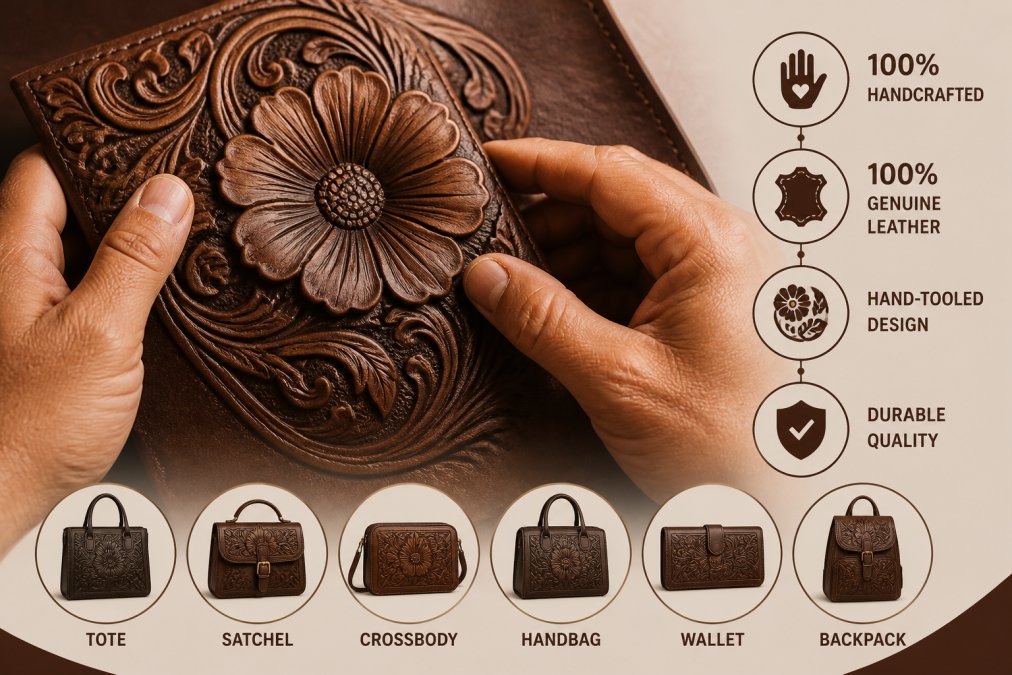
Hand-tooling is labor-intensive, which explains premium pricing. The process involves hand-carving designs directly into leather using specialized tools, then stamping or embossing patterns into the carved grooves. Each piece requires hours of skilled work, and no two pieces are identical.
Master artisans create intricate, deeply-carved designs with consistent depth and precision. When examining handcrafted leather alternatives, run your fingers across the tooled surface, you should feel distinct carved lines and dimensional texture, not flat embossing.
Handstitched leather shows visible thread lines with slight variations in spacing, which proves human craftsmanship. Lunas Artisanal Shop's pieces feature visible hand-stitching that highlights authentic origins, particularly on wallets like the Guanajuato Floral model with its hand-carved floral designs and complementary stitching. Mexican artisans bring centuries of technique to their work, traditional methods passed down through generations that create leather goods aging beautifully and withstanding daily use.
Pricing and Value
Handcrafted leather alternatives range from $30 for a compact wallet to $150+ for structured totes. Budget-friendly options like Lunas Artisanal Shop's Guanajuato Floral wallet ($30) deliver genuine leather and hand-tooled design without premium markups. Mid-range pieces like the Flora 2-in-1 Wallet-Clutch ($50) add versatility and more complex tooling. Premium totes like the Hand-Tooled Leather Ring Handle Tote ($55) feature full-grain leather, sculptural hardware, and larger storage capacity.
When comparing prices across brands, calculate cost-per-wear. A $55 tote used daily for five years costs $0.03 per wear. A $25 mass-produced bag lasting six months costs $0.17 per wear. Ethical sourcing adds cost but justifies premium pricing, brands that pay artisans fairly and maintain transparent supply chains necessarily charge more than competitors cutting corners.
Best Artisan Leather Bag Brands: What Sets Them Apart
Lunas Artisanal Shop leads with cultural authenticity and transparent craftsmanship. Every piece carries the soul of Mexican artistry, from vibrant Frida Kahlo designs to timeless floral tooling. The brand sources genuine leather exclusively from León, Guanajuato and works directly with artisans rather than middlemen. Pricing starts at $30 for wallets and ranges to $55 for structured totes. The hand-tooled details are genuinely intricate, and the stitching is visibly handcrafted. For buyers seeking cultural flair with undeniable quality, Lunas Artisanal Shop delivers the best value in the artisan segment.
Many competitors claim "Mexican artisan" status while operating primarily as retailers or distributors. The distinction matters: Lunas Artisanal Shop maintains direct relationships with makers, ensuring fair compensation and authentic craftsmanship throughout the supply chain.
Versatile Bag Styles: Totes, Crossbody, and Clutches
Handcrafted leather alternatives succeed when they serve multiple lifestyle needs. Totes remain the workhorse of artisan leather collections. Lunas Artisanal Shop's Hand-Tooled Leather Ring Handle Tote ($55) exemplifies this versatility: the structured silhouette accommodates a laptop or tablet, the hand-tooled floral carving adds visual interest, and the detachable shoulder strap enables multiple carrying options.

Crossbody bags offer hands-free convenience. The Flora 2-in1 Wallet ($50) functions as a clutch for nights out, then converts to crossbody for daily errands. The hand-tooled floral embossing and natural cowhide hair-on center strip deliver visual distinction while maintaining functionality.
Clutches and wristlets work for minimalists or as evening pieces. The Double Zipper Wristlet ($40) and Billetera Wristlet ($35) provide compact storage with full artisan detail. When evaluating handcrafted leather alternatives, ask whether the bag style genuinely serves your lifestyle or if you're paying for versatility you'll never use.
Interchangeable Strap Functionality
Interchangeable straps represent a practical innovation in artisan leather design. A single bag body becomes multiple pieces through strap swaps, transforming a tote into a crossbody or converting a clutch into a wristlet.
This functionality works only when executed with precision. Quality artisan brands engineer strap systems that are both functional and invisible. Lunas Artisanal Shop's pieces incorporate thoughtful strap design. The Flora 2-in1 Wallet includes a detachable strap that converts the piece from clutch to crossbody without compromising structural integrity. When interchangeable straps are done well, they extend the lifespan of a piece and increase its practical value.
How to Care for Tooled Leather Bags
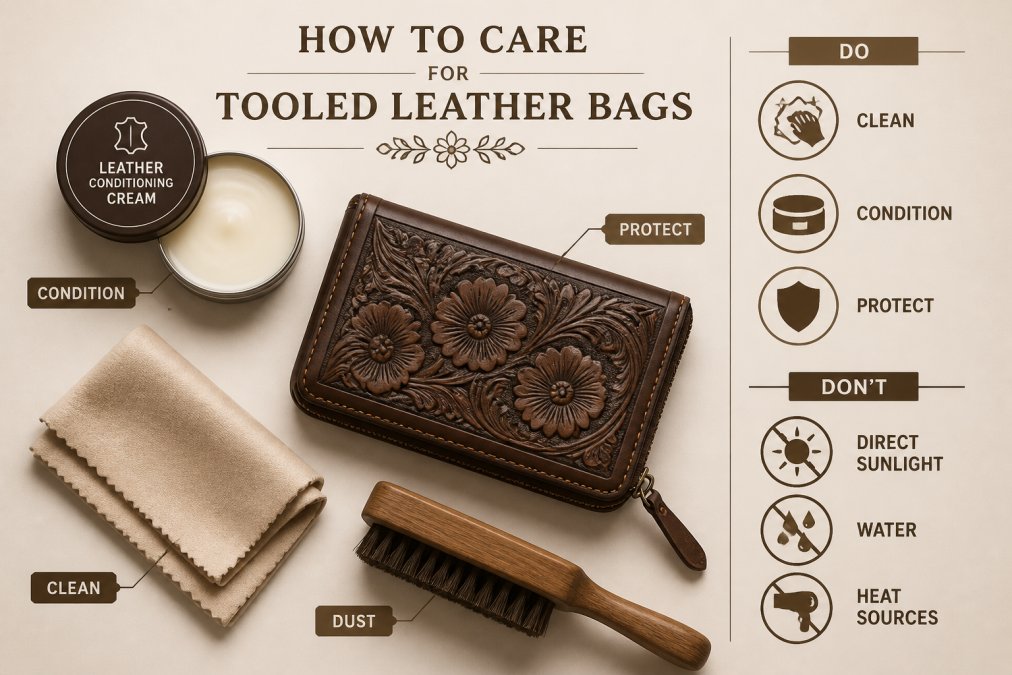
Genuine leather requires maintenance, but the process is straightforward. Proper care extends the lifespan of your handcrafted leather alternatives and enhances their natural aging process.
The foundational routine involves three steps: clean gently, condition regularly, and protect from extremes. For cleaning, use a soft, slightly damp cloth to wipe away dust and surface dirt. Avoid harsh chemicals or abrasive scrubbing. For stubborn marks, use a leather-specific cleaner designed for hand-tooled pieces.
Conditioning maintains leather suppleness and prevents cracking. Apply leather cream or conditioner every three to six months, depending on climate and usage frequency. Work the conditioner in circular motions, then buff away excess with a clean cloth. This step is crucial for hand-tooled pieces, as carved patterns can dry out faster than smooth leather surfaces.
Protection involves common sense: avoid prolonged exposure to direct sunlight, which fades color and dries leather; keep moisture away from seams and hardware; store in cool, dry conditions. If your bag gets caught in rain, let it air-dry naturally, never use heat sources like hair dryers.
Maintenance Routines and Aging Process
The aging process is where quality handcrafted leather alternatives truly shine. Unlike synthetic materials that deteriorate, genuine leather develops character over time. The surface darkens slightly, the leather softens, and the patina deepens, all visible proof of the bag's journey through your life.
Establishing a maintenance routine preserves this aging process. Condition every three to six months. Clean as needed. Rotate bags if you own multiple pieces, which distributes wear evenly. Hand-tooled details age differently than smooth leather, the carved patterns may darken slightly faster due to increased surface area, but this adds visual depth rather than detracting from the design.
Avoid over-conditioning, which can make leather too soft and prone to stretching. Avoid neglect, which allows leather to dry out and crack. Consistent, moderate care yields the best results.
Ethical Leather Handbag Alternatives: Sourcing and Labor Transparency
The ethical dimension separates authentic artisan brands from greenwashing competitors. When you invest in handcrafted leather alternatives, you're funding a supply chain that either supports real artisans or exploits them.
Genuine ethical sourcing requires transparency at every stage. Where does the leather come from? What tanning methods are used? Who makes the pieces, and are they paid fairly? Lunas Artisanal Shop maintains direct relationships with artisans and sources leather from León, Guanajuato, Mexico's established leather center where generations of families practice the craft. This is verifiable heritage, not supply-chain opacity.
Many competitors claim ethical production without substantiating those claims. They may source leather responsibly but manufacture pieces in factories rather than artisan workshops. When evaluating ethical claims, look for specifics: named artisans, documented sourcing regions, transparent pricing structures that show what makers earn. The cost of true ethical production is higher, which is why authentic handcrafted leather alternatives command premium pricing.
Shipping, Returns, and Customer Experience
The post-purchase experience reveals whether a brand truly values its customers. Reliable artisan brands ship within 5-7 business days and provide tracking information. Returns policies should be generous: 30 days minimum, full refunds or exchanges, prepaid return shipping or clear instructions for customer-paid returns.
The brand should provide care instructions with each piece, ideally printed or included as a physical card. Customer support should be responsive, answering questions about leather care, sizing, or product recommendations within 24 hours via multiple channels.
Lunas Artisanal Shop operates from Arizona with direct access to artisans and inventory. This proximity enables faster shipping and more personalized customer support than brands operating through distributed networks or drop-shipping arrangements.
Which Brand Should You Choose?
The decision hinges on four questions: What's your budget? How important is cultural authenticity? Do you prioritize versatility or focused design? How much do you value ethical transparency?
If you're seeking genuine artisan quality without premium pricing, Lunas Artisanal Shop delivers the best value. The $30-$55 price range covers wallets, clutches, and totes with authentic hand-tooled details and genuine leather. The cultural heritage angle is embedded in every piece through direct artisan relationships and Mexican sourcing.
If you need maximum versatility, the Flora 2-in1 Wallet ($50) solves multiple use cases through clever design. If you want a statement tote, the Hand-Tooled Leather Ring Handle Tote ($55) provides sculptural hardware and hand-tooled detail that elevates everyday style.
If ethical sourcing is non-negotiable, Lunas Artisanal Shop's transparent supply chain and direct artisan relationships provide confidence that your money supports real makers. The one scenario where you might look elsewhere: if you need a specific design aesthetic that Lunas Artisanal Shop doesn't offer, or if you require production timelines faster than standard artisan craftsmanship allows.
Choosing handcrafted leather alternatives means rejecting the disposable fashion cycle in favor of pieces built to last decades. Lunas Artisanal Shop delivers genuine leather, authentic artisan craftsmanship, and transparent sourcing that proves your purchase supports real makers. Explore the collection, from the hand-chiselled Guanajuato Floral wallet at $30 to the structured Hand-Tooled Leather Ring Handle Tote at $55, and discover accessories that blend traditional artistry with modern style. Shop your story today with pieces that become more beautiful with age.
| Feature | Lunas Artisanal Shop | Typical Mass-Market Alternative | Artisan Competitor (Generic) |
|---|---|---|---|
| Material | Full-grain genuine leather from León, Guanajuato | Synthetic or corrected leather | Genuine leather (sourcing unclear) |
| Hand-Tooling | Intricate, hand-carved floral designs | Flat embossing or printed patterns | Hand-tooled (quality varies) |
| Stitching | Visible hand-stitching | Machine stitching | Machine stitching primarily |
| Starting Price | $30 | $15-25 | $40-60 |
| Ethical Sourcing | Direct artisan relationships, transparent | Opaque supply chain | Claims ethical (unverified) |
| Versatility | Convertible straps on select pieces | Limited | Standard designs |
| Aging Process | Develops rich patina, improves with use | Deteriorates | Develops patina |
| Best For | Conscious buyers seeking value and authenticity | Budget-conscious shoppers | Premium aesthetic seekers |
Frequently Asked Questions
What makes handcrafted leather alternatives worth the premium price compared to mass-produced bags?
Genuine handcrafted leather bags offer durability, unique artisan designs, and longevity that mass-produced alternatives cannot match. Each piece is individually created by skilled artisans using full-grain leather and hand-tooling techniques. The cost reflects genuine materials, labor, and cultural heritage. A well-maintained artisan bag develops character and patina over years of use, making the cost-per-wear significantly lower than fast-fashion accessories that deteriorate within months.
How do I identify authentic handcrafted leather bags versus items just labeled as artisan?
Authentic handcrafted leather bags show visible hand-stitching, unique variations in hand-tooled patterns (no two pieces are identical), and genuine leather that develops natural patina. Check for consistent stitching quality, real hardware, and detailed craftsmanship. Request information about the artisans and sourcing location. Reputable brands provide transparency about their makers, production methods, and material origins. Inspect the leather for natural grain variation rather than uniform plastic-like surfaces.
What are the best ethical leather handbag alternatives that support artisan communities?
Look for brands that prioritize direct relationships with artisans, transparent labor practices, and fair compensation. Ethical alternatives source genuine leather from certified tanneries and clearly document where and how products are made. Brands that feature artisan stories, offer profit-sharing models, or support specific communities in Mexico or other regions demonstrate genuine commitment. Verify certifications, ask about worker conditions, and choose brands that publicly share their supply chain rather than hiding production details.
How should I care for tooled leather bags to ensure they last for years?
Clean tooled leather bags regularly with a dry or slightly damp cloth to remove dust and dirt. Condition the leather every 3-6 months with quality leather cream to maintain suppleness and prevent cracking. Store in a cool, dry place away from direct sunlight and moisture. Avoid prolonged exposure to heat or humidity. Allow the leather to develop natural patina over time, which actually enhances appearance. Handle with clean hands, and address spills immediately by blotting gently rather than rubbing.
This article was written using GrandRanker