

Table of Contents
- What Makes Durable Leather Bags Worth the Investment
- Full Grain Leather vs Top Grain Leather: Which Lasts Longer?
- How to Tell If a Leather Bag Is High Quality Before You Buy
-
Top Durable Leather Bags for Everyday Carry in 2026
- 1. Lunas Artisanal Shop: Handcrafted Genuine Leather with Cultural Heritage
- 2. Saddleback Leather Co. Classic Briefcase: Built for 100 Years of Daily Use
- 3. WP Standard The Vintage Messenger: Pull-Up Full-Grain for Minimalists
- 4. The Frye Company Melissa Medium Satchel: Vintage Hardware Meets Daily Function
- 5. ABLE Mamuye Classic Tote: Ethically Handmade Full-Grain for Everyday Women
- 6. Portland Leather Goods Classic Tote: American-Made Full-Grain That Ages Well
- Weight-to-Durability Ratio: How Heavy Is Too Heavy for Daily Wear?
- How to Care for Leather Bags So They Last for Years
- Conclusion: Choosing a Durable Leather Bag That Fits Your Life
Last Updated: August 9, 2026
What Makes Durable Leather Bags Worth the Investment
Durable leather bags outlast dozens of cheaper alternatives. At Lunas Artisanal Shop, we work with Mexican artisans who understand leather construction at a level most mass-market brands never reach. The difference between a bag that fails in 18 months and one that develops a gorgeous patina over a decade comes down to specific construction decisions.
Most buyers focus on aesthetics first and construction second, backwards. A bag that looks beautiful on day one but uses inferior leather and weak stitching will disappoint within a year. The bags worth owning have quality baked into every layer of the build.
Below, we break down exactly what to look for, which leather types last longest, and which specific bags earn a place in your everyday rotation in 2026.
Defining Durability: Tensile Strength, Abrasion Resistance, and Structural Integrity
Durability in leather is the material's ability to resist tearing, stretching, surface wear, and structural deformation under repeated daily stress. Three properties define it: tensile strength (how much force leather withstands before tearing), abrasion resistance (how well the surface holds up against friction), and structural integrity (how well seams, base, and attachment points maintain shape under load).
Full-grain leather, which retains the complete outer hide surface, offers the highest tensile strength. Hides with tighter grain texture and denser fiber structure resist abrasion far better than processed or split alternatives. A bag that scores well on all three will handle daily carry for years without sagging, tearing, or losing its form.
Signs of High-Quality Construction: Stitching, Hardware, and Stress Points
The biggest mistake buyers make is evaluating leather quality while ignoring construction quality. A premium hide stitched poorly will fail faster than a mid-grade hide stitched correctly.
What to examine before buying:
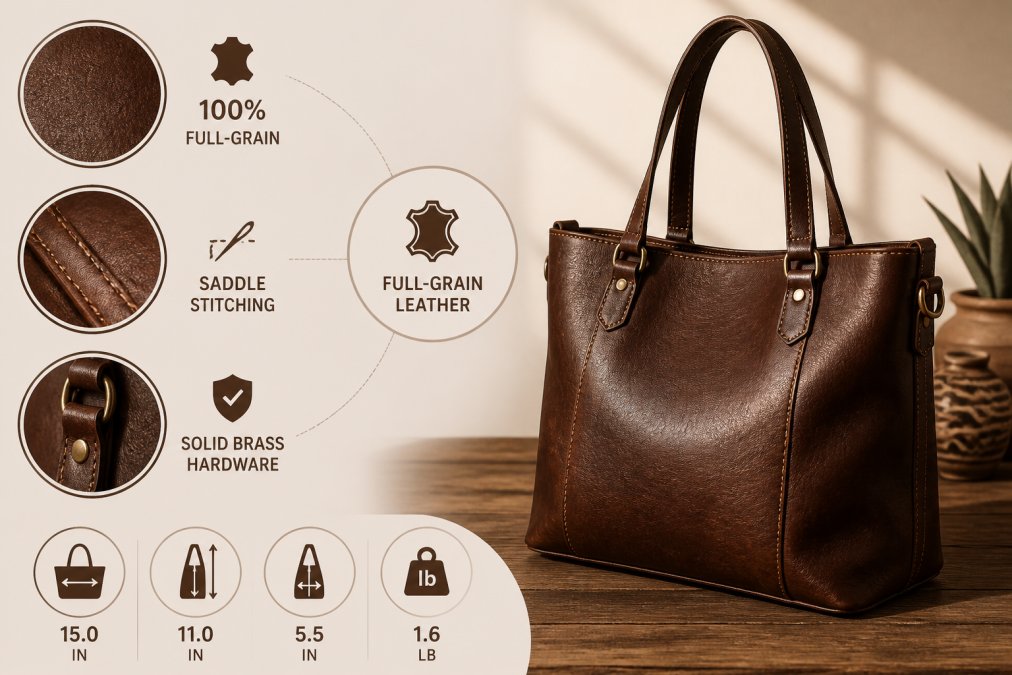
- Saddle stitching vs. machine lockstitch: Hand-stitched saddle stitching uses two needles and a single thread looped through each hole. If one stitch breaks, the rest hold. Machine lockstitch unravels from a single broken thread. Saddle stitching is the gold standard for longevity.
- Thread material: UV-resistant thread resists degradation from sunlight. Waxed linen or polyester thread outlasts cotton in high-wear seams.
- Hardware reinforcement: Solid brass or stainless steel hardware at stress points prevents the failure points that kill most bags. Zinc alloy hardware corrodes and bends under load.
- Seam reinforcement: Double or triple stitching at base corners and handle attachment points is essential on bags designed for daily carry.
- Base structure: A reinforced base panel with thick leather or a rigid insert prevents the bag from collapsing and protects against surface wear.
Full Grain Leather vs Top Grain Leather: Which Lasts Longer?
Full-grain leather lasts significantly longer than top-grain leather because it retains the entire outer surface of the hide, including the natural grain texture, the densest and most durable part of the animal's skin. Nothing is sanded away, so tensile strength and abrasion resistance are at their maximum.
Top-grain leather has had the outermost surface sanded or buffed to remove imperfections, creating a uniform appearance but removing the densest fiber layer. This results in softer leather that wears faster and resists moisture less effectively. Split leather and bonded leather are not worth considering for daily carry, split leather peels, and bonded leather cracks and degrades within a year.
| Leather Type | Durability | Patina Development | Best For |
|---|---|---|---|
| Full-grain | Highest | Rich, natural | Heirloom-quality everyday bags |
| Top-grain | High | Moderate | Structured work bags, polished look |
| Split leather | Moderate | Minimal | Budget accessories, low-wear items |
| Bonded leather | Low | None (peels) | Avoid for daily carry |
Vegetable-Tanned vs Chrome-Tanned: The Environmental and Durability Difference
The tanning process transforms raw hide into leather, and the method used affects both the environment and the bag's lifespan.
Vegetable-tanned leather uses plant-based tannins from tree bark and roots. The process takes 30 to 60 days, producing firm, dense leather that develops a rich patina with age and use. Vegetable-tanned hides are biodegradable and produced without heavy metal compounds. According to Leather Working Group environmental standards, vegetable tanning is significantly lower impact than chrome tanning for water usage and chemical discharge.
Chrome-tanned leather uses chromium salts to tan hides in as little as 24 hours, producing softer leather with greater initial water resistance. Most mass-market leather goods use chrome tanning because it's faster and cheaper. Chrome-tanned leather doesn't develop the same depth of patina, and chromium III can convert to the more toxic chromium VI under certain conditions.
For a bag you plan to carry for a decade, vegetable-tanned full-grain leather is the clear choice. It ages better, repairs more easily, and carries a lighter environmental footprint.
How to Tell If a Leather Bag Is High Quality Before You Buy
Start with the smell. Genuine full-grain and vegetable-tanned leather has a distinctive earthy, slightly sweet smell. Chrome-tanned leather smells more chemical. Bonded leather often smells of plastic or glue.
Examine the grain texture. Natural grain is irregular; no two sections of a genuine hide look identical. Perfectly uniform grain patterns indicate corrected or embossed leather. Press your thumb into the surface. Full-grain leather shows a slight impression that fades slowly. Bonded leather shows a crease that doesn't recover.
The Stress-Test Method: What to Check In Person and Online
In person:
- Pull the strap attachment points firmly; they should not flex or creak
- Check base corners for double stitching and thread consistency
- Open and close all hardware ten times; smooth operation indicates quality
- Look at interior lining attachment: it should be stitched, not glued
- Examine edges; quality bags have burnished, painted, or folded edges, not raw cuts
Online:
- Request close-up photos of stitching, hardware backs, and base corners
- Look for transparency about leather type and tanning method in product descriptions
- Check whether the maker names the tannery or country of origin
- Read reviews mentioning long-term wear (12+ months of use)
- Ask the seller directly: "Is this full-grain or top-grain leather, and is it vegetable-tanned?"
A seller who can't answer those questions confidently is selling something they don't fully understand.
Top Durable Leather Bags for Everyday Carry in 2026
The six bags below represent the strongest options across different use cases, price points, and aesthetics. Each is built from genuine leather with construction details that support years of daily use.
Quick Picks:
- Best for cultural heritage and artisan quality: Lunas Artisanal Shop handcrafted leather bags
- Best for extreme longevity: Saddleback Leather Co. Classic Briefcase
- Best minimalist messenger: WP Standard The Vintage Messenger
- Best versatile satchel: The Frye Company Melissa Medium Satchel
- Best ethically made tote: ABLE Mamuye Classic Tote
- Best American-made tote: Portland Leather Goods Classic Tote
1. Lunas Artisanal Shop: Handcrafted Genuine Leather with Cultural Heritage
Lunas Artisanal Shop produces 100% genuine leather handbags handcrafted by Mexican artisans, each piece reflecting cultural heritage and artistry. Based in Arizona, the shop bridges traditional Mexican craftsmanship with modern everyday function. The collection spans vibrant Frida Kahlo-inspired designs to timeless, understated leather pieces.
Each bag is handcrafted with genuine leather construction, providing durability that only real hide offers, not the peeling disappointment of bonded alternatives.
Best for: Women aged 30-50 who value ethical, artisan-made goods and want a bag that stands apart from mass-market leather accessories.
Pros:
- 100% genuine leather, no bonded or split leather
- Handcrafted construction with artisan-level attention to detail
- Unique cultural designs alongside timeless everyday styles
- Supports Mexican artisan communities directly
Cons:
- Pricing depends on the specific piece; visit lunasartisanal.com for current options
2. Saddleback Leather Co. Classic Briefcase: Built for 100 Years of Daily Use
If longevity is the only metric that matters, Saddleback Leather Co. makes the strongest case of any brand in this list. Their briefcases are built from full-grain leather with an over-engineered design: no breakable parts, no zippers, no snaps. The brand backs this with a 100-year warranty. The leather develops a rich patina over years of use, and the minimalist design means nothing decorative can fail. Saddleback briefcases start at $649.00.
Best for: Professionals who carry a laptop and documents daily and want a bag they'll never have to replace.
Pros:
- Full-grain leather with exceptional abrasion resistance
- 100-year warranty and no breakable parts
- Develops a beautiful patina over decades
Cons:
- Heavier than most bags due to thick leather construction
- Higher price point requires a long-term ownership mindset
3. WP Standard The Vintage Messenger: Pull-Up Full-Grain for Minimalists
For those who carry lighter loads and want a bag that disappears into daily routine, WP Standard's Vintage Messenger hits a different mark. Crafted from pull-up full-grain leather, this messenger develops visible character with every scratch and fold. The oils in the hide rise to the surface and self-heal minor marks over time. The minimalist silhouette works for both professional and casual settings. At $339, it sits at a reasonable price point for full-grain construction.
Best for: Minimalists who want full-grain quality without the bulk of a structured briefcase.
Pros:
- Rich pull-up full-grain leather that ages visibly and beautifully
- Clean silhouette works across professional and casual settings
- Self-healing surface properties from pull-up oil treatment
Cons:
- Limited internal organization
- Stud closure becomes difficult when packed near capacity
4. The Frye Company Melissa Medium Satchel: Vintage Hardware Meets Daily Function
The Frye Company has been making leather goods in the United States since 1863. The Melissa Medium Satchel reflects that long institutional understanding of what daily wear demands. The bag is crafted from full-grain leather with vintage-inspired hardware accents, brass-toned hardware at stress points, reinforced stitching at handle attachments, and a versatile design that converts between satchel and crossbody carry. Priced at $388.00 for the Melissa Medium Satchel, it sits in the mid-range for full-grain construction.
Best for: Women who want a versatile full-grain leather bag that transitions between work and weekend without looking out of place.
Pros:
- Full-grain leather with vintage hardware reinforcement
- Satchel and crossbody carry options
- Interior organization for daily essentials
Cons:
- Some styles are smaller than they appear in product photography
5. ABLE Mamuye Classic Tote: Ethically Handmade Full-Grain for Everyday Women
ABLE's approach to leather goods is built around transparency in production and fair wages for the women who make them. The Mamuye Classic Tote is handmade from full-grain leather, designed for easy access and purposeful daily use. The design balances elegance and simplicity with no unnecessary hardware and clean lines that hold their shape under load. According to ABLE's published wage transparency reports, the brand discloses the lowest wages paid in each factory, a practice almost no other fashion brand follows.
Best for: Women who prioritize ethical production and want a full-grain leather tote that handles daily carry without sacrificing elegance.
Pros:
- Handmade from full-grain leather
- Radical wage transparency in production
- Clean, practical design for everyday use
Cons:
- Specific pricing requires checking the ABLE website directly
6. Portland Leather Goods Classic Tote: American-Made Full-Grain That Ages Well
Portland Leather Goods makes their bags in Portland, Oregon, from genuine full-grain leather. The Classic Tote offers a spacious interior, optional zipper closure, and a straightforward design that prioritizes function over decoration. The leather develops character rather than degrading under daily use. Portland Leather Goods offers multiple sizes and color options, making it one of the more adaptable picks in this list.
Best for: Buyers who want American-made full-grain leather at an accessible price point with genuine sizing options.
Pros:
- Genuine full-grain leather with excellent grain texture
- Spacious and practical for daily carry
- Made in the United States
Cons:
- Specific pricing varies by size and style; check the Portland Leather Goods website for current options
| Bag | Leather Type | Best For | Standout Feature |
|---|---|---|---|
| Lunas Artisanal Shop | 100% genuine leather, handcrafted | Cultural style + artisan quality | Mexican heritage craftsmanship |
| Saddleback Classic Briefcase | Full-grain | Maximum longevity | 100-year warranty, no breakable parts |
| WP Standard Vintage Messenger | Pull-up full-grain | Minimalist daily carry | Self-healing pull-up surface |
| Frye Melissa Satchel | Full-grain | Versatile work-to-weekend | Satchel + crossbody convertibility |
| ABLE Mamuye Classic Tote | Full-grain, handmade | Ethical production | Published wage transparency |
| Portland Leather Goods Tote | Full-grain | American-made value | Spacious, multiple size options |
Weight-to-Durability Ratio: How Heavy Is Too Heavy for Daily Wear?
The weight-to-durability ratio is a practical framework most leather bag guides ignore. The features that make leather bags most durable, thick full-grain hide, solid brass hardware, reinforced base panels, also add weight. An empty leather bag for daily carry should weigh no more than 1.5 to 2 pounds. Above that threshold, cumulative load of daily essentials pushes total carry weight into a range that causes shoulder and neck strain over time.
The American Chiropractic Association guidance on bag weight suggests that carried loads should not exceed 10% of body weight. Saddleback bags are famously heavy; their thick full-grain construction suits a work commute more than a full day of errands. The WP Standard Vintage Messenger is notably lighter, partly due to its thinner leather panel and minimalist hardware.
Prioritize bags where the maker specifies the empty weight, and factor your typical daily load into the decision.
How to Care for Leather Bags So They Last for Years
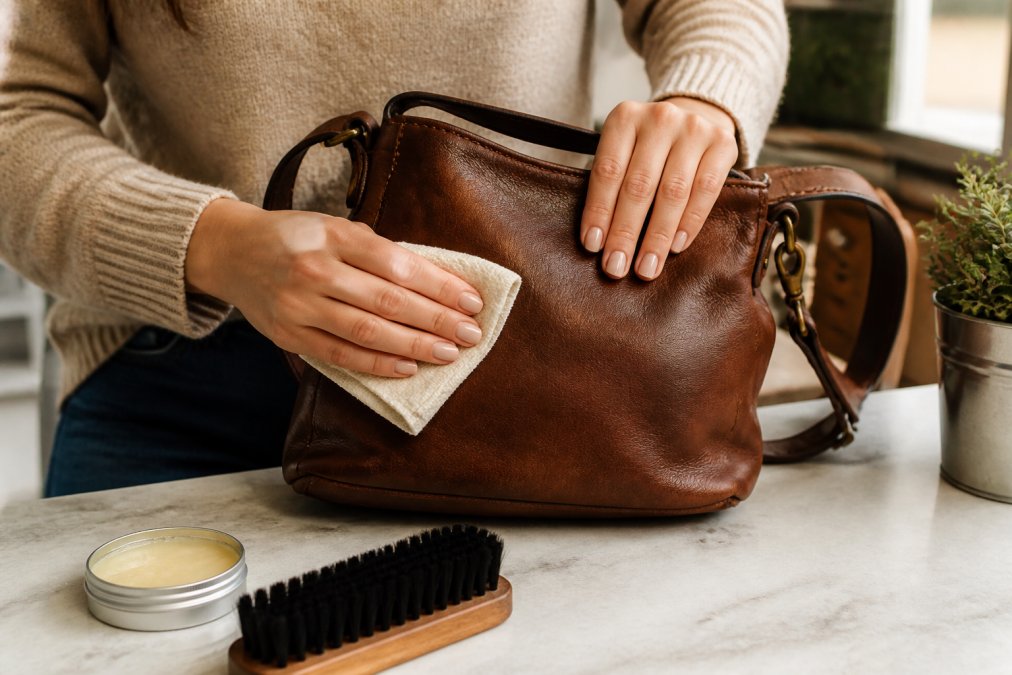
Proper leather care is the variable that separates a bag that lasts three years from one that lasts thirty. A basic maintenance routine takes about ten minutes every few months and prevents the cracking, drying, and surface degradation that ends most leather bags prematurely.
Conditioning, Water Resistance, and Patina Development
Conditioning is the most important maintenance step. Leather dries out over time as natural oils evaporate, leading to cracking and brittleness. A quality leather conditioner, beeswax-based or lanolin-based, replenishes those oils and keeps the hide supple. Apply a small amount with a soft cloth, work it in with circular motions, and buff off excess. Condition your bag every three to four months with regular use.
Water resistance develops with conditioning and the application of a leather-specific water repellent spray. Vegetable-tanned leather is more susceptible to water staining than chrome-tanned leather. If your bag gets wet, let it dry naturally away from direct heat. Never use a hair dryer; concentrated heat dries out oils rapidly and causes irreversible cracking.
Patina development is the reward for consistent care. Full-grain and vegetable-tanned leather develops a patina, a deepening of color and surface richness, through exposure to light, oils from your hands, and general use.
Quick maintenance checklist:
- Condition every 3-4 months with beeswax or lanolin conditioner
- Apply water repellent spray at the start of rainy seasons
- Store in a dust bag or pillowcase when not in use
- Stuff with tissue paper to maintain shape during storage
- Clean surface dirt with a slightly damp cloth; never saturate the leather
- Keep away from prolonged direct sunlight, which fades and dries the hide
Repairability and Circularity: Extending the Life of Your Investment Piece
A leather bag built with quality construction is repairable. Broken stitching can be resewn. Hardware can be replaced. Scratched surfaces can be buffed and re-conditioned. Repairability depends entirely on how the bag was built. Saddle-stitched seams can be repaired stitch by stitch without unraveling the rest. Riveted hardware can be replaced by a cobbler or leather repair specialist.
Before buying, ask: "Can this bag be repaired if the stitching fails?" A maker who stands behind their construction will have an answer. From a circularity standpoint, a genuine leather bag that is maintained and repaired over decades has a lower lifetime environmental footprint than three or four cheaper bags that end up in landfill. According to EPA guidance on textile and leather waste, leather and textile goods represent a significant and growing portion of municipal solid waste, a figure that drops when consumers invest in repairable, long-lasting goods.
Conclusion: Choosing a Durable Leather Bag That Fits Your Life
Choosing a durable leather bag comes down to three decisions: the right leather type for longevity, the right construction for daily stress, and the right weight for your actual habits. Full-grain, vegetable-tanned leather with saddle stitching and solid hardware will outlast every cheaper alternative, and with proper conditioning and occasional repair, it becomes more beautiful over time.
For buyers who want all of that alongside genuine artisan craftsmanship and cultural meaning, Lunas Artisanal Shop offers 100% genuine leather handbags handcrafted by Mexican artisans, with designs that range from vibrant and expressive to quietly timeless. Shop your story today at lunasartisanal.com and find the piece that carries both your daily essentials and something worth keeping.
Frequently Asked Questions
What type of leather is most durable for daily bags?
Full-grain leather is the most durable option for daily bags. It retains the complete outer surface of the hide, giving it the highest tensile strength and abrasion resistance of any leather grade. Vegetable-tanned full-grain leather is especially long-lasting because the tanning process preserves the hide's natural fiber structure. Avoid bonded leather and split leather for everyday carry, both break down quickly under regular stress and cannot develop the protective patina that makes full-grain bags improve with age.
What is the difference between full-grain and top-grain leather for durability?
Full-grain leather keeps the entire grain layer intact, making it the densest and most durable grade. Top-grain leather has the outer surface sanded down to remove imperfections, which produces a more uniform look but reduces the hide's natural structural integrity. For durable leather bags used every day, full-grain outperforms top-grain over time, it develops a richer patina, resists abrasion better, and holds up at stress points like handles and strap attachments far longer than sanded alternatives.
How do you maintain a leather bag for everyday wear?
Condition your leather bag every two to three months using a quality leather conditioner, this prevents the hide from drying out and cracking. Wipe down the surface with a dry cloth after exposure to rain or dust. Store the bag stuffed with tissue paper in a breathable cotton bag, away from direct sunlight, which degrades UV-resistant thread and fades the leather finish. Treat stress points and seams with a leather balm annually. Regular maintenance routine keeps even daily-use bags looking sharp for a decade or more.
Are leather bags too heavy for everyday use?
Thick full-grain leather briefcases can weigh 3 to 5 pounds before you add your belongings, which adds up on a long commute. Totes and crossbody bags in the same leather grade tend to weigh less because they use thinner panels. The weight-to-durability tradeoff is real: thicker leather lasts longer but costs you comfort. If weight is a concern, look for bags that use full-grain leather only at high-stress areas like handles, base corners, and strap attachments, with lighter panels elsewhere.
How do I know a leather bag is genuinely handcrafted and not mass-produced?
Examine the stitching closely. Hand-stitched saddle stitching shows slight irregularities in spacing and uses two needles passed through each hole, it looks slightly imperfect but holds together even if one thread breaks. Machine stitching is perfectly uniform but fails entirely when a single stitch snaps. Genuine handcrafted durable leather bags also show natural grain variation across panels, slight tool marks near edges, and hardware that is riveted or screwed rather than glued. Ask the seller for details about the tannery and the artisans who made the piece.
This article was written using GrandRanker