

Table of Contents
- Why Durability Testing Matters for Handcrafted Leather Bags
- The Water Absorption Test
- Smell and Scent Identification
- How to Tell if a Leather Bag Is Good Quality
- Full Grain vs. Genuine Leather Durability
- Hardware and Zipper Durability Assessment
- How to Care for Artisanal Leather Goods
- Common Mistakes to Avoid When Testing Leather Durability
Why Durability Testing Matters for Handcrafted Leather Bags
When you invest in a handcrafted leather bag, you're choosing longevity and quality. A leather bag durability test separates genuine craftsmanship from marketing hype. At Lunas Artisanal Shop, we understand that customers want their investment to last years, not months. The difference between a bag that develops beautiful patina and one that cracks, peels, or falls apart comes down to material quality, construction methods, and leather treatment during production.

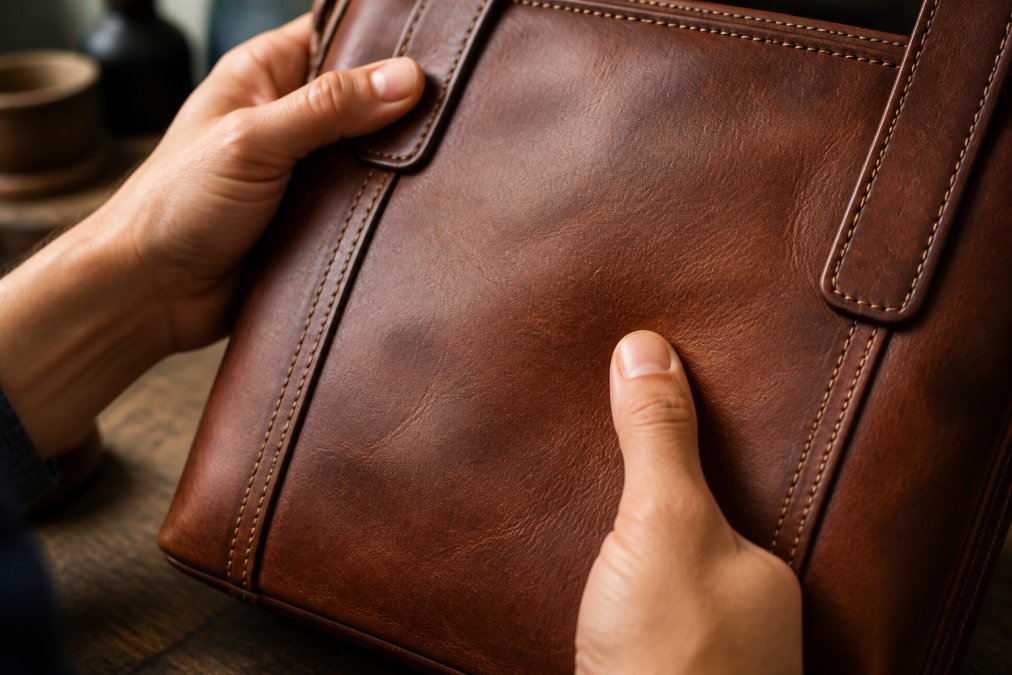
A leather bag durability test examines water absorption, scent profile, grain structure, stitching integrity, hardware strength, and flexibility under stress. This guide covers essential durability tests you can perform yourself, revealing how that bag will perform in real life.
The Water Absorption Test
Water resistance is one of the most revealing durability indicators. Use a dropper or spray bottle to apply water droplets to an inconspicuous area of the bag. Quality leather will bead slightly or absorb slowly, darkening gradually. The water should not immediately soak through or cause the leather to feel soggy.
After 30 seconds, gently wipe the area dry with a soft cloth. Genuine leather typically shows a darker tone where water was applied, but the surface should feel normal once dry. If the leather remains stiff, cracked, or shows white residue, that indicates poor tanning or low-quality hide.
Chrome-tanned leather absorbs water more readily than vegetable-tanned leather, which isn't necessarily bad, it means the leather is porous and will develop character over time (peer-reviewed research). However, excessive water absorption combined with poor edge finishing can lead to mold growth or deterioration at seams.
Smell and Scent Identification
The scent profile of leather reveals tanning method and material authenticity. Genuine leather has a distinct, natural smell. Vegetable-tanned leather smells earthy, rich, and slightly sweet. Chrome-tanned leather smells sharper, more chemical-forward, but still organic.
Synthetic leather or leather bonded to plastic backing produces a sharp chemical odor, often described as plastic-like or off-putting. This smell doesn't fade and indicates the material won't develop patina or character. If a bag smells overwhelmingly of chemicals or plastic, the durability is compromised.
Sniff the interior, exterior, and leather edges. The scent should be consistent. If the interior smells chemical and the exterior smells natural, the bag likely has synthetic lining or backing, a red flag for durability.
How to Tell if a Leather Bag Is Good Quality
Evaluating leather quality requires understanding the differences between leather grades and construction standards. A leather bag durability test should examine grain type, surface texture, edge finishing, and stitching density.
Full-Grain vs. Top-Grain Leather
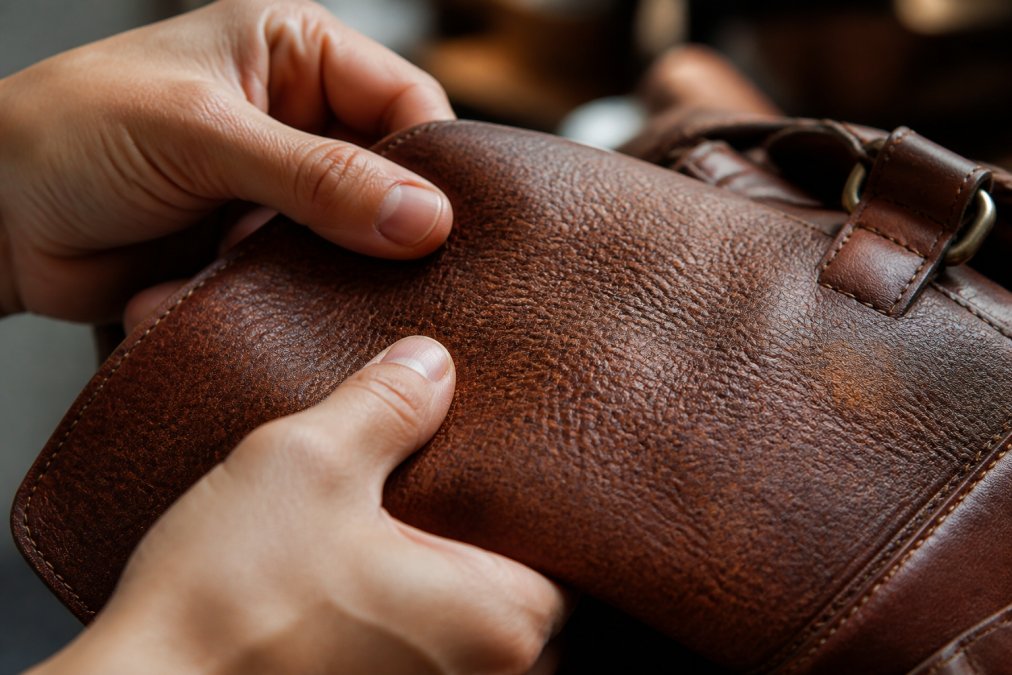
Full-grain leather includes the entire thickness of the hide, including the natural grain pattern and all surface markings (the FDA). This is the highest quality leather grade. Full-grain leather develops a rich patina over time, becoming more beautiful with age and use. Natural variations in grain pattern, scars, marks, and color shifts are evidence of authenticity, not defects.
Top-grain leather has the surface layer sanded smooth and finished with a protective coating. While still genuine leather, it's lower grade than full-grain. Top-grain leather is more resistant to stains and water damage initially, but the protective coating can crack and peel over time.
When testing a handcrafted leather bag, examine the surface closely. If you see natural grain variation, small scars, and color inconsistency, that's full-grain leather. If the surface is uniformly smooth and perfect, it's likely top-grain. Full-grain leather bags will outlast top-grain bags by years because the natural grain structure provides strength and the leather improves with age.
Surface Grain and Texture Inspection
Run your hand across the bag's surface. Full-grain leather feels alive, slightly textured, with variations in smoothness. Press your fingernail gently into the leather and release. Full-grain leather will show a temporary mark that fades as the leather relaxes.
Examine the edges of the bag closely. High-quality leather bags have edges that are burnished (smoothed and sealed) or finished with edge paint. Burnished edges are the sign of superior craftsmanship. The edge should feel smooth, not raw or splintered.
Edge and Stitching Quality
Stitching density determines how long a bag will hold together under stress. Count the stitches per inch on a seam. Quality handcrafted leather bags have 8-10 stitches per inch. Fast-fashion bags have 4-6 stitches per inch. Higher stitch density means the bag can withstand years of weight and stress without seams splitting.
Examine the thread. Genuine leather bags use waxed thread or polyester thread rated for leather work. The thread should be consistent in color and tension. Look for reinforced stress points at handles, zipper attachments, and corners. If these critical areas have single-line stitching, the bag will fail under regular use.
Full Grain vs. Genuine Leather Durability
Full-grain leather improves with age. The natural oils in the leather rise to the surface, creating a deeper color and richer appearance. Scuffs and marks add character rather than looking like damage. This is why handcrafted full-grain leather bags become heirlooms.
Flexibility and Crease Testing
Hold the bag by the handles and flex it gently. The leather should bend smoothly without making cracking sounds. Create a deliberate crease by folding the leather gently and holding for 10 seconds, then release. The crease should fade completely within a minute. If the crease remains visible, the leather lacks the natural oils and elasticity needed for durability.
Press your thumb firmly into the leather and hold for 5 seconds. When you release, the indentation should disappear completely. If the mark remains, the leather is either too thin, over-treated, or low-grade.
Hardware and Zipper Durability Assessment
Metal hardware and zippers are critical durability points. Examine the hardware closely. Quality bags use solid brass, stainless steel, or gold-plated hardware. If the hardware is labeled "alloy" or has no designation, it's likely cheap pot metal that will tarnish, corrode, or break under stress.
Test zipper operation by sliding it slowly along its entire length. The zipper should move smoothly without sticking or grinding. Examine how hardware is attached to the leather. Rivets should be set deeply into the leather, not surface-mounted. Stitching around hardware should be tight and dense.
Gently pull on each handle with moderate force. The handle should not shift, rattle, or show movement at the attachment point. Test zipper sliders by pulling the zipper tab firmly. Quality sliders have solid construction and won't bend, crack, or separate from the slider body.
How to Care for Artisanal Leather Goods
Proper maintenance extends the life of a handcrafted leather bag significantly. Clean the exterior monthly with a soft, dry cloth. For stubborn dirt, use a slightly damp cloth with lukewarm water. Never use harsh chemicals or commercial leather cleaners on handcrafted bags.
Condition the leather every 6-12 months with a quality leather conditioner (the American Dental Association). This replenishes natural oils, maintains flexibility, and prevents cracking. Store the bag in a cool, dry place away from direct sunlight. Never store in plastic bags, which trap moisture.
Protect against water damage by applying a water-resistant treatment designed for leather. Address damage immediately. Small scuffs and marks are normal and add character to full-grain leather, but cuts, punctures, or deep scratches should be treated promptly to prevent moisture from entering.
Common Mistakes to Avoid When Testing Leather Durability
The first mistake is assuming all leather is the same. The term "genuine leather" doesn't guarantee quality. You must examine the specific leather grade and construction.
The second mistake is trusting appearance alone. Stitching quality, hardware attachment, and edge finishing aren't always visible at first glance. Inspect closely and test specific components.
The third mistake is ignoring the smell test. Scent is one of the most reliable indicators of leather authenticity and tanning quality. If a bag smells synthetic or chemical, the durability is compromised.
The fourth mistake is overlooking hardware. Hardware failure is one of the most common reasons bags become unusable. A leather bag durability test must include thorough hardware examination.
The fifth mistake is buying based on price alone. Handcrafted leather bags from artisan makers are more expensive because they use better materials and construction. A $65 handcrafted bag from Lunas Artisanal Shop with full-grain leather, reinforced stitching, and quality hardware will last.
The sixth mistake is expecting leather to be waterproof. Leather is water-resistant when properly treated, but it's not waterproof. Proper care and maintenance prevent water damage.
The seventh mistake is ignoring patina development. In full-grain leather, patina is evidence of authenticity and durability. The leather is developing character and becoming more beautiful.
Evaluating a handcrafted leather bag requires more than a glance. A systematic leather bag durability test, examining water absorption, scent, grain structure, stitching, hardware, and flexibility, reveals whether the bag will last years or months. Lunas Artisanal Shop's collection of handcrafted leather bags from León, Guanajuato features full-grain leather, reinforced stitching, and quality hardware designed to pass every durability test. The Chiseled Leather Bag with Internal Dividers ($65) and the Escama Chiseled Scale Satchel ($65) are built with the structural integrity that transforms a bag into an heirloom. Shop your story today with leather that lasts.

Frequently Asked Questions
How long should a handcrafted leather bag last?
A genuine handcrafted leather bag should last 10-20 years or longer with proper care. Full-grain leather, which retains the hide's natural surface, develops a rich patina over time and becomes more durable. Top-grain leather typically lasts 5-10 years. The durability depends on the tanning process, thickness, and how well you maintain it. Regular conditioning and protection from extreme moisture extend the lifespan significantly. Bags made by artisans using vegetable-tanned leather often outlast mass-produced alternatives because of superior craftsmanship and material quality.
How can you tell if a leather bag is good quality?
Quality leather bags show consistent grain patterns, have even stitching with tight, reinforced seams, and feature smooth edges that are properly burnished. Genuine leather should have a natural scent (not chemical), flex without cracking, and have substantial weight. Inspect the hardware for secure attachment and smooth operation. Check for internal dividers and well-constructed pockets. High-quality artisanal bags like those from Lunas Artisanal Shop feature hand-chiseled details, reinforced handles, and bronze or gold-tone hardware that won't tarnish quickly. The leather should feel supple yet structured, not stiff or papery.
What is the difference between full grain and genuine leather durability?
Full-grain leather is the highest quality and most durable because it retains the hide's natural surface, including its grain pattern and imperfections. It resists abrasion better, develops character through patina, and can last 20+ years. Genuine leather (also called top-grain) has the top layer removed and often has a finish applied, making it less durable (5-10 years) but more uniform in appearance. Full-grain leather is thicker and stronger, with superior tensile strength. However, full-grain is more prone to water absorption initially until it's conditioned. For investment pieces, full-grain handcrafted leather offers better long-term value and durability.
How do I care for artisanal leather goods to maintain durability?
Condition your leather bag every 6-12 months with a quality leather conditioner to maintain pliability and water resistance. Wipe spills immediately with a soft cloth and let the bag air dry naturally away from direct heat or sunlight. Store in a cool, dry place and stuff with paper to maintain shape. Avoid prolonged exposure to moisture, extreme heat, and harsh chemicals. For handcrafted pieces like those from Lunas Artisanal Shop, handle the hand-chiseled details gently. Use a soft brush to remove dust from textured surfaces. If hardware becomes loose, have it professionally reattached. Regular maintenance prevents cracking, peeling, and structural damage, extending your bag's life significantly.
Is handcrafted leather always more durable than mass-produced leather?
Handcrafted leather is typically more durable when made from quality materials and by skilled artisans, but not always. The difference lies in craftsmanship, material selection, and construction methods. Artisanal bags often use full-grain or vegetable-tanned leather with superior tanning processes, thicker hides, and reinforced stitching. Hand-chiseled details and hand-tooled elements add structural integrity. However, some handmade bags use lower-grade leather, and some mass-produced bags use quality materials with efficient construction. The key is examining the specific bag's grain pattern, stitching density, hardware integrity, and material thickness rather than assuming handcrafted automatically means more durable.
This article was written using GrandRanker