

Table of Contents
- What Is Bonded Leather?
- How Bonded Leather Is Made
- Pros of Bonded Leather
- Cons of Bonded Leather
- Bonded Leather vs Genuine Leather
- Durability of Bonded Leather Furniture
- Alternatives to Bonded Leather
- Frequently Asked Questions
Last Updated: September 29, 2026
What Is Bonded Leather?
Bonded leather is a composite material made by bonding leather fibers and scraps to a fabric or synthetic backing using polyurethane adhesive. It mimics the appearance and feel of genuine leather at a fraction of the cost, making it a popular choice for furniture, handbags, and accessories where budget matters.

The manufacturing process takes discarded leather scraps from full-grain and top-grain leather production and recycles them into a usable material. This approach reduces waste in the leather industry while creating an affordable alternative for consumers. Understanding bonded leather helps you make an informed choice about what works for your lifestyle and budget.
Bonded leather pros and cons matter most when you're comparing cost-effective options against long-term durability. The material looks polished in the showroom. Over time, however, the adhesive binders can weaken, leading to peeling, cracking, and delamination that genuine leather simply doesn't experience.
How Bonded Leather Is Made
The manufacturing process combines recycled leather scraps with synthetic polymer binders to create a cohesive sheet. Manufacturers shred leather fibers from hide scraps, then mix them with polyurethane adhesive and a backing material, typically polyester or cotton fabric. The mixture is pressed and dried to form a unified surface coating that resembles genuine leather.
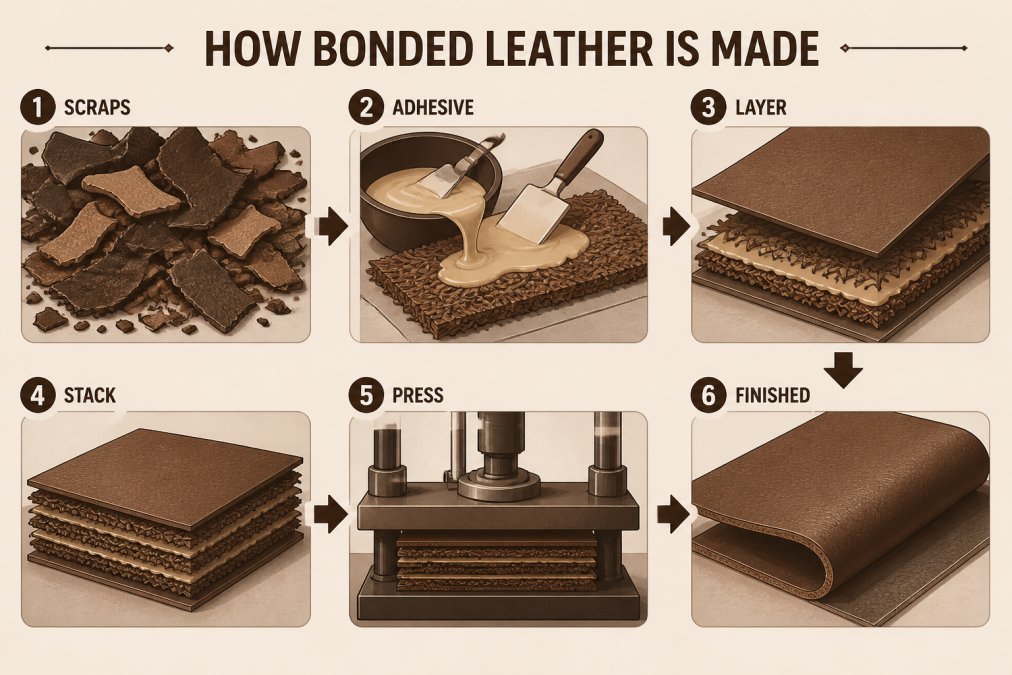
This approach keeps production costs low compared to tanning and treating full-grain or top-grain leather. The textile industry benefits from reduced waste, and consumers get an affordable product. However, the adhesive binders that hold everything together are the weak point. Temperature-sensitive polyurethane can degrade over time, especially in warm environments or with frequent use, which directly impacts the durability of bonded leather furniture and accessories.
Understanding this process clarifies why bonded leather pros and cons lean heavily toward initial affordability versus long-term reliability. The material is not defective by design, but its lifespan is measurably shorter than genuine leather alternatives.
Pros of Bonded Leather
Bonded leather offers genuine advantages for specific use cases, particularly when budget is the primary concern.
Cost-Effective: The most obvious benefit is price. Bonded leather products cost significantly less than genuine leather equivalents. A bonded leather sofa might cost half as much as a comparable genuine leather piece, making it accessible for renters, students, or anyone furnishing on a tight budget.
Appearance: Bonded leather looks convincingly like genuine leather when new. The surface finish, color options, and embossing can match high-end leather aesthetically. For display purposes or short-term use, the visual appeal is nearly identical.
Variety: Because manufacturers can blend different leather scraps and apply various surface coatings, bonded leather comes in more color and texture options than many genuine leather lines. This design flexibility appeals to consumers seeking specific aesthetics.
Easy Initial Cleaning: Bonded leather cleans easily with a damp cloth and mild soap. Unlike genuine leather, it requires no special conditioning or protective treatments during the early months of ownership.
Sustainability Angle: Bonded leather recycles leather scraps that would otherwise become waste, making it an environmentally conscious choice for consumers prioritizing waste reduction in the manufacturing process.
Cons of Bonded Leather
The drawbacks of bonded leather become apparent within months to a few years of regular use, depending on environmental conditions and wear patterns.
Peeling and Delamination: The adhesive binders holding leather fibers to the backing material weaken over time. Peeling typically starts at edges, seams, or high-friction areas where the surface coating separates from the base. Once peeling begins, it accelerates quickly. A small peel becomes a larger problem within weeks.
Cracking and Flaking: Bonded leather develops surface cracks as the polyurethane coating loses flexibility. These cracks allow moisture to penetrate the material, accelerating deterioration. Flaking follows, leaving visible damage that cannot be repaired.
Temperature Sensitivity: Heat and cold affect bonded leather more severely than genuine leather. Polyurethane adhesive softens in warm environments (above 75°F) and becomes brittle in cold. Placing a bonded leather sofa near a heating vent or in direct sunlight accelerates breakdown. Humidity above 60% compounds the problem by weakening adhesive bonds faster.
Limited Lifespan: Most bonded leather furniture lasts 3-5 years with normal use. When calculated on a cost-per-year basis, the savings disappear quickly if replacement is necessary.
Non-Repairable: Unlike genuine leather, which can be restored, repaired, or refinished, bonded leather has no viable repair options once damage occurs. A peeling sofa cannot be restored to its original condition.
Chemical Off-Gassing and VOC Emissions: The manufacturing process uses polyurethane adhesives and synthetic binders that release volatile organic compounds (VOCs) during production and the first 6-12 months of ownership. Common VOCs in bonded leather include toluene, xylene, and formaldehyde, which can trigger headaches, respiratory irritation, and allergic reactions in sensitive individuals. Off-gassing is most pronounced in warm, poorly ventilated spaces. Consumers with asthma, chemical sensitivities, or those furnishing nurseries should be aware that bonded leather products may require extended airing-out periods (opening windows, running fans) before use. Genuine leather, by contrast, uses natural tanning agents and releases minimal VOCs after the initial curing phase.
Chiseled Tote Bag with Inner Pouch →
Pet and Allergen Concerns: The synthetic backing material in bonded leather can trap pet dander, dust mites, and allergens more readily than genuine leather's porous surface. The material's tendency to peel creates small particles that can become airborne, potentially worsening allergies or asthma in pet-owning households. Additionally, pet claws accelerate surface damage, making bonded leather a poor choice for homes with cats or dogs.
Bonded Leather vs Genuine Leather
The comparison reveals why bonded leather and genuine leather serve different consumer needs.
Material Composition: Genuine leather is the tanned hide of an animal, treated to preserve its natural strength and flexibility. Bonded leather is recycled leather fibers mixed with polyurethane adhesive and a synthetic backing. This fundamental difference drives everything that follows.
Durability: Genuine leather develops a patina over years of use, becoming more attractive with age. Bonded leather deteriorates, peeling and cracking as adhesive fails.
Cost: Bonded leather costs substantially less upfront, often 40-60% cheaper than comparable genuine leather products. However, the total cost of ownership favors genuine leather when replacement cycles are factored in.
Maintenance: Bonded leather requires minimal maintenance initially but cannot be restored once damage occurs. This creates a paradox: the cheaper material demands replacement rather than maintenance.
Breathability: Bonded leather's synthetic backing traps moisture, which can lead to odor and mildew in humid conditions.
Abrasion Resistance: Bonded leather shows wear as damage that cannot be remedied.
| Factor | Genuine Leather | Bonded Leather |
|---|---|---|
| Lifespan | 15-20+ years | 3-5 years |
| Starting Price | Higher | Lower |
| Maintenance | Conditioning required | Minimal initially |
| Repairability | Yes, refinishing possible | No viable repair |
| Breathability | High | Low |
| Durability | Improves with age | Deteriorates over time |
| Best For | Long-term investment | Short-term, budget use |
Durability of Bonded Leather Furniture
Durability expectations for bonded leather furniture depend heavily on use intensity and environmental conditions.
Most bonded leather furniture shows visible signs of wear within 12-24 months of regular daily use. Peeling typically appears first at seams, edges, and high-contact areas like armrests. Once peeling begins, it spreads. A small area becomes a larger problem within weeks to months.
In moderate-use environments, bonded leather furniture may last 3-5 years before deterioration becomes unacceptable. In high-use settings, the lifespan can be 18-36 months. Pet-friendly households accelerate wear significantly, as claws and constant friction damage the surface coating faster than human use alone.
Environmental factors matter enormously. Warm climates with high humidity cause adhesive binders to fail faster. Direct sunlight weakens the polyurethane coating. Cold, dry environments may extend lifespan slightly, but the fundamental limitation remains: the adhesive will eventually fail.
Long-Term Cost-of-Ownership Analysis:
- Disposal and environmental impact: Replacing bonded leather furniture multiple times generates more landfill waste and manufacturing emissions than purchasing durable goods once.
- Time and hassle: Shopping for and replacing furniture four times over 18 years consumes time and energy that genuine leather eliminates.
Lifespan by Use Case:
- Light use (guest room, occasional seating): 5-7 years
- Moderate use (family room, regular sitting): 3-5 years
- Heavy use (daily seating, high traffic): 18-36 months
- Pet households: 18-30 months (claws and friction accelerate peeling)
- Warm, humid climates: 2-4 years (adhesive degrades faster)
- Near heat sources or direct sunlight: 1-3 years (polyurethane softens and cracks)
Alternatives to Bonded Leather
When bonded leather doesn't fit your needs, several alternatives offer different trade-offs.
Frequently Asked Questions
How long will bonded leather last?
Bonded leather typically lasts 2-5 years with normal use, depending on care and frequency of use. The adhesive binders holding leather fibers to the backing material weaken over time, causing peeling and delamination. High-traffic furniture or bags experience faster wear.
Why does bonded leather peel and crack over time?
Bonded leather peels because the synthetic polymer adhesive binders deteriorate when exposed to moisture, temperature changes, and abrasion. As the polyurethane or PU coating breaks down and the adhesive loses strength, leather fibers separate from the backing material. Cracking occurs when the surface coating fails and stress concentrates on weakened areas where the bond has already begun to fail.
How does bonded leather compare to genuine leather in durability?
Genuine leather is far more durable than bonded leather. Bonded leather furniture, made from recycled leather scraps held with adhesive binders, typically lasts only 2-5 years before showing significant wear. The manufacturing process of bonded leather uses lower-quality hide scraps and synthetic backing, making it less resistant to wear and tear.
What are the best alternatives to bonded leather?
Genuine leather and high-quality vegan leather are the strongest alternatives. Genuine leather offers durability. Vegan leather, made from polyurethane or plant-based materials, provides a sustainable option with better longevity than bonded leather and improved abrasion resistance. For artisan-quality pieces, handcrafted genuine leather accessories, like those from Lunas Artisanal Shop, combine durability with cultural heritage and ethical craftsmanship, making them a worthwhile investment over mass-produced bonded leather goods.