

Table of Contents
- The Durability Difference: Real vs. Faux Leather
- Full Grain vs. Genuine Leather Durability: What Actually Matters
- Mexican Tanning Traditions and Artisan Craftsmanship
- How to Identify High Quality Leather: A Visual and Tactile Guide
- The Science Behind Patina and Natural Aging
- Leather Care Tips for Longevity and Restoration
- Conclusion: Investing in Craftsmanship That Endures
Last Updated: August 30, 2026
The Durability Difference: Real vs. Faux Leather
Authentic mexican leather lasts dramatically longer than synthetic alternatives. Real leather is a natural material with inherent tensile strength, its fibers maintain flexibility and breathability over years of wear. Synthetic polymers like polyurethane and PVC mimic leather's appearance initially, but within months they crack and peel as the polymer coating separates from its base layer.
The core problem with synthetic leather is fiber density. Natural hides have millions of interconnected fibers that distribute stress across the material. When you bend a leather bag repeatedly, those fibers flex and return to their original state. Synthetic materials have a rigid structure that doesn't fully recover, creating microscopic damage that eventually becomes visible cracks.

Genuine leather actually improves with age, developing patina, a rich, deepened color and subtle sheen from natural oils and exposure. This transformation is unique to real leather. Faux leather simply looks tired.
Full Grain vs. Genuine Leather Durability: What Actually Matters
Not all real leather is created equal. The leather industry uses a grading system based on how much of the hide's original surface remains intact.
Full grain leather retains the hide's entire outer layer, including its natural grain pattern and imperfections. This is the strongest form of leather available, with the densest fibers that bear the most stress. Full grain resists scratches, develops patina beautifully, and can last decades with basic care.
Top grain leather removes the outer surface layer and sands the hide smooth, creating uniform appearance but removing the strongest fibers. It's still genuine leather, but weaker than full grain and less prone to developing rich patina.

Bonded leather mixes leather scraps and fibers with polyurethane binder. While it contains real leather material, the polyurethane coating cracks and peels like fully synthetic leather. Bonded leather typically lasts 2-3 years before visible deterioration begins (peer-reviewed research).
The durability difference is measurable: full grain leather shows wear gradually over 10-15 years, top grain over 5-7 years, and bonded leather within 2-3 years.
Lunas Artisanal Shop sources full grain leather from Guanajuato, Mexico, known for producing some of the world's most durable hides. The Chiseled Leather Bag with Internal Dividers uses this material specifically because full grain holds up to daily use without degrading. This choice determines whether a bag lasts five years or twenty.
Mexican Tanning Traditions and Artisan Craftsmanship
Mexico has refined leather tanning into an art form over centuries. The difference lies in the tanning process itself.
Most modern leather tanning uses chrome, a chemical process that takes 24-48 hours and produces uniform, predictable leather suited for mass production (fao.org). Vegetable tanning uses tannins extracted from tree bark and takes 30-90 days (fao.org). During this time, tannins slowly bond with the leather's collagen fibers, creating fundamentally stronger material that becomes more water-resistant and flexible over time.
Mexican artisans in León and Guanajuato have mastered vegetable tanning through understanding hide selection, timing, and finishing with natural oils and waxes that enhance the leather's ability to age gracefully.
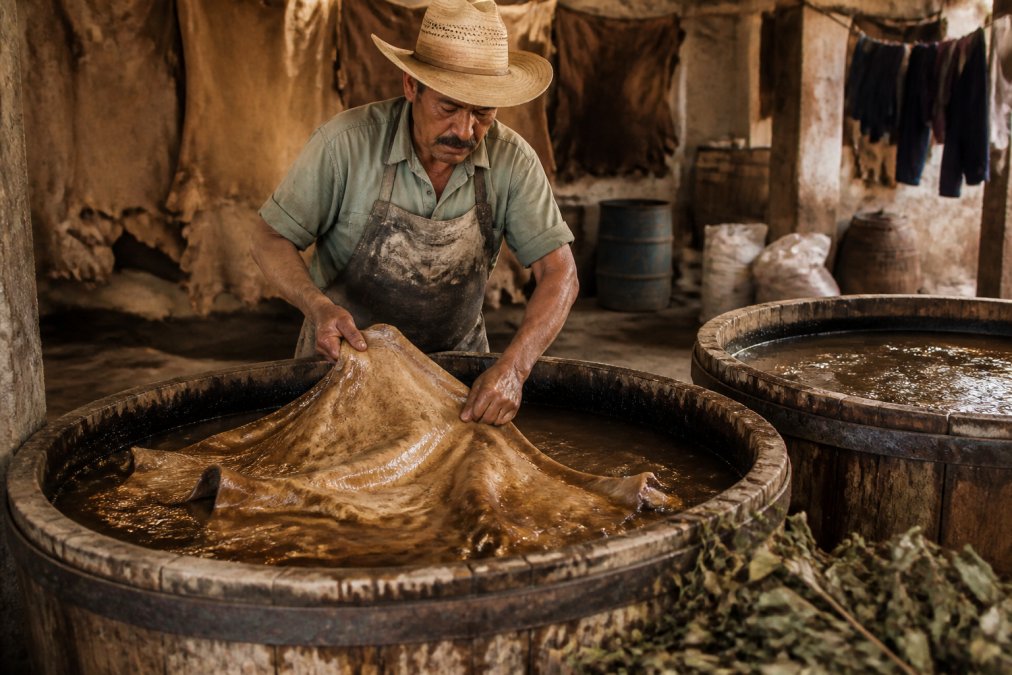
Vegetable-tanned leather from Mexico has a distinctive feel, slightly waxy, with visible grain variation. It smells like leather, not chemicals, and develops unique patina. A properly cared-for vegetable-tanned leather item can function for 20-30 years.
The trade-off is cost. Vegetable tanning requires time, skill, and expensive natural materials that can't be rushed or automated. This is why most mass-market leather goods use chrome tanning, but also why authentic mexican leather commands higher prices and delivers dramatically better value over time.
How to Identify High Quality Leather: A Visual and Tactile Guide
Grain pattern and natural variation. Genuine leather shows visible grain patterns that vary across the surface. Synthetic leather either has no grain pattern or has a perfectly uniform, repeating pattern that signals plastic.

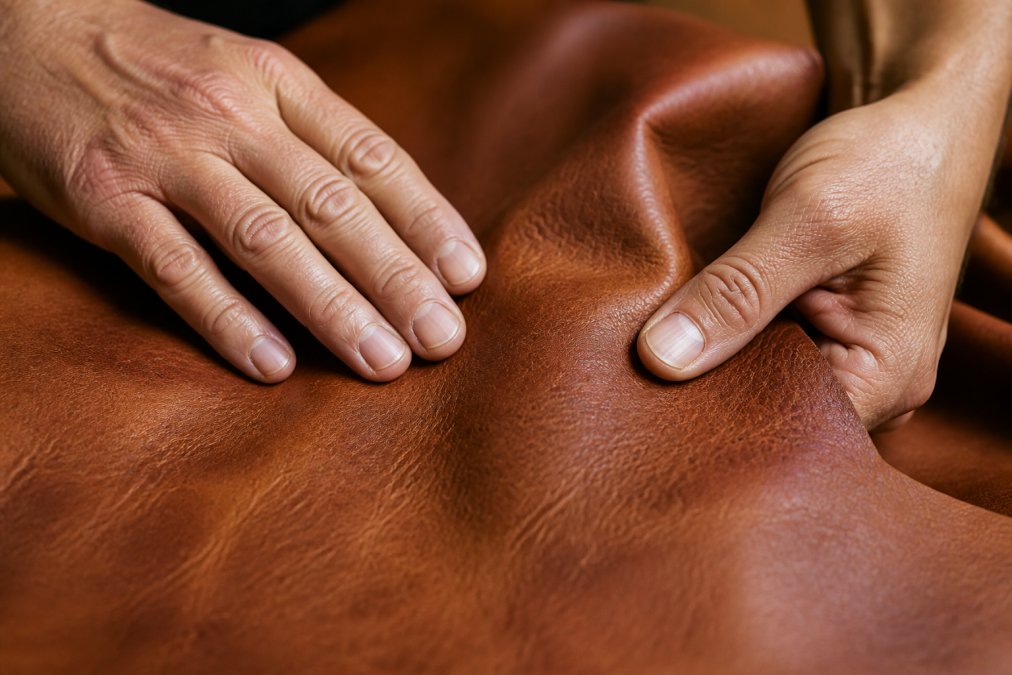
Pore structure. Real leather has visible pores randomly distributed like on skin. Synthetic leather either has no pores or has them arranged in obvious, geometric patterns.
Flexibility and weight. Genuine leather flexes smoothly and returns to its original shape, feeling substantial but not rigid. Synthetic leather feels plastic-y with less resistance and a hollow quality.
The smell test. Genuine leather smells earthy and warm, sometimes with a faint animal scent. Vegetable-tanned leather smells distinctly organic with notes of wood and earth. Synthetic leather smells like plastic or chemicals.
Edge quality. Genuine leather shows uniform color throughout the cross-section. Synthetic leather often shows a thin colored layer on top with a different material underneath, a clear sign of bonded or synthetic leather.
Price. Genuine leather, especially vegetable-tanned leather from skilled artisans, has real material and labor costs. If the price seems too good to be true, the material probably isn't genuine.
Lunas Artisanal Shop's pieces use full grain leather with visible grain patterns, natural pores, and that distinctive earthy smell of vegetable-tanned hides. The Escama Chiseled Scale Genuine Leather Satchel shows these qualities immediately, confirming what the material actually is.
The Science Behind Patina and Natural Aging
Patina forms when natural oils in leather oxidize and accumulate on the surface. As you use a leather item, your hands transfer oils and moisture to the material. Sunlight accelerates oxidation. The leather's own natural oils rise to the surface over time, deepening the color and creating a subtle sheen.
Patina indicates the leather is developing a protective layer. A leather bag with a year of patina is actually more durable than a brand-new leather bag because that protective layer has formed. This is the opposite of synthetic leather, which becomes less durable as it ages.
Different leather types develop different patina. Full grain leather develops rich, complex patina with significant color deepening. Top grain develops patina more slowly and less dramatically. Vegetable-tanned leather develops the most beautiful patina because the tannins continue to oxidize over time, creating depth that chrome-tanned leather can't match.
Aging also reveals craftsmanship. Poor construction becomes obvious as seams fail and edges fray. But well-made leather items become more beautiful with age, with patina hiding minor scratches while emphasizing the craftsmanship in their construction.
Leather Care Tips for Longevity and Restoration
Genuine leather requires simple maintenance that yields significant payoff. A well-maintained leather item lasts decades.
Conditioning. Leather needs moisture to stay flexible. Condition your leather items every 6-12 months with leather-specific conditioner to prevent drying, brittleness, and cracking.
Cleaning. Wipe down leather items regularly with a soft, damp cloth to remove dust and dirt. For stubborn stains, use leather-specific cleaner or mild soap and water. Avoid harsh chemicals and don't soak leather.
Storage. Store leather items in a cool, dry place away from direct sunlight. Use a breathable cloth bag, not plastic, which traps moisture.
Handling stains and damage. Minor scratches and scuffs contribute to patina. For deeper damage, leather can be professionally restored. Address damage early before it spreads.
Water exposure. Genuine leather can handle water but shouldn't be left wet. Wipe it dry and let it air dry completely in a well-ventilated space.
The Arizona Long Bifold Genuine Leather Wallet is designed to develop patina beautifully with use. With basic conditioning and cleaning, this wallet will function perfectly for 15-20 years.
Authentic mexican leather lasts longer because it's tanned with time and natural materials, crafted by artisans who understand hide selection and quality finishing, and designed to age beautifully rather than just look good initially. At Lunas Artisanal Shop, every piece is made with this philosophy. We source full grain leather from Guanajuato, work with artisans who understand vegetable tanning, and design pieces that reward long-term use. Shop your story today, with leather that lasts.
Frequently Asked Questions
Q: Does real leather last longer than fake leather?
A: Yes. Authentic leather develops a natural patina and becomes more flexible with age, while synthetic polymers and polyurethane crack and peel within 2-5 years of regular use. Genuine leather from artisan sources like Mexico, treated with vegetable-tanning methods, can last 10-20+ years with proper care. The fiber density and tensile strength of real leather far exceed synthetic alternatives, making it a true investment piece.
Q: What makes Mexican leather craftsmanship unique and more durable?
A: Mexican artisans, particularly those in Guanajuato, use time-honored vegetable-tanning techniques that preserve hide integrity and porosity, allowing the leather to breathe and age gracefully. This contrasts with industrial tanning that uses chemicals to speed production. The combination of high-quality hides, slower tanning processes, and hand-finishing work creates leather with superior flexibility, wear resistance, and longevity. Each piece develops character over time rather than deteriorating.
Q: How can you tell if a leather handbag is high quality?
A: Examine the grain pattern, full-grain leather shows natural imperfections and variations, never uniform embossed surfaces. Feel the weight and flexibility; quality leather is substantial but supple, not stiff or plastic-like. Check the stitching for hand-crafted irregularities rather than machine perfection. Smell genuine leather; it has a distinct, natural scent. Look for transparency in sourcing, artisan makers like those at Lunas Artisanal Shop can tell you exactly where their hides come from and how they're processed.
Q: Do I need to condition leather regularly to keep it durable?
A: Yes. Regular conditioning every 3-6 months maintains breathability and prevents cracking. Use leather-specific conditioners that penetrate the hide without creating a plastic-like surface. Wipe spills immediately to prevent water damage. Store bags in breathable cloth, not plastic. With proper maintenance, authentic Mexican leather pieces like those from Lunas Artisanal Shop develop a richer patina and remain supple and durable for decades, making the investment worthwhile.
This article was written using GrandRanker