

Table of Contents
- What Genuine Leather Actually Smells Like
- The Smell Test: Step-by-Step Instructions
- Identifying Synthetic Materials and Plastic Odors
- Why the Smell Test Alone Isn't Enough
- How to Spot Fake Leather Beyond Smell
- Understanding the 'Genuine Leather' Label Trap
- Benefits of Genuine Leather Goods
- Common Mistakes to Avoid When Testing Leather
- Frequently Asked Questions
Last Updated: September 21, 2026
What Genuine Leather Actually Smells Like
Genuine leather has an unmistakable warm, rich, and complex aroma from the tanning process and hide itself. At Lunas Artisanal Shop, we work directly with leather artisans in Mexico who understand this distinction deeply.
Real leather has a distinctive organic character that synthetics cannot replicate. The scent varies by tanning method but always smells pleasant and natural, never overwhelming.
Natural Aroma vs. Chemical Smell
Genuine leather smells earthy and organic. The aroma comes from the animal hide and the natural tanning agents used during processing. This is fundamentally different from synthetic materials, which smell sharp and chemical.
Natural leather has depth with notes of wood, earth, or hay, warm, slightly sweet, and never harsh.
Chemical smells from polyurethane and vinyl are sharp and artificial, often described as "new plastic smell" or "off-gassing," lingering for weeks or months.
How Tanning Methods Affect Leather Odor
Different tanning processes create distinct scents, which explains why genuine leather from different sources may smell different.
Vegetable-tanned leather has a distinctive earthy smell from tree bark tannins. The aroma develops complexity as the leather ages, creating a rich patina that improves over time.
Chrome-tanned leather uses chromium salts, creating a milder, cleaner scent that's more uniform across batches due to standardized processing.
The Smell Test: Step-by-Step Instructions
Follow these steps to learn how to tell if leather is real by smell and identify genuine leather with confidence.
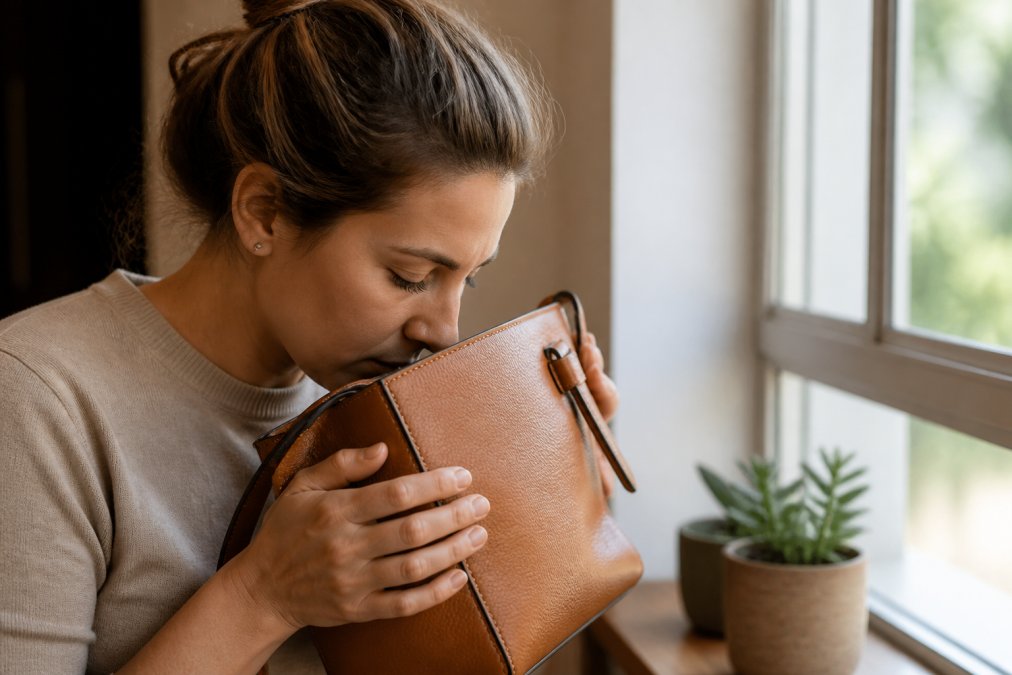
Step 1: Get Close and Inhale Deeply
Bring the item to your nose and take a full, deliberate breath to let the scent reach your olfactory receptors fully, picking up complexity and depth.
Step 2: Notice the Complexity of the Aroma
Real leather has layers, earth, wood, slight sweetness, or animal hide notes. This complexity is a hallmark of genuine leather.
Synthetic materials smell flat, just plastic with no complexity, layers, or variation.
Step 3: Test Multiple Areas of the Item
Smell different parts, interior, exterior, seams, handles, as different areas experience different processing and aging levels.
Identifying Synthetic Materials and Plastic Odors
Synthetic leather exists in several forms. Each has a recognizable smell that distinguishes it from genuine leather.
Polyurethane and Vinyl: The Telltale Chemical Scents
Polyurethane (often labeled as PU leather) smells distinctly chemical. The odor is sharp and artificial. Many people describe it as "new plastic smell" or "off-gassing." This smell comes from volatile organic compounds (VOCs) released as the material breaks down slightly over time.
Polyurethane is designed to mimic leather. It looks similar in many cases. But the smell gives it away immediately. The scent is unmistakable once you know what to expect.
Vinyl has a similar chemical odor, though sometimes slightly different in character. It smells like PVC plastic, harsh, synthetic, and unpleasant. Vinyl is cheaper than polyurethane and degrades faster, but the smell is equally telling.
Both materials will eventually stop smelling as strongly as the off-gassing process completes. But in the first weeks or months, the chemical smell is pronounced and unavoidable.
Faux Leather and Its Distinctive Plastic Smell
Faux leather is a catch-all term for any synthetic material designed to look like leather. The smell varies depending on what the material actually is, but it's always chemical and artificial.
Some faux leather products smell like plastic bags. Others smell like vinyl flooring. None smell like genuine leather, warm, organic, and complex.
The plastic smell of faux leather is one of its biggest giveaways. While manufacturers work to reduce this odor, they haven't solved it completely. The material itself is fundamentally plastic-based, so the smell is inherent.
Why the Smell Test Alone Isn't Enough
The smell test is powerful, but it has limitations. Understanding these limitations helps you make a complete assessment.
Olfactory Fatigue and Environmental Factors
Your nose adapts quickly to smells. This is called olfactory fatigue (pubmed.ncbi.nlm.nih.gov). If you smell leather for more than a few minutes, your ability to detect the scent diminishes significantly. You stop noticing it.
This means you can't rely on smell alone if you're evaluating an item over an extended period. Your perception will change.
Arizona — Long Bifold Genuine Leather →
Environmental factors also matter. A leather item stored in a humid warehouse might smell different than one stored in a dry climate. A bag that's been in a smoky environment will carry those smells. Temperature affects how strongly odors are released into the air.
These variables don't change whether the leather is genuine. They just change how it smells in that moment.
Combining the Smell Test With Visual and Touch Inspection
The best approach uses multiple senses. Smell gives you important information, but combine it with what you see and feel.
Look for natural imperfections in the leather's surface. Genuine leather has variations in grain pattern and minor flaws. Synthetic materials are often too uniform.
Feel the texture. Real leather is supple and flexible. It has a grain structure you can feel with your fingertips. Synthetics feel plastic-like, even if they look similar.
A complete assessment uses smell plus visual inspection plus touch. Together, these three tests give you high confidence in your evaluation.
How to Spot Fake Leather Beyond Smell
Testing leather requires multiple methods. Here's how to evaluate beyond smell alone.
Visual Inspection: Looking for Natural Imperfections
Genuine leather shows variation. The grain pattern isn't perfectly uniform. You'll see natural imperfections, slight discoloration, minor marks, variations in texture. These aren't flaws; they're proof of authenticity.
Synthetic leather is manufactured, so it's often too perfect. The grain pattern repeats. The color is uniform. The surface is flawless. This uniformity is actually a red flag.
Look closely at the edges and seams. Real leather shows the natural hide underneath. The color might be slightly different at the edges because that's the raw material. Synthetics have a uniform appearance throughout because they're made from a single material.
The Touch Test: Texture and Grain Patterns
Run your fingers across the surface. Genuine leather has a pore structure, tiny openings in the hide that you can feel. The texture is organic and slightly irregular.
Synthetic materials feel smoother and more plastic-like. They might feel cool to the touch initially, while genuine leather warms up quickly as it absorbs heat from your skin.
Press on the leather. Real leather is supple and flexible. It yields to pressure and bounces back. Synthetics feel stiff or artificially flexible.
Feel the inside of the item. Genuine leather typically has a suede-like interior or a natural fabric backing.
The Water Absorption Test
Place a small drop of water on an inconspicuous area of the leather. Real leather absorbs water because it's a porous material. The water will soak in and darken the leather slightly.
Understanding the 'Genuine Leather' Label Trap
The term "genuine leather" on a label doesn't always mean what you think it means. Understanding labeling standards helps you avoid confusion.
Benefits of Genuine Leather Goods
Understanding why genuine leather is superior helps you appreciate the investment.
Durability and Longevity
Genuine leather lasts decades with proper care. The material becomes more supple and beautiful over time. A well-made leather bag can outlast multiple synthetic alternatives.
Patina Development and Aging
Genuine leather develops a patina, a darkening and softening that happens naturally over time. This is one of the most beautiful aspects of real leather ownership.
Breathability and Flexibility
Genuine leather breathes. It allows moisture and air to pass through. This makes leather more comfortable to wear and helps it resist mold and mildew.
Common Mistakes to Avoid When Testing Leather
Learning how to tell if leather is real by smell is valuable, but avoid these common errors.
| Testing Method | What to Look For | What It Indicates |
|---|---|---|
| Smell Test | Warm, organic, complex aroma | Likely genuine leather |
| Visual Inspection | Natural grain variation, imperfections | Authentic material |
| Touch Test | Supple, flexible, porous texture | Real leather characteristics |
| Water Absorption | Water soaks in and darkens leather | Genuine, porous material |
| Label Check | Specific tanning method mentioned | Higher quality product |
Frequently Asked Questions
Can fake leather smell like real leather?
Fake leather can mimic some aspects of genuine leather smell, but it typically carries chemical odors from polyurethane or vinyl that genuine leather doesn't have. Synthetic materials often smell plastic-like or chemical-heavy, while real leather has a natural, complex aroma. Faux leather manufacturers sometimes add fragrances to mask plastic odors, which can fool a quick sniff. Combine the smell test with visual inspection and texture checks to confirm authenticity.
What are the benefits of genuine leather goods?
Genuine leather offers superior durability, lasting years or decades with proper care, while developing a rich patina that adds character over time. Unlike synthetic materials that crack and peel, real leather is breathable and flexible, adapting to your body and use patterns. Handcrafted genuine leather pieces from artisans like those at Lunas Artisanal Shop combine quality with cultural heritage. Real leather's natural aging process makes each piece unique.
Does genuine leather have a smell?
Yes, genuine leather has a distinctive natural aroma that varies based on tanning method. Vegetable-tanned leather smells earthy and organic, while chrome-tanned leather has a subtler, more processed scent. The smell comes from the animal hide and natural oils used in manufacturing. Fresh leather often smells stronger, and the aroma mellows over time. This natural scent is one of the sensory markers that distinguish real leather from synthetic alternatives like polyurethane or vinyl.
How can I tell the difference between real and synthetic leather?
Use multiple sensory tests: smell for natural aroma versus chemical odors, touch for supple texture and grain patterns unique to animal hide, and look for natural imperfections like scars or color variations. Real leather absorbs water, while synthetics repel it. Genuine leather has visible pore structure and develops patina with age. Check labels carefully, 'genuine leather' doesn't guarantee quality. Handcrafted pieces from reputable artisans offer transparency about materials and manufacturing, making authentication easier.