

Table of Contents
- Understand Your Leather Type Before Softening
- How to Soften Stiff Leather Bags with Natural Oils
- Choose the Right Leather Conditioner for Bags
- How to Break in a New Leather Purse Safely
- Mechanical Softening: Massage, Stretching, and Conditioning Agents
- Why Handcrafted Leather Purses Require Proper Care
- Common Mistakes That Damage Leather Bags
- When to Seek Professional Leather Conditioning Services
- Frequently Asked Questions
Last Updated: September 28, 2026
Understand Your Leather Type Before Softening
Learning how to soften stiff leather bags starts with identifying what type of leather you're working with. Different leather types respond differently to conditioning methods, and using the wrong approach can cause permanent damage.
Full-Grain vs. Chrome-Tanned Leather
Full-grain leather retains the hide's natural surface and develops a rich patina over time. It has a fibrous structure that absorbs oils and moisture naturally, responding well to gradual conditioning.
Chrome-tanned leather is processed with chromium salts, making it softer and more flexible from the start. It breaks in faster than full-grain but is less durable. Full-grain requires patience; chrome-tanned responds quickly to conditioning agents.
To tell which type you have, check your bag's documentation or look at the back of the leather. Full-grain shows natural grain patterns and imperfections. Chrome-tanned leather appears more uniform and consistent.
Vegetable-Tanned Leather and Its Break-In Period
Vegetable-tanned leather is processed using tannins from tree bark and starts stiff but softens beautifully with use and conditioning. The break-in period typically takes weeks or months as fibers gradually relax and become more supple.
Stiff vegetable-tanned leather is a sign of genuine craftsmanship, not poor quality.
How to Soften Stiff Leather Bags with Natural Oils
Natural oils penetrate the leather's fibrous structure and restore suppleness without harsh chemicals. The right oils hydrate the material while maintaining its protective surface finish.
Mink Oil and Coconut Oil Applications
Mink oil is a popular conditioning choice that mimics natural oils found in animal hides, absorbs deeply into fibers, and adds water resistance while softening.
To apply mink oil:
- Use a soft cloth or applicator pad
- Apply a thin, even coat across the entire bag
- Work in circular motions to help the oil penetrate
- Let the bag sit for 24 hours before use
- Buff away excess oil with a clean cloth
Testing Products on Hidden Areas First
Always test any conditioning product on a hidden area (inside pocket or flap underside) before applying it everywhere. Wait 24 hours and check for discoloration, sticky residue, texture changes, or adverse reactions. This prevents ruining a bag you love.
Choose the Right Leather Conditioner for Bags
A proper leather conditioner balances hydration with protection using natural oils like mink, lanolin, or jojoba oil, avoiding silicones or waxes that build up. Apply every 3-6 months for regular use. The goal is maintaining moisture balance: too little causes drying, too much risks oversaturation.
How to Break in a New Leather Purse Safely
Breaking in a new leather purse doesn't mean forcing it. The process works best when you combine gentle use with targeted conditioning.
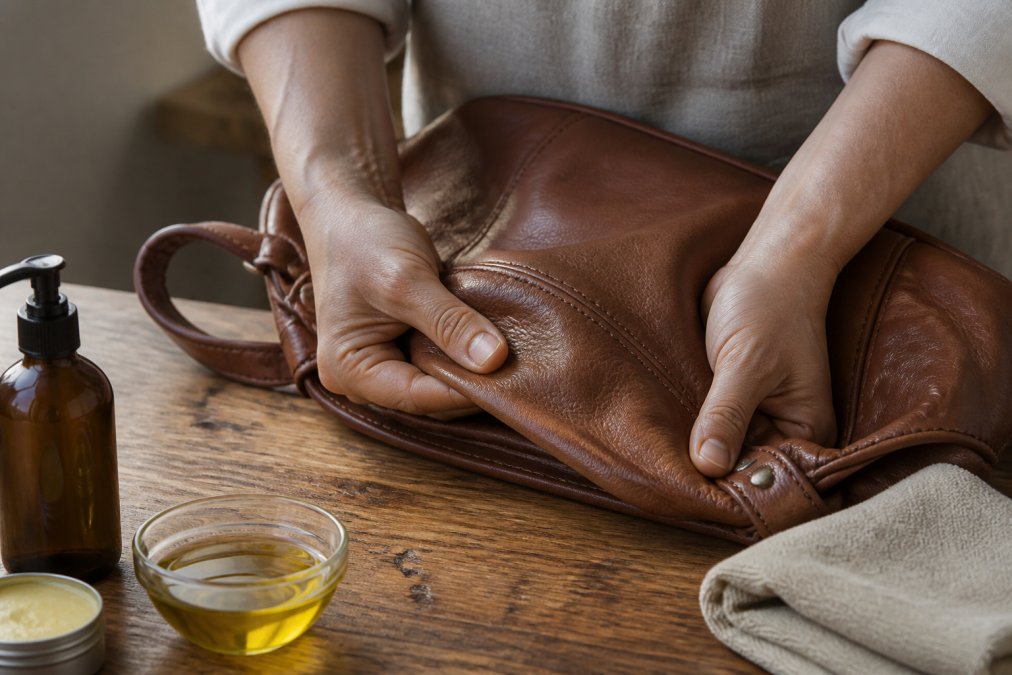
Massage and Stretching Techniques
Gentle massage helps relax the leather fibers without causing damage. Use your hands to work the material, focusing on stiff areas.
Moisture and Hydration Methods
A damp cloth encourages leather fibers to relax. Dampen a soft cloth with room-temperature water, wring out excess, wipe the bag, and air dry naturally. Repeat 2-3 times over a week. Never soak leather; the goal is gentle hydration, not saturation.
Mechanical Softening: Massage, Stretching, and Conditioning Agents
Combine mechanical methods with conditioning agents: massage for 5-10 minutes, apply conditioner, stretch stiff areas gently, and let absorb for 24 hours. Repeat weekly. Mechanical action helps conditioner penetrate deeper. Focus on high-stress areas like handles, corners, and fold lines.
Why Handcrafted Leather Purses Require Proper Care
Handcrafted leather purses are investments in quality and craftsmanship. Unlike mass-produced bags, each piece has unique characteristics that develop over time. However, softening stiff leather involves a real trade-off that many guides ignore: the more aggressively you soften leather, the more you risk compromising its shape retention and structural integrity.
The Softening vs. Structure Trade-Off
When you condition leather, you're adding moisture and oils that make fibers more pliable. This is desirable for comfort and flexibility. But leather's stiffness also serves a purpose, it holds the bag's shape, supports the structure of handles and straps, and prevents sagging over time.
- Handle elongation: Straps and handles that stretch permanently and no longer sit at their original length
- Loss of structure: Sides and panels that sag or collapse inward, especially in structured totes or satchels
- Creasing: Permanent fold lines in areas that should remain flat
- Reduced load capacity: Leather that's too soft may not support weight as effectively, causing the bag to deform under normal use
Finding the Balance: Softness Without Sacrifice
The goal is gradual softening that improves wearability without destroying the bag's engineered structure. This means:
- Condition in moderation: Apply oils and conditioners every 3-6 months, not weekly. More frequent conditioning accelerates softening but increases structural risk.
- Focus conditioning on high-contact areas: Concentrate on handles, corners, and fold lines where comfort matters most. Leave structured panels (like the body of a tote) less frequently conditioned.
- Use lighter conditioning agents for structured bags: Mink oil and heavier conditioners penetrate deeply and soften aggressively. For bags where structure is critical, consider lighter alternatives like lanolin or jojoba oil, which hydrate without over-softening.
- Monitor for warning signs: If handles start to elongate noticeably, or if the bag's sides begin to sag, reduce conditioning frequency immediately. The damage may be reversible if caught early.
Long-Term Structural Integrity and Patina Development
Genuine leather develops character as it ages. A handcrafted leather purse will show subtle color changes and develop a patina that reflects your personal style and use patterns. This natural aging is different from over-conditioning damage, patina is a surface phenomenon, while structural loss is internal.
Common Mistakes That Damage Leather Bags
Understanding what not to do is just as important as knowing what to do. Many people accidentally damage their bags through well-intentioned but harmful methods.
Heat Application and Drying Mistakes
The biggest mistake is using heat to speed up drying. This includes:
- Hair dryers
- Radiators
- Direct sunlight
- Ovens or microwaves (yes, people try this)
Heat causes leather to shrink, crack, and become brittle. The damage is often permanent. Always air dry leather naturally in a cool, shaded area.
Repairing Damage from Extreme Methods
If you've already damaged leather through heat or harsh chemicals, repair is possible but limited. Extreme damage like deep cracks or severe shrinkage may require professional restoration.
Common damage from extreme methods:
- Cracking from heat exposure
- Discoloration from harsh oils
- Brittleness from dehydration
- Staining from untested products
When to Seek Professional Leather Conditioning Services
Professional leather conditioning makes sense in specific situations. These specialists have expertise and products that go beyond home care.
Seek professional help when:
- Your bag has significant stiffness that home methods haven't improved
- The leather shows signs of damage like cracks or severe discoloration
- You want expert assessment of the leather type and condition
- The bag has sentimental or financial value worth protecting
- You're uncertain about the best approach for your specific leather
Professional services typically include:
- Thorough cleaning of the leather surface
- Deep conditioning with professional-grade products
- Assessment of damage and recommendations
- Restoration work for specific issues
- Long-term care guidance
| Care Method | Best For | Time Required | Frequency |
|---|---|---|---|
| Natural oils (mink, coconut) | All leather types | 5-10 minutes | Every 3-6 months |
| Leather conditioner | Regular maintenance | 10 minutes | Every 3-6 months |
| Massage and stretching | Breaking in new bags | 5-10 minutes | 2-3 times weekly |
| Damp cloth hydration | Gentle softening | 5 minutes | 2-3 times over one week |
| Professional conditioning | Significant stiffness or damage | Varies | As needed |
Frequently Asked Questions
Can Vaseline help soften leather?
Vaseline can soften leather temporarily, but it's not ideal for bags. Petroleum-based products can clog leather pores and trap moisture, potentially leading to mold growth or rancid conditions over time. Natural oils like mink oil or coconut oil are safer choices that condition the leather fibers while allowing the material to breathe. Always test any product on a hidden area first.
What household item softens leather best?
Coconut oil is one of the safest household options for softening leather bags. Apply a small amount with a soft cloth, working it into the leather fibers in circular motions. Glycerol mixed with water also works well for hydration. Avoid olive oil, which can become rancid. Whatever you use, test on an inconspicuous spot first and allow the leather to dry naturally without heat.
How long does it take to break in a new leather purse?
Most leather bags require 2-4 weeks of regular use to break in properly. The break-in period allows the leather fibers to relax and develop suppleness naturally. Handcrafted leather purses with full-grain or vegetable-tanned leather may take longer to soften than chrome-tanned alternatives. Speed up the process by massaging the bag gently and using a leather conditioner, but avoid forcing the leather too quickly, which can cause permanent damage.
Is it safe to use olive oil on leather bags?
Olive oil can soften leather initially, but it carries risks. Over time, olive oil can become rancid, creating an unpleasant smell and potentially damaging the leather fibers. It also tends to darken leather and can attract dust. Mink oil and coconut oil are better alternatives because they condition without the rancidity risk. If you do use olive oil, apply sparingly, test on a hidden area first, and monitor the bag for any odor or discoloration.