

Table of Contents
- Cowhide vs Full Grain Leather: A Quick Comparison
- What Is Cowhide Leather?
- What Is Full Grain Leather?
- Key Differences: Durability, Grain Structure, and Natural Markings
- How to Identify Genuine Leather and Spot the Difference
- Understanding the Leather Patina Process and What It Means
- Handcrafted Leather Purses Benefits: Why Artisanal Quality Matters
- Which Type Should You Choose?
- Frequently Asked Questions
Last Updated: September 23, 2026
Cowhide vs Full Grain Leather: A Quick Comparison
When you're shopping for leather goods that'll actually last, the difference between cowhide and full grain leather matters more than most people realize. At Lunas Artisanal Shop, we work exclusively with genuine leather, and understanding these distinctions helps you make smarter purchases. The choice between cowhide vs full grain leather determines not just durability, but how your piece will age, feel in your hands, and develop character over years of use.
Here's what separates them: full grain leather retains the hide's complete outer layer with all its natural markings intact, while cowhide refers to the raw material itself, the hide from a cow, which can be processed into various grades. This distinction matters because processing method, not just the animal source, determines quality and longevity.
| Characteristic | Cowhide | Full Grain Leather |
|---|---|---|
| Hide Layer | Can be any grade (full, top, split) | Uses complete outer layer |
| Natural Markings | Often removed or corrected | Preserved as-is |
| Durability | Varies by processing | Exceptional, improves with age |
| Patina Development | Limited or none | Rich patina over time |
| Price Range | Budget to mid-range | Mid to premium |
| Best For | Everyday basics, budget-conscious buyers | Investment pieces, heirloom quality |
What Is Cowhide Leather?
Cowhide simply means leather sourced from a cow's hide. But here's where confusion sets in: cowhide doesn't describe quality, it describes the animal source. That same cowhide hide can be processed into full grain, top grain, or split leather depending on how manufacturers handle the tanning process and which layers they use.
When a tannery receives a raw cowhide, they have choices. They can preserve the entire hide's grain structure, or they can sand away imperfections and apply corrected grain finishes. Many commercial cowhide products use buffing and sanding techniques to create uniform surfaces, removing the hide's natural character in the process. This makes production faster and cheaper, but it sacrifices authenticity.
At Lunas Artisanal Shop, our cowhide pieces like the Tangamandapio No. 4 Artisanal Cowhide Satchel use genuine cowhide with hand-tooled details and natural hair-on leather panels. This approach honors the hide's character rather than hiding it.

What Is Full Grain Leather?
Full grain leather is the highest grade of leather because it uses the complete outer layer of the hide, the corium, without removing the epidermis or surface grain. This means all the natural markings, pore visibility, and fiber density remain intact. It's the leather equivalent of keeping all the original features that make something authentic.
When you run your fingers across full grain leather, you feel the hide's actual texture. Those scars, variations in grain structure, and natural imperfections aren't flaws, they're proof of authenticity. The fiber integrity of full grain leather is superior because no buffing or sanding has compromised the tensile strength of the outer layers.
Full grain leather develops patina beautifully. Over months and years, it darkens, softens, and gains character. This patina process isn't damage, it's the leather responding to oils from your skin, exposure to light, and the natural aging of the material. That's why vintage full grain leather pieces often look better than new ones.
The grain structure of full grain leather also means superior breathability and suppleness. The leather adapts to your body, your hands, your lifestyle. It doesn't crack or peel because the complete fiber structure remains intact. This is why full grain leather commands higher prices and why pieces made from it become heirlooms.
Key Differences: Durability, Grain Structure, and Natural Markings
Full grain leather wins on durability because it retains complete fiber density and tensile strength. The hide's natural grain structure acts as a protective system, scars and marks distribute stress across the material rather than concentrating it at weak points. When cowhide is buffed and sanded to remove imperfections, you're removing the very features that give leather its strength.
Natural markings tell the story. Full grain leather preserves every scar, brand mark, and variation from the animal's life. These aren't defects. They're evidence that you own genuine leather from a real animal, not a synthetic imitation. Cowhide products often use embossing or corrected grain finishes to create uniformity, which looks cleaner but lacks authenticity.
The patina development is where full grain really shines. As you use full grain leather, it absorbs oils and darkens gradually. The grain becomes more pronounced. Creases and wear marks develop character rather than looking like damage. This transformation happens because the complete fiber structure remains stable. Cowhide products treated with surface finishes don't develop the same patina, the finish prevents direct contact between your skin and the leather.
Abrasion resistance favors full grain as well. Because the complete outer layer remains intact, the leather can withstand friction without the surface finish wearing away. Split leather and corrected grain products wear through faster because the protective layer is thinner or artificial.
Abril Cowboy Boots in Cowhide Leather →
How to Identify Genuine Leather and Spot the Difference
Start with the smell test. Genuine leather, especially full grain, has a distinctive, natural scent. It's not perfumy or chemical-heavy. Cowhide products with heavy surface treatments often smell synthetic or waxy. Vegetable-tanned full grain leather smells earthy and rich.
Look at the edges. Cut edges on genuine leather show the actual hide structure, you'll see layers and fibers. Cowhide products sometimes have sealed or painted edges that hide what's underneath. Full grain leather makers often leave edges raw or lightly finished because they're proud of the material.
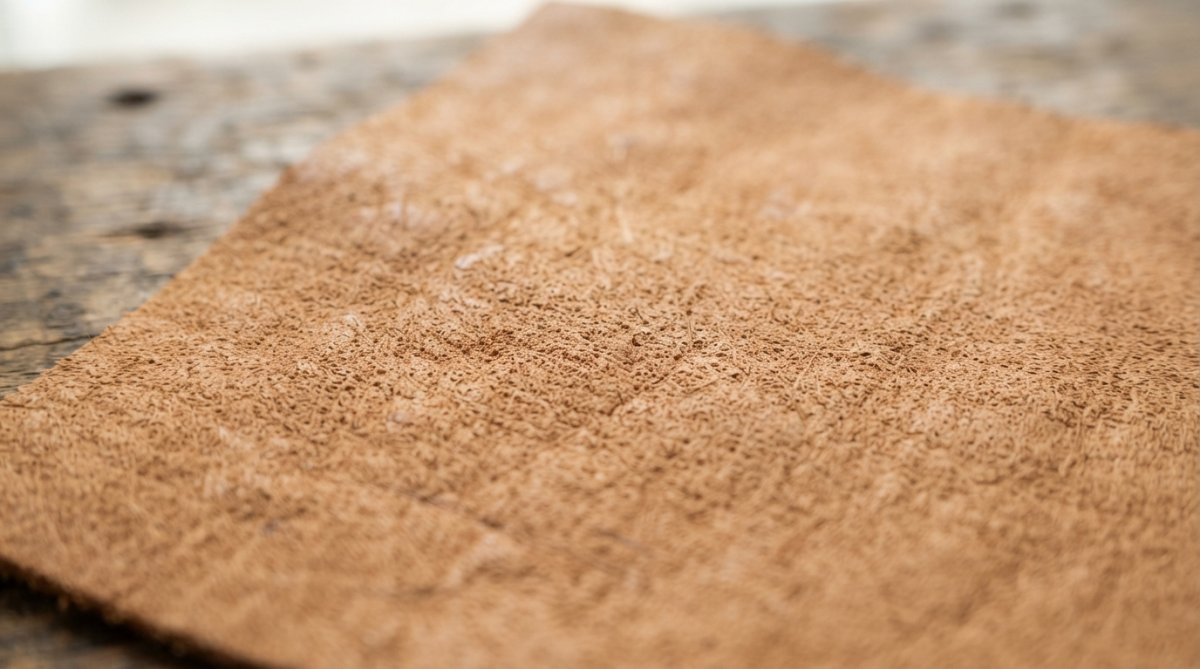
Check for pore visibility and natural imperfections. Full grain leather shows the hide's actual pores in irregular patterns. These aren't flaws, they're proof the leather is real. If the surface is perfectly uniform with no variations, you're likely looking at corrected grain or embossed cowhide. Real hides are never perfectly uniform.
Feel the flexibility and suppleness. Genuine full grain leather bends and moves naturally. It's not stiff or plastic-feeling. Cowhide with heavy surface finishes can feel rigid because the finish prevents the leather from moving naturally. Bend a corner and release it, full grain leather bounces back smoothly. Lower-quality cowhide might crease or show stress marks.
The backing also matters. Full grain leather products often show the raw hide on the back or inside. This is intentional, it proves the entire piece is genuine leather, not just a veneer over synthetic material.
Understanding the Leather Patina Process and What It Means
Patina is what happens when full grain leather ages beautifully. It's the darkening, softening, and deepening of color that occurs through use and exposure. This process takes months or years, and it's entirely natural, not something you apply or force.
Handcrafted Leather Purses Benefits: Why Artisanal Quality Matters
Handcrafted leather pieces differ fundamentally from mass-produced items. When artisans make leather goods by hand, they select hides individually, assess the grain and character, and work with the material's natural properties rather than against them. This approach requires skill, time, and genuine care for the final product.
Which Type Should You Choose?
Choose full grain leather if you want a piece that lasts decades and improves with age. Full grain is the investment choice. It costs more upfront, but the cost-per-wear drops dramatically over years of use.
Frequently Asked Questions
Is cowhide leather the same as full grain leather?
No. Cowhide refers to the animal source, while full grain describes how the leather is processed. Full grain leather retains the entire hide's surface, including natural markings and grain structure, offering superior durability and patina development. Cowhide can be processed as full grain, top grain, or corrected grain, depending on the buffing and finishing methods applied. The key difference lies in how much of the hide's natural fiber integrity remains intact.
Why does full grain leather cost more than other types?
Full grain leather preserves the entire corium layer and natural surface, which requires no corrective buffing or embossing. This means fewer processing steps, less waste, and higher-quality raw hides. The tensile strength and abrasion resistance are superior because the fiber density remains uncompromised. Additionally, full grain develops a unique patina over time, adding value and character that compensates for the higher initial investment through decades of use.
Does cowhide leather develop a patina over time?
Yes, genuine cowhide leather develops patina, but the rate and appearance depend on the processing method. Full grain cowhide ages beautifully, deepening in color and developing a rich, burnished appearance. Top grain or corrected grain cowhide may show less dramatic patina because the surface finish and buffing alter how the leather absorbs oils and light. Handcrafted leather purses benefits from this natural aging process, making each piece uniquely yours as it matures with regular use and care.
How can you tell if a handbag is made from full grain leather?
Examine the surface for natural markings, scars, and visible grain patterns. Full grain leather shows imperfections because the epidermis is never sanded away. Run your hand across it, you'll feel texture variation and slight irregularities. Check the edge: full grain shows the actual hide thickness and natural fiber color. Smell genuine leather, it has a distinctive, organic scent. Look for pore visibility across the surface. If the leather feels uniformly smooth and plastic-like, it's likely corrected grain or synthetic. Handcrafted pieces from artisan makers typically display these authentic characteristics.
What's the difference between top grain and full grain leather?
Top grain leather has the epidermis (top layer) removed and the surface sanded and buffed, then often embossed with an artificial grain pattern. This removes natural markings and imperfections but sacrifices some durability and breathability. Full grain retains the entire hide surface, including the corium and all natural characteristics. Full grain has superior tensile strength, fiber density, and develops authentic patina. Top grain is more uniform in appearance but won't age as richly. For long-term durability and character, full grain is the stronger choice.