

Table of Contents
- Why Ethical Fashion and a Tight Budget Can Coexist
- Step 1: Run a Cost Per Wear Calculation Before You Buy
- Step 2: How to Build a Capsule Wardrobe That Saves Money
- Step 3: Thrift, Consign, and Swap Before You Buy New
- Step 4: Spot Greenwashing and Verify Real Ethical Claims
- Step 5: Budget Frameworks That Keep Clothing Spending in Check
- The Benefits of Artisan-Made Leather Goods for Your Wardrobe
- Mend, Repair, and Make What You Own Last Longer
- Frequently Asked Questions
Last Updated: September 22, 2026
Why Ethical Fashion and a Tight Budget Can Coexist
Learning how to shop for ethical fashion on a budget starts with one mindset shift: ethical fashion is not a luxury category. It is a planning habit. At Lunas Artisanal Shop, we watch shoppers assume that fair wages, natural fibers, and artisan craft always carry a premium price. Sometimes they do. But the total cost of a poorly made garment, worn twice and tossed, is usually higher than one well-made piece worn for years.
Step 1: Run a Cost Per Wear Calculation Before You Buy
A cost per wear calculation is simple: divide the item's price by the number of times you expect to wear it. A $70 bag worn 200 times costs 35 cents per wear. A $25 bag worn 10 times costs $2.50 per wear. The cheaper bag loses.
The Simple Formula and a Real Example
Use this formula before every purchase:
Cost per wear = Price ÷ Estimated number of wears
Ask yourself three questions:
- How often will I realistically use this?
- Will it survive that many uses?
- Does it match at least three outfits I already own?
When a $70 Bag Beats a $25 Bag
A hand-tooled floral tote bag at $70 worn twice a week for two years lands near 34 cents per wear. A $25 bag that peels after three months costs far more per outing. Quality over quantity is not a slogan here. It is arithmetic.

Step 2: How to Build a Capsule Wardrobe That Saves Money
A capsule wardrobe is a small set of versatile pieces you mix and match, usually 30 to 40 items total. Fewer pieces means less spending, less decision fatigue, and more wear per item.
Start with these steps:
- Pull everything out of your closet.
- Set aside anything unworn in the past year.
- Identify your real wardrobe staples: neutral tops, one good jacket, two pairs of well-fitting pants, one quality bag.
- List the gaps, not the wants.
- Buy only to fill gaps.
Step 3: Thrift, Consign, and Swap Before You Buy New
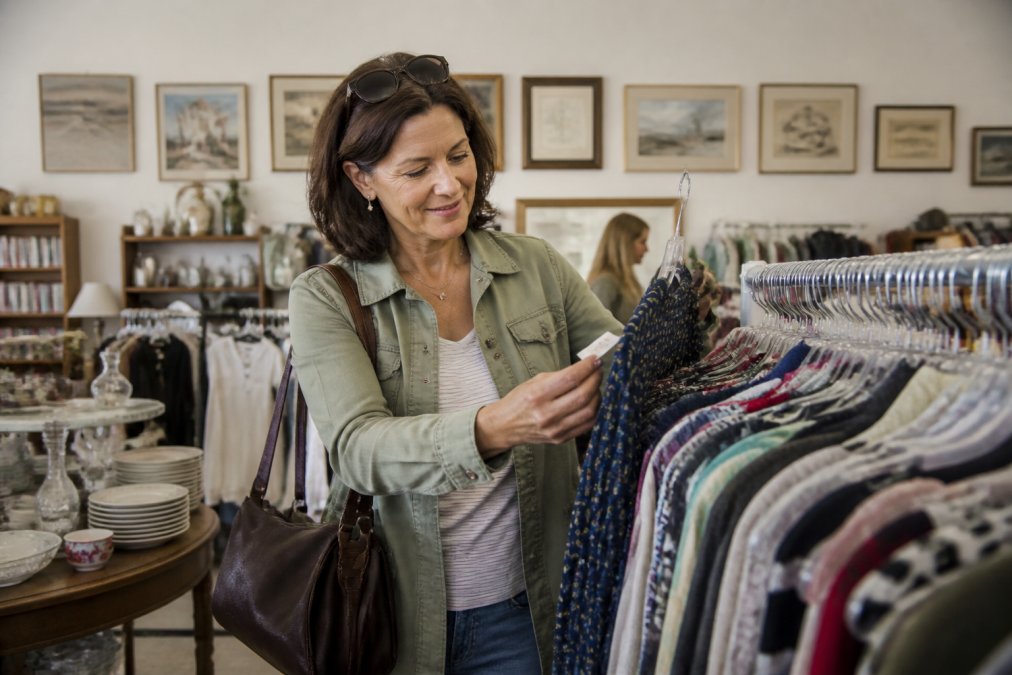
Thrifting, consignment, and clothing swaps are the fastest ways to cut clothing costs while keeping garments in use. Second-hand shopping extends a garment's life and keeps textiles out of landfills. But "go thrifting" is advice everyone gives. The difference between a frustrating afternoon and a wardrobe upgrade is knowing where to look, what to skip, and how to fold repairs into the same trip.
Match the Channel to the Item
Different resale channels are good at different things. Treat them as tools, not as one big bucket:
- Thrift stores, best for everyday basics, denim, workwear, and kids' clothing. Inventory is unpredictable, so go with a list, not a mood.
- Consignment shops, best for higher-end pieces at reduced prices. Staff usually curate, so quality is more consistent and sizing is organized.
- Resale apps and online marketplaces, best when you already know the brand and size you want. Search by brand name plus your measurements rather than browsing.
- Clothing swaps, best for zero-cost turnover with friends, coworkers, or community groups. Bring pieces in good condition and leave with pieces you will actually wear.
- Estate and tag sales, best for older, heavier construction. Pre-1990s garments often use denser fabric and real seams, which makes them excellent candidates for mending and long wear.
What to Inspect Before You Pay
Second-hand pieces are sold as-is, so a two-minute inspection saves a wasted purchase:
- Check the seams and underarms. Hold the garment up to light. Thinning underarm fabric and pulled seams are the first things to fail.
- Test every zipper and button. A stuck zipper is a repair; a missing button is a scavenger hunt.
- Look at the fiber tag. Natural fibers like cotton, wool, linen, and silk tend to hold up and can be mended. High-synthetic blends pill and hold odor.
- Smell it. Mildew and heavy perfume are hard to remove and often hide storage problems.
- Ask about the return window. Many consignment shops allow a short return; most thrift stores do not.
Fold Repairs Into the Same Trip
This is where second-hand shopping and mending connect, and it is the part most guides skip. A garment with a loose hem or a missing button is often priced lower for exactly that reason, and it is usually a ten-minute fix.
- Keep a small repair kit: needles, matching thread in black, white, navy, and gray, a seam ripper, and a few spare buttons.
- Learn three repairs that cover most thrift-store finds: reattaching a button, closing a hem, and patching a small hole from the inside.
- For bigger jobs, replacing a zipper, resoling shoes, altering a jacket, a local tailor or shoe repair shop typically charges a fraction of a new purchase.
Set a Swap Rhythm, Not a One-Time Event
Pre-loved pieces carry no manufacturing footprint of their own. That makes them one of the lowest-impact choices available, and when you pair them with basic mending, they also become one of the cheapest.
Step 4: Spot Greenwashing and Verify Real Ethical Claims
Greenwashing is when a brand markets itself as sustainable without evidence to back it up. It is the single biggest trap for budget-conscious ethical shoppers, because vague claims let a company charge a premium without changing anything about how the garment is made. The fix is not to trust harder, it is to verify.
The Four Greenwashing Patterns You Will See Most
Most misleading claims fall into one of four buckets:
- Vague language. "Eco-friendly," "conscious," "planet-positive," and "green" have no legal definition in apparel marketing. If a claim cannot be measured, treat it as decoration.
- Cherry-picking one feature. A brand highlights a recycled hangtag or a bamboo fiber while ignoring the dye house, the factory wages, or the shipping footprint. One good attribute is not a supply chain.
- Fluffy imagery over data. Leaf logos, earth tones, and models in linen fields are cheap to produce. Supplier lists, factory names, and fiber percentages are not.
- Self-awarded badges. A brand can invent its own "sustainability seal" in an afternoon. A real certification is issued by an outside body with public standards.
Certifications Worth Checking (and What They Actually Cover)
You do not need to memorize every label. Learn the small set that maps to the concerns budget shoppers care about most, worker treatment, fiber content, and chemical use:
- Fair Trade Certified, verifies social, environmental, and economic standards at the factory or farm level, including a premium paid back to workers.
- GOTS (Global Organic Textile Standard), covers organic fiber content plus processing and social criteria across the textile supply chain.
- OEKO-TEX Standard 100, tests finished textiles for harmful substances; useful for what touches your skin, but it does not verify wages.
- B Corp Certification, a company-level assessment of social and environmental performance, accountability, and transparency. It says something about the business, not a specific garment.
- bluesign, focuses on chemical and resource use in textile production.
A 60-Second Verification Routine
Before you buy, run this sequence:
- Find the fiber content. It should be on the product page or the sewn-in label. "Recycled" without a percentage is not a number.
- Look for a supplier or factory list. Brands that publish named factories are far harder to fake than brands that publish a mission statement.
- Search the certification name on the certifier's own site. A logo on a product page is not proof; a listing in the certifier's public directory is.
- Check the return and repair policy. A brand that stands behind a garment for years is signaling something a slogan cannot.
- Read one negative review. Durability complaints tell you more about real-world lifespan than any sustainability page.
Federal Trade Commission guidance on environmental marketing claims
Why This Matters More on a Budget
When money is tight, a greenwashed purchase is a double loss: you paid a premium for a claim that was not verified, and you may still be replacing the item in a year. Verification is free. It costs a few minutes of research and it protects both your wallet and the workers the label claimed to support.
Step 5: Budget Frameworks That Keep Clothing Spending in Check
A clothing budget works best when it is tied to a percentage, not a feeling. Many households use a simple rule: cap clothing at 5% of monthly take-home pay, then split it into needs and wants.
Try this framework:
- 50% needs: replacements for worn-out staples.
- 30% planned upgrades: one quality piece per season.
- 20% flexible: thrift finds, swaps, or repairs.
The Benefits of Artisan-Made Leather Goods for Your Wardrobe
Artisan-made leather goods carry a story you can trace. That combination is exactly what a budget-conscious, ethical wardrobe needs.
The benefits of artisan-made leather goods come down to two things:
- Designs with cultural meaning, not mass-market sameness.
- A purchase that supports real makers, not a middleman.
Mend, Repair, and Make What You Own Last Longer
The cheapest garment is the one you already own. Mending is the most overlooked tool in ethical fashion, and it costs almost nothing.
Basic repairs anyone can learn:
- Reattach a loose button with a needle and thread.
- Patch a small hole before it spreads.
- Replace a worn zipper pull.
Frequently Asked Questions
How can I shop sustainable fashion on a budget without sacrificing quality?
Start with cost per wear instead of sticker price. A $70 artisan-made vegan leather tote can offer a better cost per wear than a $25 fast-fashion bag replaced every four months. Combine that math with thrifting, consignment, and clothing swaps to stretch your budget further while still supporting ethical makers.
How can I identify truly ethical fashion brands?
Look for specifics, not slogans. Ethical brands name their factories or artisan workshops, disclose materials like organic cotton or plant-based vegan leather, and explain fair trade or fair wage practices. Vague terms such as 'green' or 'eco-friendly' without detail are greenwashing signals. If a brand cannot tell you who made the item and where, treat the ethical claim as unverified and keep looking.
What is the 3-3-3 rule for clothing?
The 3-3-3 rule asks you to wear a new item at least three times in the first three weeks, or pause three days before buying. It interrupts impulse purchases and reveals whether a piece fits your actual wardrobe. For ethical fashion on a budget, this rule pairs well with cost per wear calculation: if you cannot picture three wears, the item probably will not earn its price.
How does buying artisan-made goods support ethical fashion?
Artisan-made goods keep money with the makers rather than intermediaries. When you buy a handcrafted piece, you support skilled labor, traditional techniques, and small workshops that often lack the volume to compete with mass production.
Building an ethical wardrobe on a tight budget is not about deprivation. It is about buying less, choosing better, and keeping what you own in use. Lunas Artisanal Shop makes that easier with handcrafted leather accessories built to last, from Frida Kahlo-inspired designs to timeless everyday totes. Shop your story today and build a wardrobe you will actually keep.