

Table of Contents
- What Are Ethical Fashion Certifications?
- Why Ethical Fashion Certifications Matter to Shoppers
- How to Identify Ethical Fashion Brands Through Certification
- Fair Trade Certification Requirements in Fashion
- What to Look for in Artisan-Made Goods
- Spotting Greenwashing and Fake Certifications
- Building Your Certification Literacy
- Conclusion
- Frequently Asked Questions
Last Updated: September 17, 2026
What Are Ethical Fashion Certifications?
Ethical fashion certifications are third-party verification systems that confirm a garment meets specific environmental, social, and labor standards. At Lunas Artisanal Shop, we understand that shoppers increasingly want to know the story behind their purchases.
Certifications come from independent organizations that audit production facilities, review material sourcing, and verify fair wages and working conditions. Unlike self-declared labels, third-party verification creates accountability through inspections, documentation review, and ongoing monitoring.
Understanding these labels matters because the fashion industry produces significant environmental waste and has historically relied on low-wage labor. According to the United Nations Sustainable Development Goals framework, responsible consumption and production are critical global priorities. Certifications help bridge the gap between consumer intent and actual impact by making supply chain accountability visible and measurable.
Why Ethical Fashion Certifications Matter to Shoppers
Certifications reduce greenwashing by introducing independent auditing and public accountability, eliminating guesswork when brands make vague ethical claims.
For conscious consumers, these labels provide concrete evidence that purchasing decisions align with their values. External auditor verification ensures money genuinely supports ethical manufacturing rather than marketing claims alone.
When enough consumers demand certified products, it creates market pressure for entire supply chains to improve.
The Affordability Reality: Why Certified Items Cost More
Certified products cost more for concrete reasons:
- Fair wages increase production costs. Workers earning $8-12 per hour (living wage) versus $2-3 per hour significantly raises per-garment costs.
- Organic materials cost more. Organic cotton costs 15-25% more than conventional cotton due to restricted farming practices and lower yields.
- Third-party auditing adds expense. Fair Trade audits can cost $5,000-15,000 per facility annually.
- Smaller production runs reduce economies of scale. Ethical brands produce in smaller batches for quality control and artisan relationships.
- Supply chain transparency requires infrastructure. Traceability systems, documentation, and dedicated personnel add costs.
Building a Sustainable Wardrobe on a Budget
1. Prioritize certified basics over trends. Invest in certified essentials you'll wear for years; skip certification for trendy pieces you'll discard in a season.
How to Identify Ethical Fashion Brands Through Certification
Look for certification logos on product tags, hang tags, or the brand's website. However, seeing a logo is only the first step, verification is where most shoppers stop, which is exactly where greenwashing succeeds.
The Verification Workflow
-
Identify the certification name. Look for specific certification names on the product or brand website: Fair Trade Certified, Global Organic Textile Standard (GOTS), B Corp Certified, Cradle to Cradle, or Bluesign®. Vague terms like "responsibly sourced" or "made with care" are not certifications, they're marketing language.
-
Visit the issuing organization's official directory. Each major certification maintains a public database:
- Fair Trade International (fairtradeusa.org) maintains a searchable directory of certified producers and brands. Search by brand name or facility location.
- GOTS (Global Organic Textile Standard) operates a public database at gots.org where you can verify certified facilities and licensed brands.
- B Lab (bcorporation.net) publishes all B Corp certified companies in a searchable database with their impact scores.
- Cradle to Cradle Products Innovation Institute (c2ccertified.org) lists all certified products and their certification level (Bronze, Silver, Gold, Platinum).
-
Search for the brand or facility name. Type the brand name or production facility into the official directory. If the brand claims certification but doesn't appear in the official database, the claim is false. Take a screenshot of your search result as proof.
-
Check the certification status and scope. When you find the brand, verify:
- Certification status: Is it currently active or expired? Certifications require annual renewal and audits.
- Scope of certification: Does the certification cover all products or only specific lines? Some brands certify only certain items while others remain uncertified.
- Certification level: Some certifications have tiers. Cradle to Cradle, for example, ranges from Bronze to Platinum. GOTS has standard and organic-only variants.
-
Review the certification details. Click through to see what standards the brand actually meets. For Fair Trade, you'll see whether the certification covers labor practices, community development, or both. For GOTS, you'll confirm the percentage of organic fiber content and chemical restrictions applied.
Avoid these mistakes when verifying certifications:
- Confusing similar names: "Fair Trade Certified" (Fair Trade USA) differs from "Fair Trade International." Check which organization issued the certification.
- Assuming old certifications are current: Always check the current status date.
- Accepting partial certification as full commitment: A brand certifying only 10% of its product line is using certification as marketing, not demonstrating ethical commitment.
- Trusting third-party retailer claims: Verify certification directly with the issuing organization, not the retailer's description.
Fair Trade Certification Requirements in Fashion
Fair Trade Certification focuses on labor rights and community welfare, requiring fair wages, safe working conditions, freedom of association, and no forced or child labor. Regular facility audits verify wage records and safety compliance. For artisan-made goods, Fair Trade certification ensures artisans receive direct payment rather than having margins extracted by middlemen, guaranteeing fair compensation for craftsmanship.
What to Look for in Artisan-Made Goods
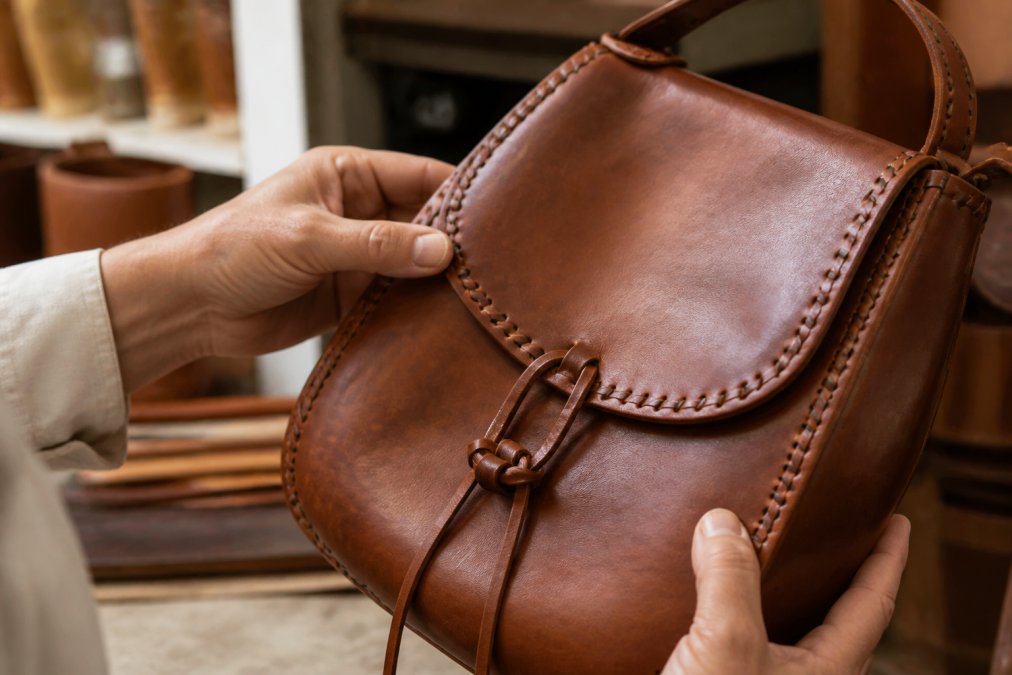
Examine construction quality first: hand-tooled details, careful stitching, and finishing work signal genuine craftsmanship. Handcrafted pieces show intentional variation and individual artisan signatures. For leather goods, look for consistent hand-tooling patterns, quality leather that develops patina, and even, secure stitching.
Spotting Greenwashing and Fake Certifications
Greenwashing occurs when brands use ethical language without substantive practices. Red flags include vague terms like "eco-conscious" or "sustainable" without specific certification backing. Verify certifications independently by visiting the certification organization's official website and searching their directory. Be skeptical of certifications you've never heard of or those created by the brand itself. Industry-recognized certifications like GOTS, Fair Trade International, B Corp, and Cradle to Cradle have established credibility through independent organizations with rigorous standards.
Building Your Certification Literacy
Key terminology: Supply chain transparency traces materials from raw material through finished product. Environmental footprint measures ecological impact. Labor rights certifications verify fair wages, safe conditions, and freedom from discrimination. Circularity refers to designing products for longevity and end-of-life recovery. Develop a simple verification habit: when a brand makes ethical claims, ask for proof by requesting certification documentation and checking independent directories.
Conclusion
Ethical fashion certifications transform vague ethical claims into verifiable accountability. When you understand what certifications mean and how to verify them, you gain the tools to support genuinely ethical brands rather than funding greenwashing. The pieces you choose today, from handcrafted vegan leather totes to artisan-made accessories, reflect your values and influence production practices across the industry.
| Certification Type | Primary Focus | Verification Method | Best For |
|---|---|---|---|
| Fair Trade | Labor rights, fair wages | Facility audits, wage verification | Ensuring artisans earn fair compensation |
| GOTS | Organic fiber integrity | Material testing, supply chain review | Confirming genuine organic materials |
| B Corp | Overall social/environmental impact | Comprehensive business assessment | Brands committed to stakeholder benefit |
| Cradle to Cradle | Product lifecycle design | Material assessment, production review | Circular economy principles |
Frequently Asked Questions
What are the most reliable ethical fashion certifications?
Look for third-party verified certifications like Fair Trade Certified, Global Organic Textile Standard (GOTS), and B Corp certification. These require independent audits and ongoing compliance monitoring. Fair Trade Certified verifies fair wages and labor rights. GOTS confirms organic fiber sourcing and chemical safety. B Corp certification evaluates the entire company's environmental and social impact. Certifications from established bodies carry more weight than brand-created labels, which lack external verification.
How can I tell if a handbag brand is truly ethical?
Check for third-party certifications, supply chain transparency, and specific claims backed by evidence. Ethical brands publish details about where and how products are made, name their manufacturers, and explain their labor practices. Ask: Does the brand disclose factory locations? Do they publish audit reports? Can they trace materials to their source? Vague claims like 'ethically made' without certification or transparency are red flags. Genuine ethical brands welcome questions about their sourcing and production methods.
What does Fair Trade certification mean for fashion accessories?
Fair Trade certification ensures workers earn fair wages, work in safe conditions, and have labor rights protection. For fashion accessories, it covers both the production of raw materials and manufacturing. Fair Trade Certified brands commit to paying above minimum wage, allowing worker organizing, and maintaining safe working conditions. The certification includes regular third-party audits to verify compliance.
How do I verify a brand's sustainability and ethical claims?
Request documentation: ask for certification numbers, audit reports, or links to verifier websites. Legitimate certifications have searchable databases where you can confirm a brand's status. Check the brand's website for supply chain transparency, real ethical brands name specific factories and manufacturers. Look for impact reports showing environmental metrics like water usage or chemical reduction. Visit third-party review sites and industry certifiers. Brands that hide sourcing details or use vague language are likely not genuinely committed to ethical practices.
Are leather goods considered ethical if they have certifications?
Some brands use plant-based vegan leather with certifications ensuring the alternative materials are sustainably sourced. The key is third-party verification of the entire process. Certification type matters: chemical safety and labor certifications are most relevant for vegan leather goods.
What's the difference between sustainable and ethical fashion certifications?
Ethical certifications focus on labor rights, fair wages, and human rights in production. Sustainable certifications emphasize environmental impact: material sourcing, water use, chemical management, and waste. Many certifications address both, Fair Trade covers ethics and some environmental practices, while GOTS focuses on organic materials and chemical safety. A brand might be sustainable (low environmental impact) but not ethical (poor labor practices), or vice versa. True responsible fashion requires both: ethical treatment of workers and minimal environmental harm. Check what each certification actually covers.
How do I spot greenwashing in ethical fashion claims?
Greenwashing uses vague language without proof: 'eco-friendly,' 'sustainable,' or 'ethical' without certification or transparency. Red flags include no supply chain details, no third-party verification, and no specific environmental metrics. Brands that hide factory locations, refuse to answer sourcing questions, or use only self-created labels are likely greenwashing. Genuine ethical brands name certifiers, publish audit results, and explain exactly how they meet standards. Ask for proof: certification numbers, verifier websites, and detailed sourcing information. If a brand can't provide specifics, the claims are probably marketing, not substance.