

Table of Contents
- What Is Vegetable Tanned Mexican Leather?
- The Traditional Tanning Process Explained
- Vegetable Tanned vs Chrome Tanned Leather
- How to Care for Vegetable Tanned Leather
- Patina Development and Aging Over Time
- Why Authentic Mexican Leather Boots and Accessories Stand Out
- Sustainability and Environmental Impact
- How to Identify Genuine Vegetable Tanned Leather
- Frequently Asked Questions
Last Updated: September 18, 2026
What Is Vegetable Tanned Mexican Leather?
Vegetable tanned Mexican leather is leather processed using natural tannins extracted from tree bark, primarily oak and chestnut, rather than synthetic chemicals. This ancient method preserves the hide's protein structure while creating a material that develops a rich patina over time. At Lunas Artisanal Shop, we work exclusively with artisans who use this traditional technique because it produces leather that ages beautifully and lasts for decades.
The tanning process uses organic compounds found in tree bark to transform raw animal hides into durable leather. Unlike chrome tanning, which uses chemical compounds and produces consistent results quickly, vegetable tanning is slower and more labor-intensive. The result is leather with character, pieces that develop unique color variations and surface texture as they age.
Mexican leather craftsmanship has a heritage spanning centuries. The regions of León, Guanajuato, and surrounding areas have perfected vegetable tanning techniques passed down through generations. This leather is prized globally for its quality, durability, and the skill embedded in every piece.
The Traditional Tanning Process Explained
The vegetable tanning process begins when raw animal hides arrive at the tannery. Artisans clean and prepare the hides, removing hair and excess tissue. The hide is then placed in successive vats containing increasingly concentrated solutions of tannins extracted from tree bark. This process can take anywhere from several weeks to several months, depending on the hide thickness and desired firmness.
Each stage of the process matters. The tannins gradually penetrate the protein structure of the hide, cross-linking the collagen fibers. This creates leather that is supple yet durable, with natural flexibility. The longer hides remain in the tanning vats, the firmer and darker the final leather becomes.
After tanning, artisans dry the leather carefully. This stage is critical, improper drying can crack the hide or cause uneven color development. Once dry, the leather is often burnished, a process where the surface is smoothed and polished to enhance the natural grain and create a subtle sheen.
The final step involves conditioning the leather with natural oils. This restores suppleness and prepares the leather for use. The result is finished leather ready to be cut, shaped, and crafted into bags, belts, wallets, and accessories. Mexican artisans often add hand-painted designs or embroidered elements at this stage, transforming functional leather into wearable art.
Vegetable Tanned vs Chrome Tanned Leather
| Characteristic | Vegetable Tanned | Chrome Tanned |
|---|---|---|
| Tanning Agent | Natural tree bark tannins | Synthetic chromium salts |
| Processing Time | 4-12+ weeks | 1-2 days |
| Cost | Higher | Lower |
| Patina Development | Rich aging, color deepens | Minimal change over time |
| Environmental Impact | Biodegradable, minimal chemicals | Chemical waste, disposal concerns |
| Durability | Improves with age | Consistent but doesn't improve |
| Feel | Develops suppleness naturally | Soft initially, may harden |
| Water Resistance | Improves over time | Consistent from start |
Chrome tanning dominates the commercial leather industry because it's fast and affordable. Hides can be processed in days rather than months. The leather is uniformly soft and consistent batch to batch. For mass-produced goods, this efficiency is essential.

Vegetable tanning sacrifices speed for character. The leather isn't uniformly consistent, variations in hide quality, tannin concentration, and environmental conditions create unique pieces. Some consider this a limitation. Others see it as proof of authenticity. A vegetable tanned bag from Lunas Artisanal Shop will never look identical to another, because each one is genuinely handcrafted.
The environmental difference is substantial. Vegetable tanning uses biodegradable materials and produces waste that decomposes naturally. Chrome tanning creates chemical residue that requires careful disposal. For conscious consumers, this distinction matters.
How to Care for Vegetable Tanned Leather
Vegetable tanned leather improves with proper care. Start by understanding that this leather is designed to be used, not preserved in a closet. Exposure to light, air, and gentle handling accelerates the natural patina development.
Clean your leather regularly with a soft, dry cloth. For stubborn marks, use a slightly damp cloth with mild soap and water. Dry immediately with a clean cloth. Avoid harsh chemicals or leather conditioners designed for chrome-tanned leather, as these can interfere with the natural aging process.
Condition your leather every 6-12 months using natural oils. Mink oil or beeswax-based conditioners work well. Apply sparingly and buff away excess. This restores suppleness and deepens the patina. The leather will darken gradually, this is normal and desirable.
Protect your leather from extreme conditions. Prolonged exposure to direct sunlight can fade color unevenly. Excessive moisture can cause the leather to swell and warp. Store in a cool, dry place when not in use. If your leather gets wet, allow it to dry naturally at room temperature, never use heat.
Scratches and scuffs are part of the leather's story. They fade as the patina develops. Deep scratches can be minimized by conditioning regularly. Over time, the leather's character only deepens.
Hand-Painted Vegetable-Tanned Leather →
Patina Development and Aging Over Time
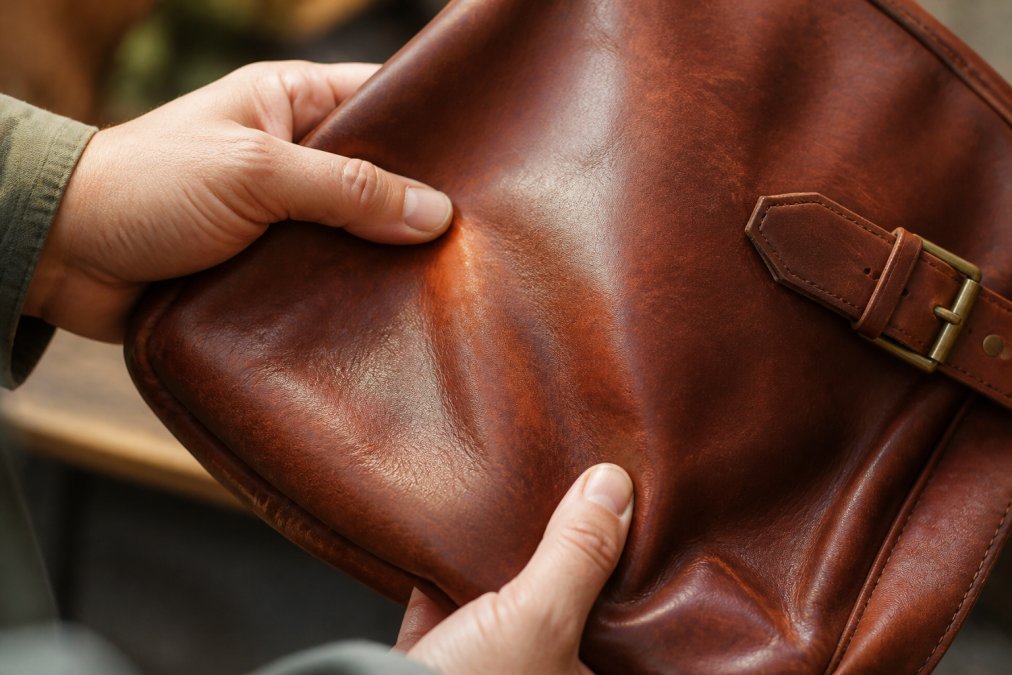
Patina is the visible transformation that occurs as vegetable tanned leather ages. The leather darkens gradually, developing richer tones and subtle color variations. The surface becomes increasingly supple while maintaining structural integrity. This process is what makes vegetable tanned leather special, it becomes more beautiful with use, not less.
The timeline for patina development varies. Within the first few months, you'll notice color deepening, especially in areas that receive the most handling and light exposure. By one year, the transformation is dramatic. The leather develops a warm, honey-like glow. By five years, the patina is rich and complex, with deep color variations that tell the story of how the piece has been used.
Different parts of the same bag age differently. Handles darken faster from hand oils and friction. The body develops a more even patina from light exposure. Creases and folds create natural shadows. This uneven aging is what gives vintage vegetable tanned leather its unmistakable character.
Factors that influence patina development include how often the leather is used, exposure to sunlight, humidity levels, and how well it's maintained. A bag used daily in varied lighting will develop patina faster than one stored indoors. Neither is better, the pace simply reflects the leather's journey with its owner.
The patina is permanent and desirable. It's not damage, it's proof that the leather is genuine and that it's being lived with. A well-aged piece of vegetable tanned leather is often worth more than a new one.
Why Authentic Mexican Leather Boots and Accessories Stand Out
Mexican artisans have earned a global reputation for leather craftsmanship. The combination of natural vegetable tanning, skilled hand-finishing, and cultural design traditions creates leather goods that stand apart from mass-produced alternatives.
The quality begins with hide selection. Mexican tanneries source hides from carefully managed herds, prioritizing animals raised without excessive antibiotics or growth hormones. The hides themselves are thicker and more uniform than those used in many industrial tanneries, resulting in leather that's both supple and durable.
Artisan finishing is where Mexican leather truly distinguishes itself. Rather than applying uniform stains and finishes, Mexican craftspeople hand-paint designs, hand-burnish surfaces, and incorporate traditional motifs. Each piece reflects the artisan's skill and vision.
Sustainability and Environmental Impact
Vegetable tanning is fundamentally more sustainable than chrome tanning. The process uses renewable resources, tree bark, and produces biodegradable waste. Tannin-rich byproducts can be composted or returned to the land. There are no persistent chemical residues to manage.
How to Identify Genuine Vegetable Tanned Leather
Genuine vegetable tanned leather has distinctive characteristics that set it apart from imitations and chrome-tanned alternatives. Learning to recognize these signs ensures you're purchasing authentic, durable leather.
Frequently Asked Questions
What makes vegetable tanned leather different from chrome tanned leather?
Vegetable tanned leather uses natural tannins from tree bark and plant extracts to preserve hides, creating a firm, durable material that develops a rich patina over time. Chrome tanning relies on chemical tanning agents that work faster but produce less character and durability. Vegetable tanned leather improves with age and use, while chrome tanned leather remains relatively unchanged. This makes vegetable tanned leather ideal for heirloom pieces that gain beauty and suppleness as they age.
How do you identify authentic vegetable tanned leather?
Genuine vegetable tanned leather has a distinctive natural grain and develops a warm patina when exposed to sunlight and handling. Look for edges that are sealed naturally without plastic coating, and check for consistent color that deepens over time rather than fading. The leather should feel firm initially but gradually become more supple with use. Many artisans, including those at Lunas Artisanal Shop, use the fire test to guarantee authenticity: genuine vegetable tanned leather will char rather than melt when exposed to flame, proving its natural composition.
Is vegetable tanned leather environmentally friendly?
Vegetable tanned leather is significantly more sustainable than chrome tanned alternatives. It uses organic tannins from renewable tree bark sources like oak and chestnut, reducing chemical pollution and environmental footprint. The tanning process is slower and more labor-intensive, but it avoids toxic chemical runoff that harms waterways. Because vegetable tanned leather is exceptionally durable and ages beautifully, pieces last for decades or lifetimes, reducing waste and the need for replacement. This makes it the preferred choice for conscious consumers prioritizing sustainability.
Does vegetable tanned leather age well?
Yes, vegetable tanned leather ages beautifully. It develops a rich, warm patina that deepens with exposure to sunlight and handling, creating a unique character that improves with time. The leather becomes more supple and flexible while maintaining its firmness and durability. Unlike chrome tanned leather, which remains static, vegetable tanned pieces tell a story through their aging process. This natural transformation is one of the primary reasons artisans and collectors value vegetable tanned leather for heirloom accessories and boots.