

Table of Contents
- What Are Mirasol Accessories Alternatives?
- Plant-Based and Vegan Leather Materials
- Handmade Mexican Leather Bags and Artisan Craftsmanship
- Durability and Longevity of Leather Alternatives
- How to Care for Artisan Leather and Plant-Based Materials
- Environmental Impact and Sustainability Comparison
- Pricing and Value: What You Actually Get
- Conclusion
Last Updated: August 28, 2026
What Are Mirasol Accessories Alternatives?
If you're drawn to handcrafted leather accessories but want options beyond the mainstream market, understanding mirasol accessories alternatives for leather opens up a world of possibilities. The term covers everything from plant-based vegan leather to vegetable-tanned genuine leather, each with distinct characteristics, durability profiles, and ethical implications.

At Lunas Artisanal Shop, we've spent years sourcing and creating alternatives that honor both craftsmanship and sustainability. The reality is that not every alternative performs the same way. Some develop a rich patina over time, while others maintain their original finish. Some are genuinely eco-friendly, while others simply market themselves that way.
The best mirasol accessories alternatives depend on what matters most to you: durability, environmental impact, aesthetic development, or price point.
| Alternative Type | Material Base | Durability | Best For | Price Range |
|---|---|---|---|---|
| Plant-based vegan leather | Cactus, apple, mushroom | 2-4 years | Conscious consumers | $40-$75 |
| Vegetable-tanned leather | Genuine leather | 5-10+ years | Long-term investment | $55-$100 |
| Piñatex (pineapple fiber) | Agricultural waste | 3-5 years | Eco-minded buyers | $50-$80 |
| Recycled synthetic | Reclaimed materials | 2-3 years | Budget-conscious | $30-$60 |
Plant-Based and Vegan Leather Materials
Plant-based leather has evolved dramatically in the past five years into a legitimate alternative to traditional leather. The key distinction: vegan leather isn't a single material. It's a category that includes cactus-derived options, apple-based alternatives, and mushroom leather, each with different aging characteristics, care requirements, and environmental footprints.
Cactus and Apple Leather Options
Cactus leather, often called Desserto leather, originated in Mexico and has gained significant traction among conscious consumers. The material takes dye beautifully, making it ideal for vibrant, hand-painted designs. It's lighter than traditional leather and typically lasts 2-4 years with regular use before showing significant wear. It doesn't develop the character that vegetable-tanned leather does.
Apple leather works similarly, using dried apple pomace from juice production. It tends to feel slightly softer than cactus leather, though both require more careful maintenance than genuine leather and should be kept away from prolonged moisture.
The Hand-Tooled Vegan Leather Floral Tote Bag from Lunas Artisanal Shop ($40) demonstrates what plant-based materials can achieve, featuring hand-tooled embossing with a structured silhouette and removable crossbody strap.

Mushroom Leather and Piñatex
Mushroom leather, created from mycelium, represents the cutting edge of bio-based materials. It's genuinely innovative but still relatively new to mainstream markets, with limited availability and higher pricing.
Piñatex, made from pineapple leaf fiber, is durable, takes color well, and has a distinctive texture. Both materials maintain their original appearance longer than leather, which some prefer but others find less interesting for long-term use.
Handmade Mexican Leather Bags and Artisan Craftsmanship
The craftsmanship distinction matters more than most shoppers realize. Handmade Mexican leather bags represent a specific tradition refined across generations in regions like León, Guanajuato. Each artisan develops their own approach to tooling, painting, and finishing, meaning subtle differences appear between pieces.
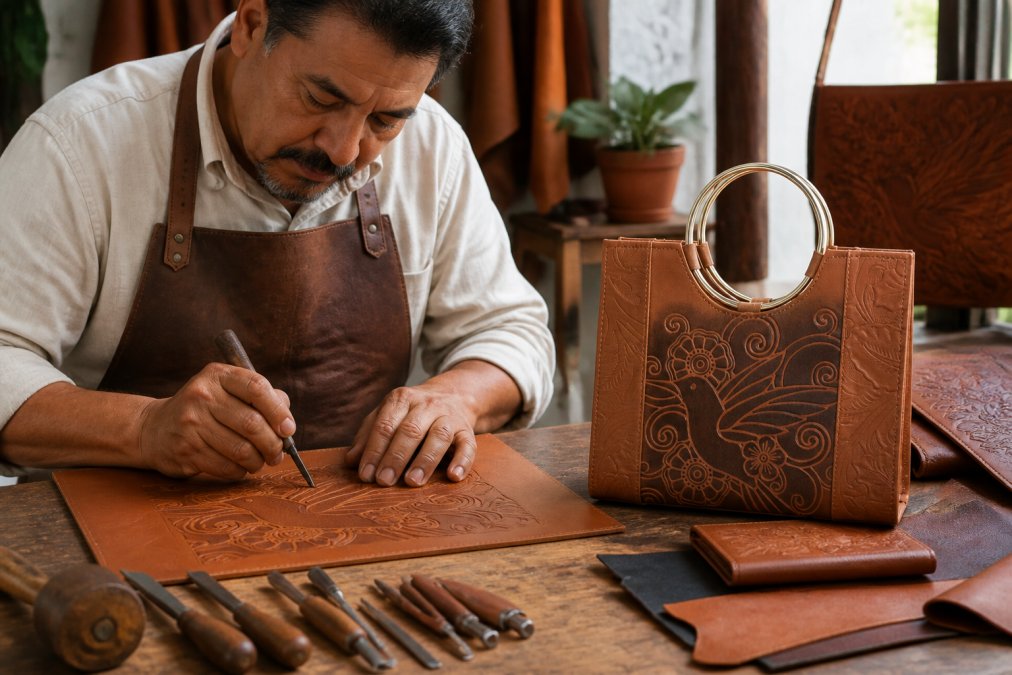
The Chiseled Tote Bag with Inner Pouch from Lunas Artisanal Shop ($70) exemplifies this approach, handcrafted by Mexican artisans from León with striking all-over floral embossing. The Hand-Painted Vegan Leather Tote Bag ($75) takes the concept further, with artists hand-painting floral designs directly onto vegan leather, ensuring no two bags are identical.
The Tangamandapio Minimalist Rectangular Bag in Vegan Leather ($55) is crafted from genuine vegetable-tanned leather from Guanajuato and comes with a "fire test" authenticity guarantee, ensuring genuine, high-quality leather.

Durability and Longevity of Leather Alternatives
Genuine vegetable-tanned leather improves with age, developing a deepening patina through use (peer-reviewed research). Vegan leather maintains its original appearance longer but doesn't develop character the same way. After five years, a well-used vegan leather bag looks similar to a new one, except with visible creasing and wear marks.
The durability timeline varies significantly:
- Plant-based vegan leather (cactus, apple): 2-4 years of regular daily use (peer-reviewed research)
- Vegetable-tanned genuine leather: 5-10+ years, improving with age
- Piñatex and mushroom leather: 3-5 years, minimal aesthetic development
- Recycled synthetic materials: 2-3 years before visible degradation
The Tangamandapio bag's vegetable-tanned leather represents the longest-lasting option at $55, designed to outlast trends and fashion cycles.
How to Care for Artisan Leather and Plant-Based Materials
Care requirements differ dramatically between material types. Genuine vegetable-tanned leather needs regular conditioning every 3-6 months with a quality leather conditioner to replace depleted oils (the American Dental Association). This is the difference between a bag that softens beautifully and one that cracks.
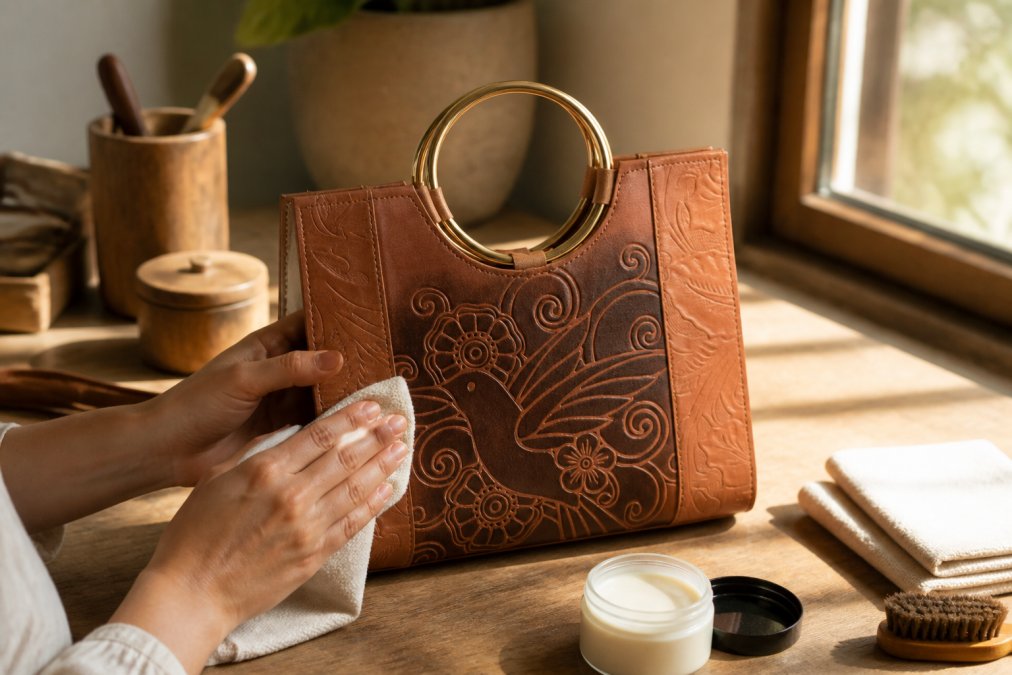
Vegan leather requires gentler handling. Never use oil-based conditioners; instead use plant-based or water-based cleaners specifically formulated for vegan leather. Wipe down the bag monthly with a slightly damp soft cloth and allow it to air dry completely.
Both types should be kept away from direct heat and prolonged sunlight. Store in a cool, dry place with acid-free tissue paper to maintain shape. If vegan leather gets wet, dry it immediately with a soft cloth and allow air circulation. Never use heat sources like hair dryers.
Environmental Impact and Sustainability Comparison
The environmental story is more nuanced than marketing suggests. Plant-based leather isn't automatically better than vegetable-tanned genuine leather. Traditional leather production carries significant environmental costs through cattle ranching and tanning processes. However, vegetable tanning relies on natural tannins from tree bark and is significantly less polluting than chrome tanning.
Plant-based alternatives sound ideal until you examine the full lifecycle. Cactus leather, apple leather, and Piñatex all require energy-intensive processing and dyeing. Their environmental impact hasn't been fully studied across decades like vegetable-tanned leather.
The honest assessment: choosing a bag designed to last 10 years matters more than choosing a vegan material that lasts 3. A vegan leather bag replaced every three years has a higher total environmental impact than a vegetable-tanned piece kept for a decade.
Pricing and Value: What You Actually Get
Price doesn't correlate perfectly with quality, but it does correlate with intention. Artisan-made pieces cost more because labor-intensive work commands a premium. The Hand-Painted Vegan Leather Tote Bag at $75 costs more than the Hand-Tooled Vegan Leather Floral Tote at $40 because each design is hand-painted by an individual artist, a process that cannot be rushed.
The value calculation shifts based on your timeline. If you plan to use a bag for three years, a $40 option is reasonable. If you plan to use it for ten years, a $55-$75 investment becomes cost-effective, spreading to $5-$7.50 per year. Compare this to typical retail alternatives: a $120 mass-produced bag lasting 2-3 years costs $40-$60 annually. The artisan piece, if it lasts longer, becomes the cheaper option over time.
Choosing alternatives to mainstream leather accessories means understanding what you're actually buying. Plant-based materials offer environmental benefits and ethical advantages, but they come with shorter lifespans. Handmade pieces cost more upfront but develop character and prove more durable. Vegetable-tanned leather requires more maintenance but rewards that care with a richer aesthetic over time.
Lunas Artisanal Shop brings together these considerations through pieces designed to last. Whether you choose the Hand-Painted Vegan Leather Tote for its artistic uniqueness, the Chiseled Tote for its balance of craftsmanship and functionality, or the Tangamandapio for its minimalist durability and authenticity guarantee, you're investing in accessories that honor both maker and wearer. Shop your story today with pieces that reflect your values and your commitment to quality that endures.
Frequently Asked Questions
Q: What makes Lunas Artisanal Shop a better choice than Mirasol accessories alternatives?
A: Lunas Artisanal Shop offers 100% genuine handcrafted leather and vegan leather pieces made by Mexican artisans from León, Guanajuato. Each bag features unique hand-painted or hand-tooled designs, with prices starting at $40. Every piece includes provenance details and artisan craftsmanship you can see and feel. The brand prioritizes transparent sourcing and cultural authenticity, ensuring your purchase directly supports real artisans.
Q: How do I identify high-quality artisan leather accessories when comparing handmade Mexican leather bags?
A: Look for several markers: hand-painted or hand-tooled details that show variation (no two pieces identical), genuine leather or certified vegan leather with proper weight and texture, reinforced stitching, and documented maker information. Lunas Artisanal Shop includes specifics like artisan location (León, Guanajuato), material composition (100% vegan leather or vegetable-tanned), and even fire-test authenticity guarantees on certain pieces. Ask for photos of the actual bag you're receiving, not just product samples.
Q: Are vegan leather alternatives as durable as traditional leather for everyday use?
A: High-quality vegan leather from artisan makers lasts years with daily use. Lunas Artisanal Shop's vegan leather bags feature reinforced stitching, and structured silhouettes designed for durability. The key difference: vegan leather develops a subtle patina over time rather than a rich patina like natural leather. With proper care, a $60-75 artisan vegan leather bag can be a durable option.
Q: How should I care for artisan leather to extend its lifespan?
A: Wipe vegan leather monthly with a soft, slightly damp cloth to remove dust. Avoid prolonged direct sunlight and extreme heat. Use a leather conditioner designed for plant-based materials every 3-4 months to maintain suppleness. For vegetable-tanned leather, occasional conditioning with natural oils keeps the material supple. Store bags in dust bags away from moisture. Never use harsh chemicals or abrasive cleaners. Regular, gentle maintenance extends the life of artisan pieces by years.
Q: What is the price difference between Lunas Artisanal Shop alternatives and other handmade brands?
A: Lunas Artisanal Shop prices range from $40-75 for handcrafted vegan and vegetable-tanned leather bags. The Hand-Tooled Vegan Leather Floral Tote starts at $40, the Tangamandapio Minimalist Rectangular Bag at $55, and hand-painted pieces at $75. These prices reflect genuine artisan craftsmanship and direct support to Mexican makers.
This article was written using GrandRanker