

Table of Contents
- What Makes Authentic Leather Different
- Full Grain vs. Genuine Leather: Understanding the Grades
- Durability and Longevity: What You Actually Get
- Benefits of Handcrafted Leather Bags Over Mass Production
- How to Care for Authentic Leather and Extend Its Life
- The Cost-Per-Wear Reality: Is Authentic Leather Worth It?
- How to Identify Real vs. Fake Leather
- Environmental Impact of Leather Grades
Last Updated: August 25, 2026
What Makes Authentic Leather Different
Authentic leather is animal skin treated through tanning to become durable and wearable. Real leather develops character over time, a patina that synthetic materials cannot replicate. At Lunas Artisanal Shop, we work exclusively with genuine leather sourced from tanneries in Guanajuato, Mexico, where artisans have perfected their craft over generations.
Full-grain leather preserves the entire surface of the animal skin, including natural imperfections and grain texture. Top-grain leather has the outer layer buffed or sanded to remove marks, creating a more uniform appearance. Genuine leather refers to leather made from real animal skin but typically from lower-quality hides or byproducts of higher grades.
Authentic leather is breathable, allowing moisture to escape rather than trapping it. The tensile strength of real leather means it resists tearing better than faux leather (astm.org). Over months and years, genuine leather develops a rich patina that tells the story of how you've used it.
Full Grain vs. Genuine Leather: Understanding the Grades
Full-grain leather sits at the top tier, the entire hide with all its natural characteristics intact. Top-grain leather comes next, offering a more uniform look but sacrificing some of the hide's natural character. Genuine leather occupies a lower position, made from the remaining layers after higher grades are separated.
Why the Term 'Genuine' Can Be Misleading
The word "genuine" sounds premium, but in leather classification, it often signals a compromise product. Genuine leather is real animal skin, but it's typically made from lower-quality hides, split leather, or bonded leather (leather scraps glued together with adhesive). Manufacturers use the term because it's technically accurate, yet it allows them to charge premium prices for substantially lower-quality products.
Many consumers see "genuine leather" on a price tag and assume they're getting authentic quality. In reality, you might be purchasing leather that will peel, crack, or deteriorate within a few years. The corrected grain surface of genuine leather often masks poor-quality hide, and the bonding agents used break down with regular use and moisture exposure.
Lunas Artisanal Shop's handcrafted pieces use 100% genuine leather, which is why each bag carries a higher price point but delivers years of durability.

| Leather Grade | Hide Quality | Durability | Appearance | Price Range |
|---|---|---|---|---|
| Full-grain | Entire hide, all imperfections visible | 10+ years | Develops rich patina | Premium |
| Top-grain | Buffed surface, uniform look | 7-10 years | Consistent finish | Mid-to-premium |
| Genuine | Lower-quality hides or split leather | 2-4 years | May peel or crack | Budget-to-mid |
| Bonded leather | Scraps glued together | 1-2 years | Deteriorates quickly | Budget |
Durability and Longevity: What You Actually Get
When you invest in authentic leather, you're buying longevity. Full-grain leather bags routinely last 10-15 years with proper care (peer-reviewed research). Top-grain leather typically delivers 7-10 years of reliable use. Genuine leather often fails within 2-4 years because the lower-quality hide and adhesive bonds break down under regular stress (peer-reviewed research).
The durability difference comes down to the hide's inherent strength and the tanning process. Higher-grade leather comes from prime sections of the hide where the fiber structure is densest. These fibers provide natural tensile strength that resists tearing and puncturing. Lower-grade hides have weaker fiber density, which is why genuine leather bags often show wear in handles and bottom corners long before a full-grain bag would.
Handcrafted pieces add another durability layer. Hand-stitched details, like those on Lunas Artisanal Shop's Arizona wallet, distribute stress more evenly across seams. A single broken stitch on a machine-sewn bag can unravel quickly. On a hand-stitched piece, individual stitches are independent, so one failure doesn't cascade into a larger problem.
Environmental exposure also affects longevity. Genuine leather's porous surface absorbs moisture, which can lead to mold or mildew if not dried properly. Full-grain leather's natural oils provide some water resistance, and the tighter fiber structure sheds moisture more effectively.
Benefits of Handcrafted Leather Bags Over Mass Production
Handcrafted leather bags offer distinct advantages that mass-produced alternatives cannot match. Each piece is made by a single artisan or small team, which means quality control happens at every step.
Hand-stitching creates stronger seams than machine stitching because the artisan can adjust tension based on the leather's thickness and the stress the seam will endure. Machine stitching follows a preset pattern regardless of material variations. On a handcrafted bag, the artisan responds to the unique characteristics of each hide and adapts the construction accordingly.
Personalization is another handcrafted advantage. The hand-chiseled scale texture on the Escama satchel is worked entirely by artisan hands, meaning each piece has unique depth and variation. This is proof of authenticity and human creativity.

When you buy a handcrafted leather bag from artisans in León, Guanajuato, your money supports skilled craftspeople and their families directly. Mass-produced leather goods typically flow through multiple middlemen, with the actual maker receiving a fraction of the retail price.
Artisanal bags also age more gracefully. The patina that develops on a full-grain leather bag made by hand reflects genuine use and time. A handcrafted piece, properly maintained, can be passed down, something rarely true for mass-produced alternatives.
How to Care for Authentic Leather and Extend Its Life
Proper maintenance separates a leather bag that lasts three years from one that lasts three decades. Keep it clean, keep it dry, and condition it regularly.
Cleaning genuine leather requires minimal effort. A soft, slightly damp cloth removes surface dust and dirt. For stubborn marks, a leather-specific cleaner applied with a soft cloth works well. Avoid harsh chemicals or abrasive scrubbing. Let the bag air dry naturally, never use heat sources like hair dryers or radiators.
Conditioning is the most important maintenance step. Every 6-12 months, apply a leather conditioner using a soft cloth in circular motions. This replenishes the natural oils that tanning removes and prevents the leather from becoming brittle. Conditioning also enhances the patina development, deepening the color and character over time.
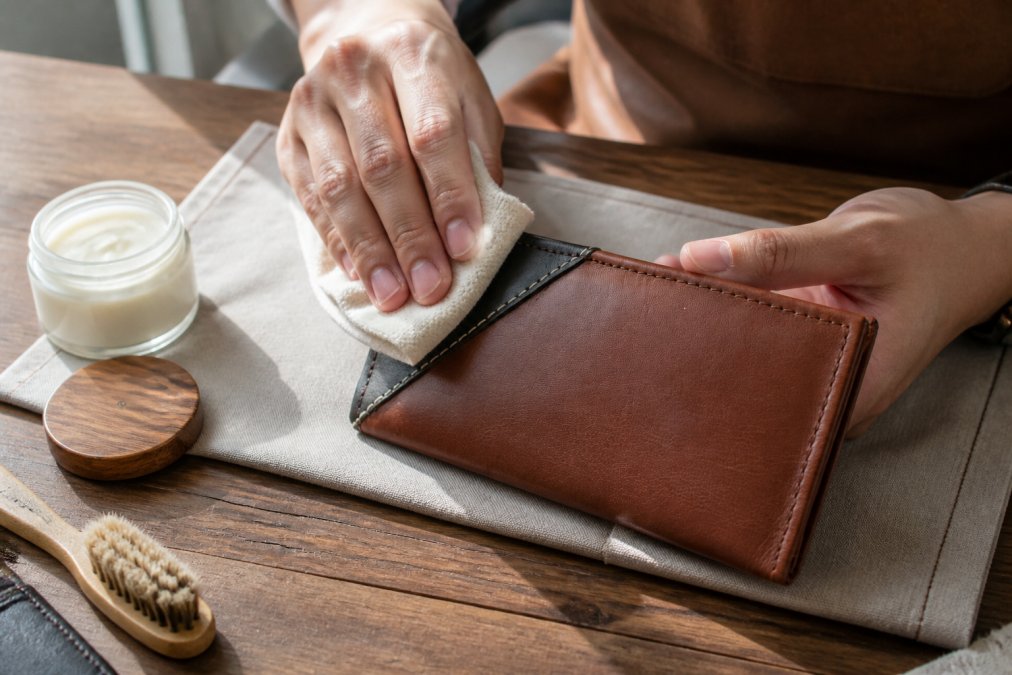
Store your leather bag in a cool, dry place away from direct sunlight. Prolonged sun exposure fades leather and can cause cracking. If your bag gets wet, stuff it loosely with newspaper (change the paper as it absorbs moisture) and let it dry at room room temperature.
For Lunas Artisanal Shop pieces, pay special attention to the hardware. Wipe metal components occasionally with a dry cloth to prevent tarnishing. Creases in the handles are normal and add to the bag's character, they're evidence of use and authenticity, not damage.
The Cost-Per-Wear Reality: Is Authentic Leather Worth It?
A genuine leather bag priced at $30-40 might seem like a bargain until it deteriorates in 18 months. A handcrafted authentic leather bag from Lunas Artisanal Shop, like the Valeri handbag at $65, lasts for years with regular use. At 300 uses per year, the cost-per-wear is a fraction of the cheaper alternative.

Consider the Escama satchel at $65. If you use it 250 days per year for 10 years, that's 2,500 uses, or roughly 2.6 cents per wear. Compare that to a $40 mass-produced satchel that fails after 1,500 uses (roughly 2 years). That's 2.7 cents per wear, and you're replacing it twice, losing time and dealing with the hassle of finding a replacement.
Using a bag you love every day creates value beyond the mathematics. A handcrafted piece with cultural significance, like Lunas Artisanal Shop's designs celebrating Mexican artistry, becomes part of your identity and story.
How to Identify Real vs. Fake Leather
The smell test is immediate and accurate. Genuine leather has a distinctive, natural scent, slightly earthy, sometimes with hints of tanning chemicals. Faux leather often smells plastic-like or chemically artificial.
Run your fingers across the surface. Full-grain leather has a natural grain pattern with slight variations in texture. Faux leather often feels too smooth or plastic-like, almost artificially uniform.
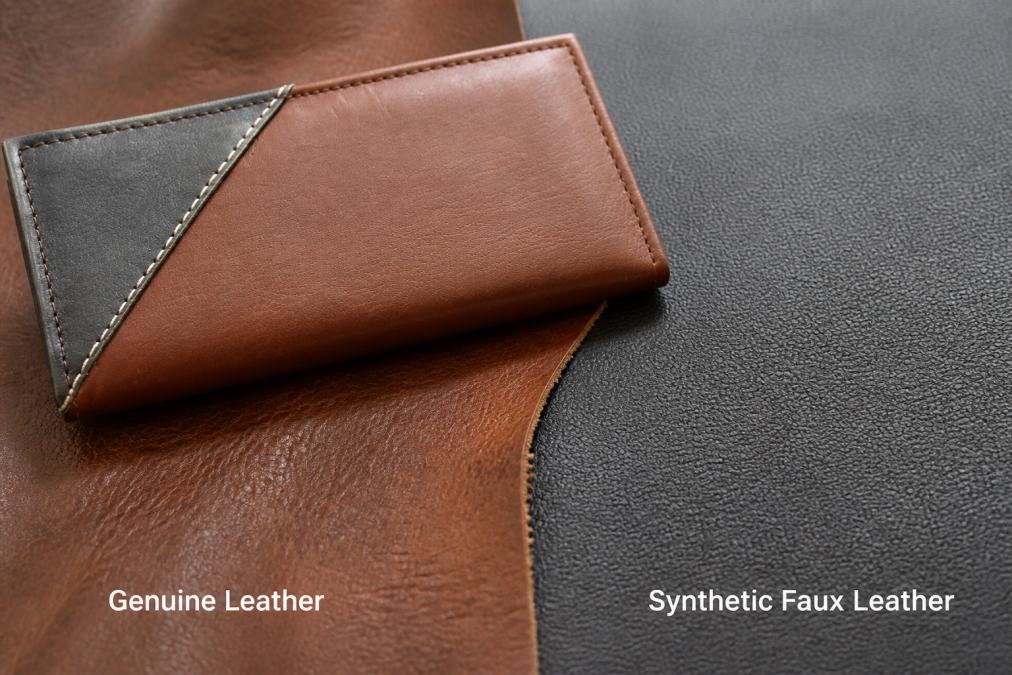
The water test works for quick verification. Place a small drop of water on an inconspicuous area. Genuine leather absorbs water slowly, darkening slightly as moisture penetrates. Faux leather repels water, keeping the surface dry.
Check the price against the quality. If a bag is labeled "genuine leather" and costs $20-30, it's almost certainly bonded leather or split leather. Handcrafted authentic leather requires time and skilled labor. Prices under $50 for supposedly handmade pieces are red flags.
Examine the edges. On genuine leather, cut edges show the hide's natural layers and color. On handcrafted pieces like those from Lunas Artisanal Shop, edges are often finished with care, burnished, sealed, or hand-stitched, showing the maker's attention to detail.
Reputable makers provide clear information about leather grade and origin. Lunas Artisanal Shop specifies that pieces are "100% genuine leather" from Guanajuato, Mexico, and includes details about the artisans and construction methods.
Environmental Impact of Leather Grades
Full-grain and top-grain leather, made from higher-quality hides, use less processing and fewer chemical treatments. Genuine leather and bonded leather require more chemical intervention because lower-quality hides need extensive buffing, correction, and coating.
Longevity is the most important environmental factor. A leather bag that lasts 10 years has a lower total environmental impact than a synthetic bag replaced every 2 years, even if the synthetic bag requires fewer chemicals to produce.
Handcrafted pieces from Lunas Artisanal Shop reduce waste through precision. Artisanal construction minimizes waste because the maker is invested in using every piece of material efficiently.
Vegetable tanning, used by many traditional Mexican tanneries, is more environmentally friendly than chrome tanning but takes longer and costs more. This is reflected in the higher prices of handcrafted pieces made with vegetable-tanned leather.
Supporting artisanal leather producers, particularly those using traditional tanning methods, encourages sustainable practices. When you purchase from Lunas Artisanal Shop, you're supporting craftspeople who work with tanneries committed to quality over volume, which naturally aligns with environmental responsibility.
Is authentic leather worth buying? The answer depends on your priorities, but the evidence strongly favors genuine, handcrafted pieces. When you account for durability, cost-per-wear, emotional value, and environmental impact, authentic leather from skilled artisans outperforms cheaper alternatives across nearly every metric.
The Arizona wallet ($25), Escama satchel ($65), Valeri handbag ($65), Reina backpack ($65), and Leather Bag with Floral Embroidery ($70) from Lunas Artisanal Shop represent the value of handcrafted authentic leather. Each piece is built to last, designed with cultural significance, and made by artisans who take pride in their work. These aren't just purchases, they're investments in quality, durability, and a connection to genuine craftsmanship. Shop your story today with pieces that will age beautifully and carry meaning for years to come.
Frequently Asked Questions
Does 100% genuine leather mean it's real leather?
Yes, 100% genuine leather is real leather, but the term 'genuine' can be misleading in marketing. It refers to leather made from animal hide, but it doesn't specify the quality grade. Full-grain and top-grain are higher quality; genuine leather is lower-grade, often made from leftover hide scraps bonded together. All are real leather, but genuine leather typically lasts 2-3 years with daily use, while full-grain can last 10+ years.
What's the difference between full grain vs genuine leather?
Full-grain leather uses the entire hide with natural imperfections intact, developing a rich patina over time. It's the most durable and breathable. Genuine leather is lower-grade, made from hide scraps bonded with adhesives and finished with synthetic coatings. Full-grain costs more but lasts 3-4 times longer. For handcrafted pieces like those from Lunas Artisanal Shop, the 100% genuine leather used justifies the investment through years of durability.
How long does authentic leather actually last?
High-quality authentic leather, full-grain or top-grain, lasts 10-15 years or more with proper care. Lower-grade genuine leather typically lasts 2-5 years before showing significant wear. Handcrafted leather bags benefit from superior construction and often use higher-grade hides, extending lifespan. Cost-per-wear analysis shows a $65 handcrafted bag worn 3 times weekly for 5 years costs about $0.20 per wear, cheaper than fast-fashion alternatives.
Why is handcrafted leather worth more than mass-produced?
Handcrafted leather bags use superior materials, precise stitching, and artisan techniques that mass production cannot replicate. Each piece is inspected individually, resulting in better structural integrity and longevity. Artisans often select higher-grade hides and apply traditional finishing methods. You're paying for durability, uniqueness, and ethical production, not just a product, but a piece designed to last decades.
This article was written using GrandRanker