

Table of Contents
- What You're Really Paying For: Price vs. Quality Breakdown
- Handcrafted Leather Purses: Why Artisan-Made Costs More
- How to Identify Genuine Leather Handbags: Authentication Guide
- Handcrafted Mexican Leather Bag Prices: What to Expect
- Leather Bag Maintenance Tips: Protecting Your Investment
- Why These Bags Are Worth the Price: Durability and Sustainability
- Conclusion
Last Updated: August 21, 2026
What You're Really Paying For: Price vs. Quality Breakdown
A genuine artisan-made Mexican leather bag costs $55 to $75, while mass-produced alternatives sit at $20 to $30. The difference isn't markup, it's a fundamental gap in materials, production method, and longevity. Handcrafted pieces use full-grain leather, hand-stitching that takes hours per bag, and artisan labor that cannot be automated. Mass-produced bags cut corners on every front: thinner leather, glued seams, and hardware that oxidizes within months.
The real question isn't whether handcrafted Mexican leather bag prices are high, it's whether you're comparing apples to apples. A $65 hand-tooled leather satchel and a $25 synthetic tote solve different problems. One is an investment piece you'll carry for a decade; the other is disposable fashion.
What drives the cost difference: material sourcing, labor intensity, regional craftsmanship standards, and durability expectations. When you buy from artisans in León or Guanajuato, you're paying for skills passed down through generations, not factory efficiency metrics.
Handcrafted Leather Purses: Why Artisan-Made Costs More
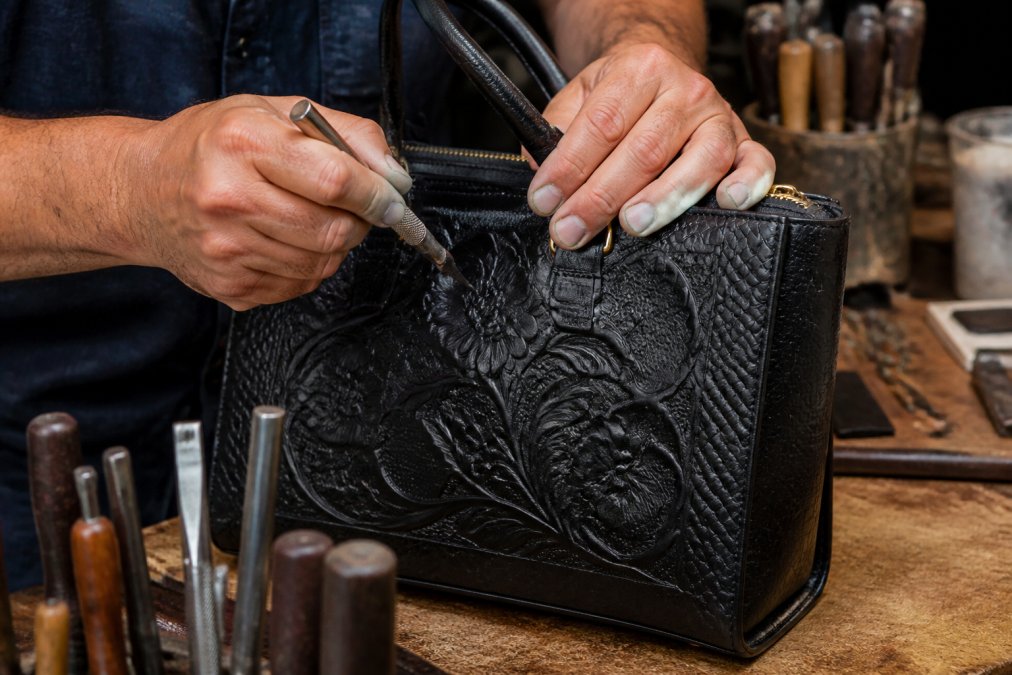
Handcrafted leather purses command higher prices because production is labor-intensive and skill-dependent. Unlike factory assembly lines, artisan leather workers execute the entire creation process, from cutting and treating leather to hand-stitching seams and tooling details.
Artisan Craftsmanship Techniques and Labor
Traditional Mexican leather craftsmanship requires years of training. A skilled artisan must understand leather grain, carve without damaging the hide, and execute hand-stitching with precision machines cannot replicate. A single bag might require 8 to 12 hours of focused labor (peer-reviewed research).
Hand-tooling leather, the carved or embossed designs on pieces like the Escama satchel with its hand-chiseled scale texture, demands artistic skill and physical precision. The artisan uses traditional carving tools to create depth and character. This technique cannot be sped up without sacrificing quality. A factory stamps a design in seconds; an artisan creates unique texture variations that make each piece distinct.

Labor costs in Mexico's leather-working regions remain substantially lower than manufacturing wages in the United States or Europe, making handcrafted Mexican leather bag prices accessible compared to Italian or Spanish alternatives. However, artisans still earn fair wages for their expertise.
The time investment includes quality control throughout production, not just at the end. An artisan inspects leather before cutting, checks stitching as work progresses, and adjusts techniques based on the specific hide's characteristics.
Full-Grain Leather and Hand-Tooled Details
Full-grain leather is the highest quality available because it retains the natural surface of the hide, including grain patterns and natural marks. This material costs more than corrected-grain or bonded leather because it hasn't been artificially treated to hide imperfections.
Hand-tooled details, whether floral embossing, chiseled patterns, or carved designs, add significant labor and material cost. The Mestiza bag's hand-carved floral motifs and the Valeri bag's intricate embossed patterns represent hours of artisan work that machines cannot replicate without losing authenticity.
Hand-tooled leather becomes more beautiful over time as it ages and develops patina. The natural oils in full-grain leather darken and soften with use, creating a lived-in aesthetic that synthetic materials cannot replicate. This aging process is part of what makes handcrafted Mexican leather bag prices a sound long-term investment.
How to Identify Genuine Leather Handbags: Authentication Guide
Not every bag labeled "handcrafted" or "genuine leather" is what it claims to be. Learning to spot the difference protects your investment and ensures your money supports artisans.
Spotting Fake vs. Authentic Leather
Genuine full-grain leather has a distinct smell, earthy, slightly sweet, unmistakably organic. Synthetic leather smells like plastic or chemicals. The surface texture of full-grain leather is irregular, with natural variations in grain pattern and occasional marks from the animal's life. Machine-made "leather" appears uniformly perfect because it's been artificially treated or printed.
Weight and flexibility matter. Full-grain leather is heavier than synthetic alternatives and develops natural flexibility over time. Cheap faux leather feels thin, plasticky, and doesn't age well.
Stitching quality reveals authenticity. Handcrafted bags feature consistent but not robotically perfect stitching. Threads are visible and evenly spaced, with slight variations that signal skilled, human work. Factory-made bags have either perfect machine stitching or visibly weak hand-stitching done to cut costs.
Hardware durability is a practical indicator. Genuine bags use solid metal hardware (brass, gold-tone, or stainless steel) that doesn't tarnish immediately. Cheap hardware oxidizes or breaks within months.
Verifying Artisan Origin and Craftsmanship
Authentic artisan leather goods come with maker identification, a maker's mark, label indicating region of origin (León, Guanajuato), or brand name associated with the artisan or cooperative.
Ask the seller directly: Where is this bag made? Who made it? Legitimate sellers have answers and can describe the production process. Evasive responses are a red flag.
Check leather sourcing. Ask whether the leather is vegetable-tanned (a traditional, sustainable method) or chrome-tanned. Vegetable-tanning produces leather that ages beautifully and lasts longer.
Examine construction details. Genuine handcrafted bags have reinforced seams, secure closures, and thoughtful hardware placement. Straps are attached with multiple stitching passes, not glued. The Escama satchel's reinforced double top handles and internal zippered pocket exemplify the attention to functional detail that signals authentic craftsmanship.
Request photos or videos of the actual production process if buying from an unfamiliar seller. Legitimate artisans often document their work and are happy to share it.
Handcrafted Mexican Leather Bag Prices: What to Expect
Handcrafted Mexican leather bag prices fall into predictable ranges based on size, complexity, and leather quality.
Entry-Level Structured Bags ($55-$65)
The entry-level range includes compact designs made from genuine full-grain leather with basic hand-tooling or embossing. These bags are perfect for everyday use and represent the sweet spot for first-time buyers.
The Chiseled Leather Bag with Internal Compartments and Protected Base sits at $55, offering a compact rectangular design with hand-carved floral detailing and internal organization. The Mestiza bag at $60 and the Caoba satchel at $60 offer slightly larger capacity with more elaborate hand-tooled designs. At this price, you're getting full-grain leather, hand-stitching, and design details that will age beautifully.

These entry-level pieces prove that handcrafted Mexican leather bag prices don't require five-figure budgets. You can own a genuine artisan bag that will last 10+ years for the cost of a few mass-produced alternatives.
Mid-Range Statement Pieces ($65-$75)
Mid-range bags introduce larger silhouettes, more elaborate hand-tooling, and premium hardware finishes.
The Escama satchel at $65 features the striking hand-chiseled scale texture that requires significant artisan skill. Its 12-inch width and structured shape make it suitable for work or travel, while the deep black tone and gold hardware elevate it beyond casual use. The Valeri two-tone handbag at $65 combines color contrast with extra-large main compartment capacity. The Large Handcrafted Leather Tote at $75 offers substantial carrying capacity at 17 inches wide, representing a genuine investment piece. The Leather Bag with Two Compartments and Floral Embroidery at $70 adds organizational features that increase functional value.
Leather Bag Maintenance Tips: Protecting Your Investment
A handcrafted leather bag is a long-term investment, but only if you care for it properly. Genuine full-grain leather improves with age when maintained correctly.
Daily Care and Conditioning
Keep your leather bag away from direct sunlight and high humidity. Prolonged sun exposure fades color and can dry out leather, causing cracking. Store your bag in a cool, dry place when not in use.
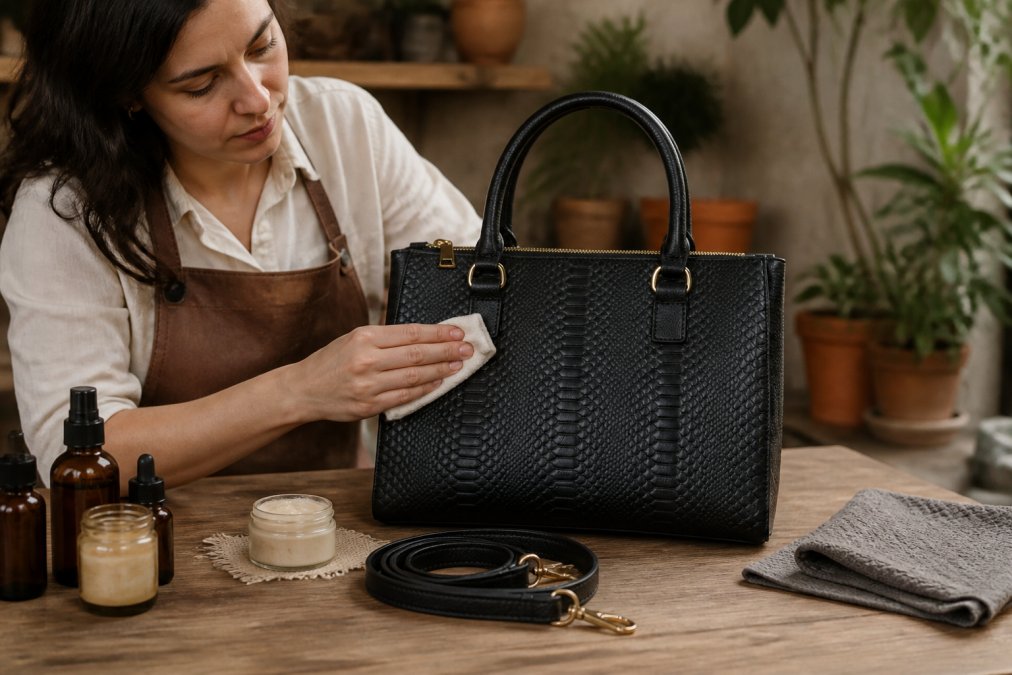
Clean regularly with a soft, dry cloth. Dust and dirt accumulate in creases and can scratch the leather surface. For scuffs or marks, gently wipe with a slightly damp cloth, then dry immediately.
Condition the leather every 3 to 6 months using quality leather conditioner (the FDA). Full-grain leather naturally contains oils, but these deplete over time. Conditioning replenishes these oils, keeping the leather supple and preventing cracks. Apply conditioner sparingly, rub it in with a soft cloth using circular motions, then buff away excess.
Avoid harsh chemicals, alcohol-based cleaners, and excessive water. If your bag gets wet, blot excess moisture and allow it to air-dry at room temperature. Never use heat sources like hair dryers, which can warp and crack leather.
Wipe metal components with a soft cloth to prevent oxidation. If gold-tone or brass hardware develops patina, a gentle polish with a specialized metal cloth can restore shine.
Aging and Patina: What to Expect Over Time
One of the most rewarding aspects of owning a handcrafted leather bag is watching it develop patina, the natural darkening and softening that occurs with age and use.
Full-grain leather develops a richer, deeper color over months and years. Light-colored bags become warmer and more golden. Brown bags darken to deep chocolate or nearly black tones. This color shift adds character that no new bag can replicate.
The leather also becomes softer and more flexible with use. New leather can feel slightly stiff, but regular carrying and conditioning soften it into supple, comfortable material. This process typically takes 3 to 6 months of regular use.
Surface marks and creases are part of the aging story. Scratches and minor dents don't diminish value; they add authenticity. Stitching may develop a slightly worn appearance where straps attach, but quality hand-stitching is durable enough to last decades.
Expect your handcrafted Mexican leather bag to look noticeably different and more beautiful after 2 to 3 years of regular use. This transformation is the reason artisan bags justify their price.
Why These Bags Are Worth the Price: Durability and Sustainability
Handcrafted Mexican leather bag prices reflect not just current craftsmanship but long-term value. A bag that lasts 10 to 15 years costs far less per year of use than a $25 synthetic bag replaced every 18 months.
Durability comes from material quality and construction method. Full-grain leather is inherently stronger than corrected-grain or bonded alternatives. Hand-stitching creates seams that distribute stress across multiple threads, whereas glued seams fail when adhesive degrades. A handcrafted Mexican leather bag will outlast multiple mass-produced alternatives (peer-reviewed research).
Sustainability is another compelling reason. Handcrafted production generates minimal waste compared to factory manufacturing. Artisans use the entire hide, repurposing scraps for smaller items. Full-grain leather is biodegradable and decomposes naturally, unlike synthetic materials that persist in landfills for centuries. Vegetable-tanned leather is processed using plant-based tannins rather than harsh chemicals, reducing environmental impact.
Supporting artisan leather workers preserves traditional craftsmanship and sustains communities in Mexico's leather-working regions. Your money directly supports skilled workers and their families, creating economic incentive to maintain craft traditions. Mexican leather craftsmanship represents centuries of artistic tradition, and each handcrafted piece carries that heritage.
Handcrafted Mexican leather bag prices reflect genuine value that mass-produced alternatives cannot match. Quality full-grain leather, skilled artisan labor, thoughtful design, and lasting durability justify every dollar. A $65 hand-tooled satchel from Lunas Artisanal Shop isn't an expense, it's an investment in a piece that will age beautifully and serve you for years. When you shop for handcrafted leather, you're supporting artisans, preserving tradition, and choosing durability over disposability. That's worth the price.
Frequently Asked Questions
Q: What factors influence the price of handcrafted Mexican leather bags?
A: Handcrafted Mexican leather bag prices reflect several factors: the quality and sourcing of full-grain leather, the complexity of hand-tooled designs, the artisan's skill level, and the time invested in each piece. Bags featuring intricate embossed floral patterns or hand-chiseled scale textures command higher prices because they require skilled labor. Additionally, sustainable leather sourcing, fair wages for artisans, and the cultural heritage embedded in each design contribute to the final price. At Lunas Artisanal Shop, prices range from $55 to $75, reflecting genuine leather and authentic handcrafted techniques.
Q: How can you tell if a Mexican leather bag is authentic?
A: Authentic handcrafted Mexican leather bags display consistent, natural variations in leather texture and color, mass-produced fakes have uniform, plastic-looking finishes. Examine the stitching: genuine hand-stitched bags show slightly irregular, strong seams, while counterfeits have perfectly uniform machine stitching. Check for hardware quality; authentic pieces use solid metal hardware (not flimsy stamped metal), and artisan details like embossed floral patterns should have depth and shadow, not surface-level printing. Ask for proof of origin, legitimate makers like those in León, Guanajuato provide documentation of craftsmanship and material sourcing. Genuine leather also develops a natural patina over time, darkening and gaining character.
Q: Why does hand-tooled leather cost more than mass-produced alternatives?
A: Hand-tooled leather requires skilled artisans to create intricate designs using traditional carving tools. This labor-intensive process cannot be rushed or automated without losing the unique character and depth that define artisan work. Full-grain leather used in handcrafted pieces is more expensive than the bonded or corrected leather in mass-produced bags, and it lasts longer with proper care versus for cheaper alternatives. Additionally, small-batch production means higher per-unit overhead, and ethical sourcing and fair wages for artisans add cost. The premium reflects durability, sustainability, and the irreplaceable skill of human craftsmanship.
Q: How do I care for my handcrafted leather handbag to ensure longevity?
A: Keep your bag away from prolonged sun exposure and humidity, which can fade and crack leather. Clean gently with a soft, dry cloth weekly to remove dust. Condition the leather every 3-6 months with a quality leather cream to maintain suppleness and prevent cracking. Store the bag in a cool, dry place with tissue paper inside to maintain its shape. Avoid overstuffing, which stresses seams and hardware. If your bag gets wet, let it air-dry naturally, never use heat. Over time, genuine leather develops a beautiful patina (darkening and character marks), which is normal and actually increases the bag's aesthetic value. With proper care, a handcrafted leather bag becomes a heirloom.
Q: Are Mexican leather bags considered a good investment?
A: Yes, handcrafted Mexican leather bags are a solid investment for conscious consumers. Unlike mass-produced fashion bags that deteriorate within months, genuine handcrafted pieces improve with age, developing rich patina and character. They hold their value because they're durable (lasting 10-15 years), made from sustainable full-grain leather, and represent authentic cultural craftsmanship. Additionally, supporting artisan communities in Mexico through ethical purchases contributes to cultural preservation and fair-trade economics. While the initial cost is higher ($55-$75 at Lunas Artisanal Shop), the cost-per-wear over years of use is far lower than cheaper alternatives, making them both a financial and ethical choice.
This article was written using GrandRanker