

Table of Contents
- What Is Vegetable Tanned Leather and Why It Matters
- What You'll Need: Tools and Supplies for Leather Care
- Step 1: Daily Maintenance and Cleaning Your Leather
- Step 2: How to Remove Stains from Vegetable Tanned Leather
- Step 3: Best Leather Conditioner for Vegetable Tanned Leather
- Understanding the Vegetable Tanned Leather Patina Process
- Step 4: Protecting Against Water, Moisture, and UV Damage
- Storing Your Vegetable Tanned Leather Properly
- Frequently Asked Questions
Last Updated: October 1, 2026
What Is Vegetable Tanned Leather and Why It Matters
Vegetable tanned leather is leather treated with natural tannins from tree bark instead of chemicals. This process creates leather that ages beautifully, develops character over time, and becomes softer with use. At Lunas Artisanal Shop, many of our pieces highlight vegetable-tanned leather as part of our focus on authentic Mexican craftsmanship and durable, artisan quality.

Vegetable-tanned leather develops a rich patina, natural darkening that makes each piece unique and tells the story of how you use it.
Proper maintenance is straightforward and pays off: vegetable-tanned leather lasts decades and grows more beautiful with age, while cheap leather peels and cracks.
What You'll Need: Tools and Supplies for Leather Care
You need just a few essential tools, no expensive specialty products or complicated equipment:
Essential tools:
- Soft, lint-free cloth (cotton or microfiber works best)
- Horsehair brush for gentle surface cleaning
- Distilled water in a spray bottle
- Natural leather conditioner or salve (see ingredient guidance below)
- Leather wax for water protection
Optional but helpful:
- Soft bristle brush for detailed areas
- Leather cream for deeper conditioning
- pH-balanced leather cleaner
Quality cotton cloths are your most important tool, they last years and cost almost nothing. You genuinely need just three things to start: a cloth, water, and a good conditioner.
What to Avoid: Ingredients That Damage Vegetable-Tanned Leather

Many products marketed as "leather-safe" contain ingredients that interfere with vegetable-tanned leather's natural aging. Understanding what to avoid is as important as knowing what to use.
Silicone-based products: Silicone conditioners create a plastic-like coating that clogs pores, traps moisture, and causes stiffness and cracking over time.
Mineral oils and petroleum products: These cheap fillers sit on the surface, attract dirt, and interfere with tannin oxidation, resulting in uneven aging.
Synthetic waxes and paraffin: Paraffin flakes off and dulls the grain. Natural beeswax or plant-based waxes (carnauba, candelilla) work better with the leather's natural properties.
Harsh chemicals and solvents: Acetone, bleach, and alcohol-based cleaners strip natural oils and cause permanent discoloration. Always check ingredient labels for unrecognizable or proprietary ingredients.
Lanolin-heavy products: Excessive lanolin can over-soften leather and cause stretching. Choose conditioners where lanolin is one ingredient among several, not the primary component.
Fragrance and dye additives: Synthetic dyes can transfer onto clothing or fade unevenly. Stick to unscented, undyed products.
Reading ingredient labels: The best conditioners list recognizable natural ingredients: distilled animal oils, beeswax, plant oils, and natural waxes. Terms like "silicone-free" and "paraffin-free" indicate respect for the leather's natural properties. Quality conditioners cost slightly more upfront but last longer and improve your leather instead of degrading it.
Step 1: Daily Maintenance and Cleaning Your Leather
Daily care takes minutes but makes an enormous difference. Wipe your bag with a dry cloth at the end of each day to remove surface dust and prevent particles from settling into the pores.
For weekly cleaning, spray distilled water onto a cloth (not directly onto leather), wring it nearly dry, then gently wipe the surface to remove oils and sweat buildup.
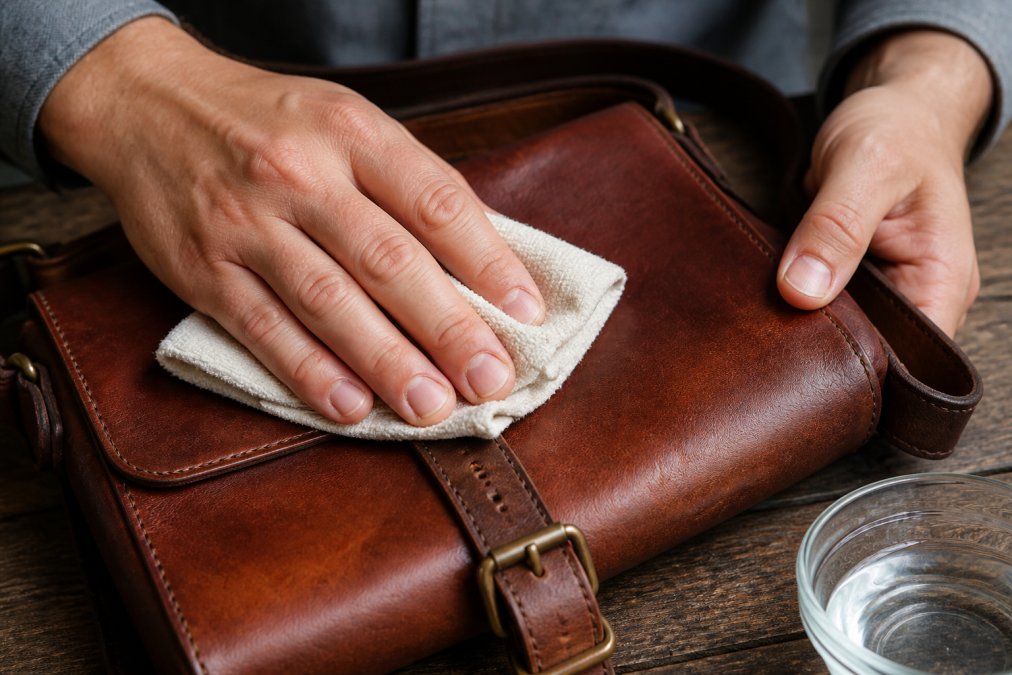
Pay special attention to grip areas where body oils accumulate. Use the horsehair brush on textured areas like embossed designs.
Daily cleaning checklist:
- Wipe with dry cloth after use
- Check for visible dirt or spills
- Address any marks immediately
- Allow leather to air dry naturally
- Never use heat to speed drying
Let leather dry at room temperature; heat or direct sunlight causes cracking and fading.
Step 2: How to Remove Stains from Vegetable Tanned Leather
Most stains on vegetable-tanned leather are removable if you act quickly; the longer a stain sits, the harder it becomes to lift.
For water-based stains (coffee, juice, sweat): Blot immediately with a dry cloth. Use a barely damp cloth with distilled water to gently work the stain outward from the center, preventing it from spreading deeper. Let it air dry completely.
For oil-based stains (sunscreen, makeup, grease): Sprinkle baking soda or talc powder on the stain and let it sit 24 hours. Brush away gently. Repeat if needed. Never use water on oil stains.
For ink or dye stains: These are the trickiest. Blot immediately and avoid adding moisture. A leather professional can sometimes lift these, but prevention is better than cure. Keep pens away from your bag's interior.
Act fast, fresh stains lift easily. Set-in stains become part of the leather's character, though this differs from intentional aging.
Step 3: Best Leather Conditioner for Vegetable Tanned Leather
Most people either skip conditioning or use the wrong products. Your leather needs conditioning to stay supple and prevent cracking. The best conditioner contains natural oils and waxes, distilled animal oils, beeswax, or plant-based alternatives. Avoid silicone-based and heavy synthetic products that clog pores.
How often to condition: Base Schedule
- New leather: condition every 2-3 weeks for the first 3 months
- Regular use (2-3 times per week): condition every 2-3 months
- Heavy use (daily): condition monthly
- Light use (occasional): condition every 4-6 months
- Seasonal: always condition before winter storage
Climate-Specific Conditioning Adjustments
Your local climate dramatically impacts conditioning frequency. Vegetable-tanned leather responds differently to humidity and temperature extremes.
Arid and dry climates (relative humidity below 30%): Dry air causes brittleness and cracking. Increase conditioning frequency to every 4-6 weeks. Watch for stiffness, chalky appearance, or fine cracks, condition immediately when you see these signs. Use a heavier conditioner with higher oil content.
Humid climates (relative humidity above 60%): High humidity traps moisture and risks mold growth. Condition less frequently, every 3-4 months. Use lighter applications and ensure good air circulation in storage areas. If you notice fuzzy growth or musty smell, stop conditioning and address mold first.
Temperate climates (relative humidity 40-60%, moderate temperature swings): These regions allow for standard conditioning schedules.
How to apply conditioner properly:
Signs your leather needs conditioning:
Understanding the Vegetable Tanned Leather Patina Process
Patina is the natural darkening and character development that makes vegetable-tanned leather special. It begins immediately as the leather is exposed to light, air, and handling oils. A five-year-old bag looks richer and more distinguished than a new one.
What creates patina:
- Exposure to light and air
- Natural oils from handling
- Gradual oxidation of the tannins
- Intentional conditioning with oils and waxes
Step 4: Protecting Against Water, Moisture, and UV Damage
Water and sunlight are the two biggest threats to vegetable-tanned leather. Both can cause permanent damage if not managed carefully. The good news is that protection is simple and preventive.
Storing Your Vegetable Tanned Leather Properly
How you store your leather matters as much as how you use it. Poor storage causes damage that's difficult to reverse. The goal is a cool, dry environment with good air circulation.
Storage best practices:
- Keep leather in a dark, cool place away from heat and direct sunlight
- Store in breathable cloth bags, never plastic
- Maintain room temperature between 60-75°F
- Keep humidity between 30-50%
- Never stack heavy items on top of leather goods
- Avoid basements or attics where temperature and humidity fluctuate
Frequently Asked Questions
How often should I condition my vegetable tanned leather?
Condition your vegetable tanned leather every 3 to 6 months, depending on how frequently you use it and your climate. Items in dry environments may need conditioning more often, while pieces in humid climates can go longer between applications. Watch for signs of stiffness or dryness, these indicate it's time to condition. Start with a light application and adjust based on how your leather responds.
What is the best leather conditioner for vegetable tanned leather?
Look for conditioners made with natural oils and waxes that won't clog the leather's pores. Avoid silicone-based products. The best options contain distilled animal oils or plant-based alternatives that maintain the leather's breathability. Test any new conditioner on a hidden area first. Quality matters, cheap conditioners can leave a sticky residue or cause uneven darkening of your vegetable tanned leather.
How do I remove stains from vegetable tanned leather without damaging it?
For fresh spills, blot immediately with a clean, dry cloth, don't rub. For water stains, wipe with a slightly damp cloth and let air dry naturally away from direct heat. For oil stains, sprinkle talc powder or baking soda and let sit overnight, then brush off. For stubborn marks, use a soft horsehair brush in gentle circular motions. Always test your approach on an inconspicuous area first to ensure it won't affect the leather's finish.
Will my vegetable tanned leather develop a patina, and is that normal?
Yes, patina is a natural and desirable part of the vegetable tanned leather aging process. Over time, your leather will deepen in color and develop character marks that reflect its history of use. This patina is what makes artisan leather pieces unique, no two bags age exactly the same. Patina is distinct from damage; it's a beautiful evolution that shows your leather is genuine and well-cared for, not a flaw or sign of deterioration.
Maintaining vegetable-tanned leather takes commitment, but the reward is accessories that grow more beautiful with time. The pieces from Lunas Artisanal Shop are built to last generations when given proper care. Start with daily wiping, add monthly conditioning, and protect against water and sunlight. These three habits form the foundation of leather care that works. Shop your story today with pieces that age into heirlooms rather than fading into closet clutter.