

Table of Contents
- How We Evaluated These Sustainable Leather Bags
- Quick Comparison: Sustainable Leather Bags for Women at a Glance
- 1. Lunas Artisanal Shop: Mexican Handcrafted Leather with Cultural Soul
- 2. Strathberry East/West Mini: Luxury Craftsmanship with LWG-Certified Leather
- 3. Parker Clay Miramar Crossbody: Byproduct Leather, Women-Led Artisan Impact
- 4. Cuyana Classic Leather Zipper Tote: Fewer, Better Things Philosophy
- 5. HYER GOODS Upcycled Leather Belt Bag: Deadstock Leather Reimagined
- 6. O My Bag Audrey Mini: Responsibly Sourced Eco-Leather for Everyday Wear
Last Updated: August 6, 2026
Sustainable leather bags for women have become one of the most searched categories in conscious fashion. The slow fashion movement has pushed shoppers to ask harder questions: Who made this? What tanned the hide? Will it last a decade or fall apart in a season? At Lunas Artisanal Shop, we've spent years sourcing and celebrating bags that honor both craft and planet. This guide covers eight standout picks, from LWG-certified luxury to upcycled deadstock and handcrafted Mexican artisan work.
The biggest mistake shoppers make is treating "sustainable" as a single checkbox. A bag can be vegetable-tanned yet produced with poor labor standards. Another can be made from byproduct leather by women artisans earning fair wages, a completely different story. The framework that matters: materials, production ethics, durability, and traceability.
Quick Picks:
- Best for Cultural Artisanship: Lunas Artisanal Shop - 100% genuine leather, handcrafted Mexican heritage designs
- Best Luxury Investment: Strathberry East/West Mini - LWG-certified leather, handcrafted in Spain
- Best Social Impact: Parker Clay Miramar Crossbody - byproduct leather, women-led Ethiopian artisans
- Best Vegan Alternative: O My Bag Audrey Mini - responsibly sourced eco-leather, supply chain transparency
How We Evaluated These Sustainable Leather Bags
Four criteria drove every pick: material integrity, ethical manufacturing, durability, and supply chain transparency.
Material integrity covers how the leather was tanned and sourced. Vegetable-tanned leather uses plant-based tannins rather than heavy metal chromium compounds, significantly reducing toxic runoff into waterways. Responsibly sourced hides, whether byproduct leather from the food industry or offcuts diverted from landfills, reduce the carbon footprint of each piece.
Ethical manufacturing practices examine who makes the bag and under what conditions. Fair trade certification, living wages, and women-led production workshops signal genuine commitment. Handcrafted production tends to correlate with higher quality control and lower waste per unit.
Durability and longevity is where sustainable leather often beats vegan alternatives. A genuine leather bag lasting 15 years has dramatically lower cost-per-wear than a synthetic bag replaced every two years, even if the synthetic version costs less upfront.
Supply chain transparency means the brand can tell you where the hide came from, who tanned it, and who stitched it. Third-party certifications like the Leather Working Group or Fair Trade USA provide independent verification.
| Criteria | What to Look For | Red Flags |
|---|---|---|
| Material Sourcing | Vegetable-tanned, byproduct leather, LWG-certified | Vague "genuine leather" with no tannery info |
| Production Ethics | Fair wages, artisan workshops, women-led teams | No factory details, no certifications named |
| Durability | Full-grain leather, lifetime warranty, repair programs | Bonded leather, short warranty, no repair option |
| Transparency | Named tanneries, third-party audits, supply chain maps | Marketing claims without verifiable sourcing |
| End-of-Life | Biodegradable materials, take-back programs, circularity | No disposal guidance, non-recyclable components |
Quick Comparison: Sustainable Leather Bags for Women at a Glance
| Brand | Starting Price | Material | Best For | Certification |
|---|---|---|---|---|
| Lunas Artisanal Shop | Visit site for pricing | 100% genuine leather | Cultural artisanship, gift shoppers | Handcrafted artisan |
| Strathberry East/West Mini | $645 | LWG-certified leather | Luxury investment piece | LWG certified |
| Parker Clay Miramar | $198 | Byproduct leather | Social impact shoppers | Women-led artisan |
| Cuyana Classic Tote | $248 | Italian leather | Everyday professional use | Ethical production |
| HYER GOODS Belt Bag | Varies | Upcycled deadstock | Unique, limited-edition | Italian crafted |
| O My Bag Audrey Mini | ~$200-$300 | Eco-leather | Everyday ethical wear | Supply chain transparent |
1. Lunas Artisanal Shop: Mexican Handcrafted Leather with Cultural Soul
Lunas Artisanal Shop is our top pick for sustainable leather bags with genuine artisan credentials. Every bag is made from 100% genuine leather, handcrafted by Mexican artisans whose skills represent generations of traditional craft.
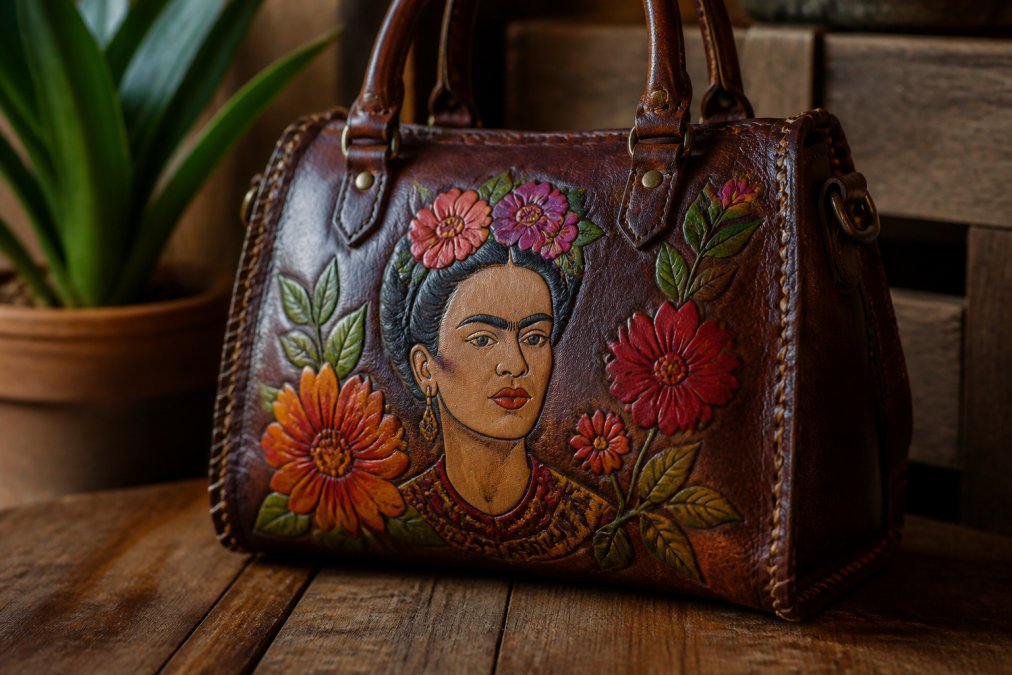
Designs range from vibrant Frida Kahlo motifs to timeless silhouettes suitable for professional environments. Handcrafted Mexican leather goods feature hides selected for character, so natural variations in grain and color are features, not defects. Your bag will be distinct.
Lunas Artisanal Shop is based in Arizona and works directly with artisan communities in Mexico, celebrating cultural heritage as its explicit mission. For gift shoppers seeking something with genuine provenance and story, this delivers on both counts.
Pros:
- 100% genuine leather, not bonded or coated alternatives
- Handcrafted production means each piece has individual character
- Designs range from bold cultural motifs to timeless everyday styles
- Supports Mexican artisan communities directly
Best for: Women who want a bag with real cultural soul and artisan craftsmanship; gift shoppers seeking authentic provenance.
2. Strathberry East/West Mini: Luxury Craftsmanship with LWG-Certified Leather
Strathberry is one of the few luxury brands that passes third-party certification verification. The East/West Mini is handcrafted by Spanish artisans, with each bag requiring a minimum of 20 hours of production time. The leather comes from tanneries certified by the Leather Working Group, an independent body that audits tanneries on environmental performance, chemical management, and water stewardship.
The Leather Working Group's tannery certification standards require tanneries to demonstrate measurable environmental improvements across energy use, water consumption, and waste reduction. LWG certification is one of the most credible ethical leather certification standards available.
At $645, the Strathberry East/West Mini is a genuine investment piece designed for generational longevity. The distinctive bar closure and timeless design resist trend cycles entirely.
Pros:
- LWG-certified leather sourcing with independently verified tannery standards
- Minimum 20 hours of handcrafted production per bag
- Designed for generational longevity
- Exceptional attention to detail and finish quality
Cons:
- $645 starting price limits accessibility
- Limited range of bold designs
Best for: Shoppers treating a bag as a long-term investment; those wanting independently verified ethical leather certification.
3. Parker Clay Miramar Crossbody: Byproduct Leather, Women-Led Artisan Impact
Parker Clay's Miramar Crossbody is made from byproduct leather, hides that would otherwise be discarded as waste from the food industry. This directly addresses the criticism that raising animals solely for hides carries heavy environmental cost. Byproduct leather sidesteps that argument entirely.
The bags are handcrafted by women artisans in Ethiopia in a workshop providing sustainable employment, healthcare, and professional development. Parker Clay publishes supply chain details that let buyers trace their purchase back to the makers. That level of traceability is rare even among brands marketing themselves as ethical.
Starting at $198, the Miramar Crossbody comes with a lifetime warranty, a genuine sustainability signal. The brand expects the product to last and is willing to stand behind it. A lifetime warranty changes how you think about the purchase: this is a bag you repair, not replace.
Pros:
- Byproduct leather minimizes environmental impact without sacrificing quality
- Women-led artisan workforce with documented social benefits
- Lifetime warranty signals genuine durability commitment
- Strong supply chain transparency
Cons:
- Small-batch production means some styles sell out and don't return
- Higher price than fast-fashion alternatives
Best for: Shoppers prioritizing social impact alongside environmental responsibility; those wanting documented supply chain transparency.
4. Cuyana Classic Leather Zipper Tote: Fewer, Better Things Philosophy
Cuyana built its brand around a countercultural idea: buy less. The "fewer, better things" philosophy shapes product development, so the Classic Leather Zipper Tote is designed to be the last tote you buy for years, not a seasonal addition.
The bag is made from Italian leather with a focus on quality and longevity. Cuyana maintains transparent production practices and emphasizes ethical manufacturing throughout its supply chain. The deliberately classic design is the right choice for a bag positioned as a long-term wardrobe anchor.
At $248, Cuyana sits in the accessible luxury tier. For professional use, the Classic Leather Zipper Tote functions as a daily workhorse: structured enough for offices, spacious enough for a full day's carry.
Pros:
- Italian leather with exceptional quality and longevity
- Timeless design that resists trend cycles
- "Fewer, better things" philosophy embedded in product development
- Ethically made with transparent production practices
Cons:
- Limited range of bold designs by design intent
- Higher upfront cost than mass-market alternatives
Best for: Professional women seeking a durable, versatile everyday tote as a long-term wardrobe investment.
5. HYER GOODS Upcycled Leather Belt Bag: Deadstock Leather Reimagined
The fashion industry generates enormous volumes of leather offcuts and deadstock material, most ending up in landfill. HYER GOODS built its brand around that problem. The Upcycled Leather Belt Bag is crafted from luxury leftover and deadstock leather, materials diverted from waste streams and given a second life by skilled Italian artisans.
Every HYER GOODS piece uses material that already exists, which means no new hides, no additional tanning processes, and no incremental carbon footprint from raw material production. Designing products to keep materials in use is one of the highest-impact interventions in reducing fashion waste.
Because HYER GOODS depends on available deadstock, specific colors and materials vary. Each piece is effectively limited-edition. The belt bag format is versatile: wearable as a waist bag or crossbody, extending its use cases.
Pros:
- Upcycled deadstock leather directly reduces fashion waste
- Italian artisan craftsmanship at a high standard
- Versatile wear options extend functional life
- Each piece is effectively limited-edition
Cons:
- Color and material availability varies with deadstock supply
- Not suited to shoppers wanting consistent restock availability
Best for: Eco-conscious shoppers wanting a unique piece with a clear, verifiable circular economy story.
6. O My Bag Audrey Mini: Responsibly Sourced Eco-Leather for Everyday Wear
O My Bag makes supply chain transparency a central product feature. The Audrey Mini is crafted from responsibly sourced eco-leather, produced in small batches to avoid mass overconsumption. The brand publishes detailed information about tanneries, production partners, and material sourcing, enabling independent verification.
The design prioritizes durability and timeless style. The Audrey Mini's adjustable straps and thoughtful interior compartments make it a functional everyday bag. O My Bag's limited US physical retail presence means most purchases happen online, but the brand's transparency materials, including factory visit documentation and material certifications, provide more information than handling a bag in-store.
Pros:
- Responsibly sourced eco-leather with documented supply chain
- Small-batch production avoids overproduction waste
- Timeless design built for slow fashion longevity
- High supply chain transparency
Cons:
- Limited US physical retail presence
- Higher upfront investment relative to fast-fashion alternatives
Best for: Women wanting a daily-use bag backed by genuine supply chain transparency and slow fashion values.
How to Care for Sustainable Leather Bags to Maximize Longevity
Proper care is the final piece of the sustainable leather equation. A well-maintained genuine leather bag can last decades. A neglected one deteriorates in years, defeating the purpose of buying sustainably.
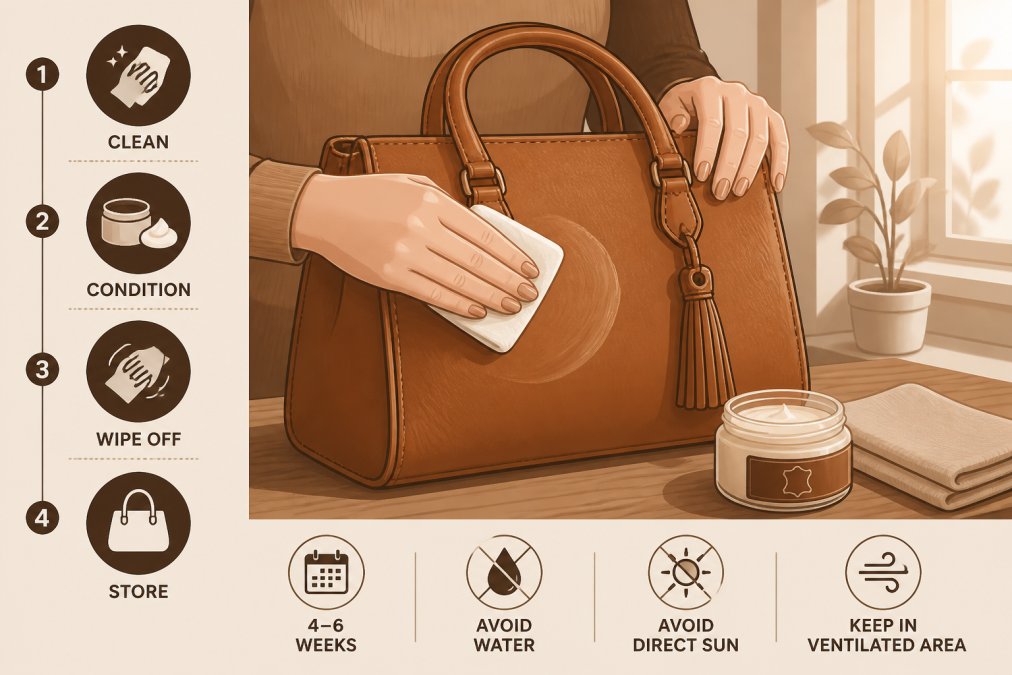
Vegetable-tanned leather's natural tannins make it more responsive to conditioning than chrome-tanned alternatives. It absorbs conditioner readily and ages gracefully when cared for properly.
Core care routine for sustainable leather bags:
- Condition every 3-6 months with a natural beeswax or lanolin-based conditioner. Avoid silicone-based products, which seal the leather and prevent breathing.
- Wipe down after use with a dry or slightly damp cloth. Avoid saturating the leather.
- Store in a dust bag, not plastic. Leather needs airflow to prevent mold and cracking.
- Keep away from direct sunlight for extended periods. UV exposure fades natural dyes and dries out leather.
- Address scratches with a leather balm and soft cloth using small circular motions. Light surface scratches on full-grain leather often buff out entirely.
- For vegetable-tanned leather, allow the patina to develop naturally. The darkening and character that develops over years is a quality signal, not damage.
Genuine leather is biodegradable, though the timeline varies based on tanning method. Vegetable-tanned leather biodegrades significantly faster than chrome-tanned alternatives. When a leather bag reaches the end of its usable life, offcuts and panels can be repurposed for smaller goods, patches, or crafts rather than sent to landfill.
Frequently Asked Questions
Is there such a thing as truly sustainable leather?
Sustainable leather bags exist on a spectrum. The most responsible options use byproduct hides from the food industry (so no animal is raised solely for leather), processed with chrome-free or vegetable tanning methods that reduce toxic runoff, and produced in workshops with verified fair wages. No leather is entirely without environmental impact, but choosing vegetable-tanned, responsibly sourced, or upcycled leather from a transparent brand is meaningfully better than buying mass-produced, chemically tanned alternatives.
What are vegetable tanned leather benefits compared to chrome-tanned leather?
Vegetable-tanned leather uses natural plant-based tannins, oak bark, chestnut, and mimosa are common, instead of chromium salts. The process takes weeks rather than days, which produces a denser, firmer hide that develops a rich patina over time. It is biodegradable at end of life, produces less toxic wastewater, and is safer for the artisans working with it. The tradeoff is a higher price and slightly less water resistance early on, but the durability advantage over years of use makes it a sound investment.
How can I tell if a leather handbag brand is ethical?
Look for third-party verification rather than self-reported claims. Credible signals include Leather Working Group (LWG) certification for tanneries, Fair Trade or B Corp status for the brand overall, and named production workshops with photos or supplier lists. Brands that publish their supply chain, disclose artisan wages, and offer repair or take-back programs are operating with genuine transparency. Vague phrases like 'responsibly made' with no documentation are a red flag for greenwashing.
Does sustainable leather last as long as conventional leather?
High-quality sustainable leather bags, especially those made from full-grain, vegetable-tanned hides, typically outlast conventionally produced bags because the focus is on material integrity rather than speed of production. Brands offering lifetime warranties or repair programs back this up in practice. Vegan leather alternatives vary: plant-based materials like apple or cactus leather are improving, but most still have a shorter lifespan than well-maintained genuine leather, which is worth factoring into a cost-per-wear calculation before buying.
What are the best vegan leather alternatives for women's handbags?
The most eco-conscious vegan leather alternatives currently available use food byproducts or recycled materials. Apple leather (Allégorie) and cactus leather use agricultural waste streams. Recycled PET bottles, used by brands like Matt & Nat and JW PEI, divert plastic from landfills. These options are cruelty-free and petroleum-free in their base material, though many still require a polymer backing for durability. For women who want animal-free bags without sacrificing quality, small-batch production in a certified workshop is the clearest indicator of a responsible product.
Choosing a sustainable leather bag comes down to knowing which trade-offs matter most to you. If cultural artisanship and genuine leather craftsmanship are the priority, Lunas Artisanal Shop's handcrafted Mexican leather collection delivers that combination with authentic provenance and timeless quality. Visit lunasartisanal.com to shop your story today and find the piece that carries both your essentials and your values.
This article was written using GrandRanker