

Table of Contents
- What Makes Ethical Handcrafted Leather Bags Different
- How to Identify Ethical Leather Brands
- Benefits of Full Grain Leather
- Fair Wage and Labor Practices in Artisan Production
- Environmental Impact and Sustainable Sourcing
- Durability, Longevity, and Cost-Per-Wear
- Maintenance and Care for Long-Term Wear
- Conclusion
Last Updated: August 12, 2026
What Makes Ethical Handcrafted Leather Bags Different
Ethical handcrafted leather bags represent a fundamental shift in how consumers approach fashion and durability. Unlike mass-produced alternatives churned out in high-volume factories, ethical handcrafted leather bag benefits stem from transparency, intentional sourcing, and genuine human craftsmanship at every stage. The difference isn't just marketing, it's structural, environmental, and deeply rooted in how the product gets made.
When you hold an ethically made leather bag, you're holding the result of deliberate choices: where the hide came from, how it was tanned, who stitched it, and what they earned for their labor. Mass production obscures all of this. Ethical brands make it visible. This visibility matters because it changes the entire value equation. You're not just buying a container for your belongings, you're buying durability, cultural heritage, transparency, and a product designed to last decades instead of seasons.
The core distinction revolves around three pillars: material sourcing integrity, production transparency, and labor fairness. Ethical brands can trace their leather back to specific tanneries and often to the ranches or byproduct sources where hides originate. They document tanning processes, publish labor standards, and maintain relationships with artisans rather than treating them as interchangeable factory workers. This approach costs more upfront. It also produces bags that age beautifully, develop character through use, and maintain structural integrity far longer than conventionally made alternatives.
At Lunas Artisanal Shop, this philosophy translates directly into practice. Each piece is handcrafted with genuine leather and cultural intention, reflecting the kind of intentional production that defines ethical leather goods. The brand demonstrates how artisanal quality and ethical sourcing aren't separate concerns, they're inseparable when done correctly.
How to Identify Ethical Leather Brands
Identifying genuinely ethical leather brands requires moving past marketing language and examining concrete practices. Many companies claim ethical credentials without substantiating them.
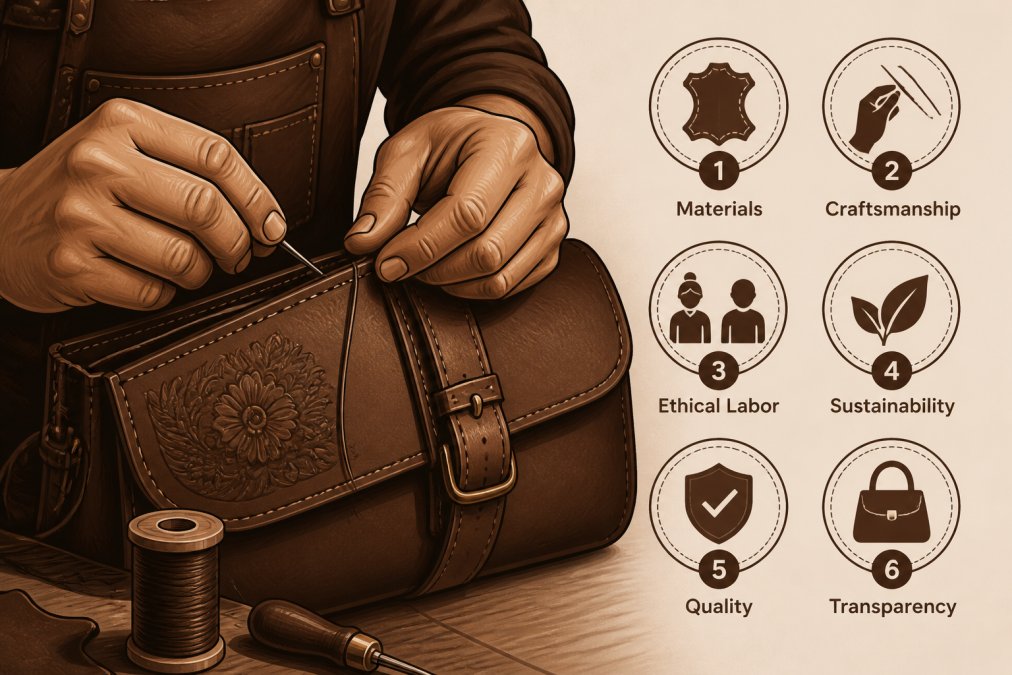
Transparency in Tanning Process
A brand's willingness to discuss tanning methodology is a primary credibility signal. Tanning is where leather becomes either environmentally damaging or relatively benign, and where labor practices either protect or exploit workers. Ethical brands openly identify their tanning approach.
Vegetable-tanned leather, processed using tannins from tree bark rather than synthetic chemicals, represents the traditional and environmentally gentler method. Chrome tanning, which uses chromium salts, works faster and cheaper but creates chemical waste streams that require careful management. Chrome-free leather has emerged as a compromise, it uses alternative chemicals to chromium but maintains faster processing than vegetable tanning.
Brands worth trusting will tell you exactly which method they use and why. They'll explain their specific tannery partners, often naming them by location. If a brand vaguely references "sustainable tanning" without specifying the process, that's a red flag. Genuine ethical brands understand that transparency builds trust because it's verifiable.
Traceability and Material Sourcing
Ethical leather sourcing begins with answering a simple question: where did this hide come from? The answer reveals whether a brand is genuinely committed to ethical practices or simply using the term as marketing.
Full-grain leather, the entire hide with its natural surface intact, comes from specific animals raised under documented conditions. Ethical brands source from ranches or tanneries that maintain records of animal welfare standards. Some use byproduct leather, salvaging hides from meat production that would otherwise go to waste. This circular approach eliminates the argument that leather production requires raising animals solely for their hides.
Upcycled leather represents the frontier of ethical sourcing. Brands like Unshattered demonstrate how pre-consumer leather scraps and manufacturing waste can be transformed into finished products, dramatically reducing the material footprint of each bag.
Traceability means a brand can answer specific questions: Which ranch? Which tannery? What certifications does that tannery hold? If a company deflects or offers vague answers, their commitment to ethical sourcing is questionable. Genuine ethical brands maintain supply chain documentation they're willing to share.
Benefits of Full Grain Leather
Full-grain leather offers distinct advantages that justify its prominence in ethical leather goods. This material includes the complete hide surface with all its natural characteristics, scars, variations in texture, and patina potential. It's the opposite of sanded, buffed, or artificially uniform leather.
Full-grain leather develops a rich patina over time. Use and exposure create a deepening color and surface character that tells the story of the bag's life. This isn't degradation, it's maturation. A five-year-old full-grain leather bag looks distinguished, not worn out. The same timeline applied to lower-grade leather results in visible deterioration.
Durability in full-grain leather stems from structural integrity. The complete fiber structure remains intact, providing maximum tensile strength. The leather resists punctures, tears, and abrasions more effectively than split or corrected-grain alternatives. Stitching holds better because the material itself provides solid anchoring for thread.
Water resistance in full-grain leather is natural rather than applied. The dense fiber structure sheds water without requiring chemical treatments. A properly conditioned full-grain leather bag can handle rain without damage. The leather may darken temporarily but dries cleanly without staining or structural compromise.
The aesthetic argument matters too. Full-grain leather's natural variations, color shifts, subtle scarring, grain patterns, make each bag genuinely unique. This isn't a flaw; it's authenticity. Two bags from the same artisan will differ slightly, reflecting the natural material and individual hand production. Mass-produced alternatives achieve uniformity through chemical processing that strips away these characteristics.
Fair Wage and Labor Practices in Artisan Production
Ethical handcrafted leather production depends entirely on how artisans are compensated and treated. This is where many brands claiming ethical credentials fail scrutiny.
Fair wage means more than legal minimum compliance. It means compensation that allows artisans to live with dignity in their actual geographic context. A fair wage in Mexico differs from a fair wage in Ethiopia, but both should enable housing, healthcare, education for children, and modest savings. Ethical brands publish their wage structures or work with certified fair trade organizations that verify compensation independently.
Labor practices extend beyond wages. Safe working conditions, reasonable hours, access to healthcare, and skill development opportunities all define ethical production. Artisans working with leather face chemical exposure during tanning and finishing. Ethical producers provide protective equipment, ventilation, and regular health monitoring. They don't demand 60-hour weeks. They invest in training so workers can advance their skills and earning potential.
The relationship between brand and artisan matters structurally. Ethical producers maintain direct relationships with the people making their products. They know artisans by name, understand their circumstances, and invest in their communities. This contrasts sharply with the conventional supply chain where brands never meet the people producing their goods.
Organizations like ABLE and Parker Clay exemplify this approach, they employ artisans directly, maintain transparent wage structures, and build community infrastructure around production. Ten Thousand Villages operates through fair trade certification, ensuring independent verification of labor standards. These models prove that ethical labor practices aren't economically impossible; they're a choice about where profit margins go.
Environmental Impact and Sustainable Sourcing
The environmental footprint of leather production spans water use, chemical pollution, carbon emissions, and waste generation. Ethical brands address each dimension differently, but transparency about environmental impact distinguishes genuine commitment from greenwashing.
Vegetable-Tanned and Chrome-Free Leather
Vegetable tanning uses tannins extracted from tree bark, mimosa, chestnut, or oak, to chemically bond with collagen in the hide. This ancient process creates leather that's biodegradable and free from persistent synthetic chemicals. The process takes longer (weeks rather than days) and costs more, but the environmental trade-off is significant.
Chrome-free leather emerged as a middle path. It avoids chromium salts while using alternative tanning agents that process faster than vegetable tanning. The environmental benefit is real but less dramatic than full vegetable tanning. Chrome-free leather still requires chemical inputs and waste management, but it eliminates the specific toxicity concerns associated with chromium.
Water consumption differs dramatically between methods. Vegetable tanning uses substantial water but the effluent is biodegradable and poses lower toxicity risk. Chrome tanning requires careful wastewater treatment to prevent chromium contamination of local water supplies. Ethical producers invest in treatment systems that remove heavy metals before discharge. Unethical producers often skip this step, poisoning water supplies in communities where tanneries operate.
Certifications like OEKO-TEX and GOTS provide independent verification of chemical standards. Brands displaying these certifications have submitted to third-party testing proving their leather meets specific safety and environmental thresholds. This matters because greenwashing is common, brands claim sustainability without backing it up.
Byproduct and Upcycled Leather
Byproduct leather sourcing addresses the ethical concern that leather production requires raising animals specifically for their hides. When leather comes from animals for meat, the hide becomes a byproduct that would otherwise become waste. This circular approach maximizes the value extracted from each animal while reducing the material footprint.
Upcycled leather takes this further. Manufacturing leather goods generates significant scrap, offcuts, damaged sections, and rejected pieces. Upcycled leather recaptures this waste stream, processing scraps into usable material for finished products. Brands like Unshattered demonstrate how upcycled leather can produce high-quality bags without requiring new hides at all.
The environmental benefit is straightforward: less waste in landfills, reduced demand for new hide production, and maximum use of existing materials. Upcycled leather doesn't require the water, chemicals, and energy of tanning virgin hides. It's the closest leather gets to true circular economy practices.
Regenerative ranching represents another environmental angle. Some leather producers source from ranches using regenerative agriculture, grazing practices that rebuild soil health and increase carbon sequestration. Range Revolution exemplifies this approach, sourcing from ranches that improve environmental conditions rather than merely minimizing damage. This shifts leather from a necessary evil to a potential environmental benefit.
Durability, Longevity, and Cost-Per-Wear
The most underrated metric in ethical leather purchasing is cost-per-wear. A bag costing three times more than a fast-fashion alternative becomes economically superior if it lasts nine times longer. Ethical handcrafted leather bags typically achieve this math.
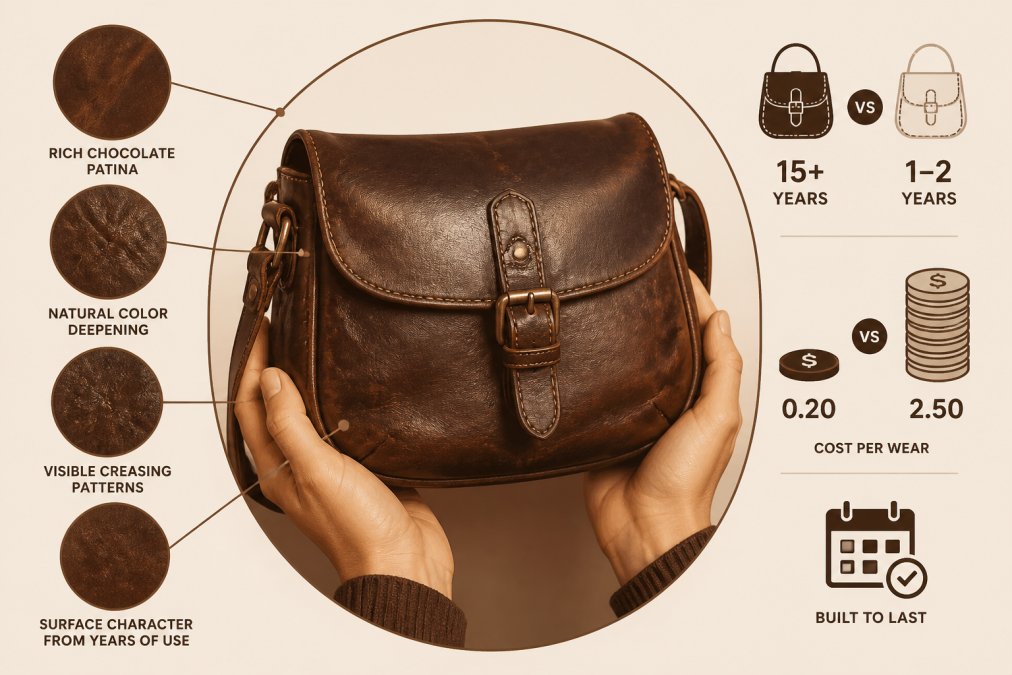
Durability in ethical bags stems from material quality and construction method. Full-grain leather resists damage that would destroy lower-grade materials. Hand-stitching, while slower, creates stronger seams than machine stitching because each stitch is individually secured. Reinforced stress points, handles, corners, strap attachments, receive extra attention in artisanal production.
Longevity means the bag functions properly for decades. Handles don't stretch and separate. Stitching doesn't unravel. The leather doesn't crack or peel. Zippers and hardware remain functional. This durability isn't accidental, it's built into the design and material selection from the beginning.
Cost-per-wear calculation is straightforward. A bag costing $300 used daily for ten years costs 8 cents per wear. A $60 bag lasting one year costs 16 cents per wear. The ethical bag is cheaper on a per-use basis while also providing superior functionality, aesthetic development, and environmental impact over its lifetime.
This math shifts how consumers should evaluate leather bags. The initial price sticker shouldn't be the decision point. Expected lifespan should be. Ethical brands confidently project longevity because they've designed and built for it.
Maintenance and Care for Long-Term Wear
Proper maintenance transforms a leather bag from a temporary purchase into a lifetime asset. Ethical leather, particularly full-grain and vegetable-tanned varieties, responds dramatically to intentional care.
Basic maintenance requires minimal effort. Regular conditioning with leather-specific products (not furniture polish or random oils) keeps the material supple and water-resistant. Conditioning every six months to a year prevents drying and cracking. For vegetable-tanned leather, this maintenance is essential, the material naturally ages and can become brittle without periodic conditioning.
Cleaning addresses dirt and stains without damaging the leather. A soft cloth and mild soap handle most soiling. Stubborn marks sometimes require specialty leather cleaners, but these should be applied sparingly. The goal is cleaning without stripping natural oils or altering the patina.
Storage matters for longevity. Leather should be stored in cool, dry conditions away from direct heat and sunlight. Stuffing the bag with acid-free paper maintains its shape during storage. Avoid plastic bags or airtight containers that trap moisture and promote mold growth.
Minor damage, small tears, loose stitching, worn handles, can be professionally repaired by leather craftspeople. This is where the artisanal production model shines. Many ethical brands maintain relationships with repair specialists or offer repair services themselves. A $30 repair extending a bag's life by years is economically and environmentally rational.
The maintenance requirement isn't a burden, it's a feature. It creates a relationship between owner and object. The bag develops character through use and care. This engagement transforms purchasing from consumption into stewardship.
Ethical handcrafted leather bags demand more thought than typical fashion purchases. But that consideration pays dividends through durability, environmental impact reduction, and genuine support for artisan communities. Lunas Artisanal Shop demonstrates how handcrafted leather goods, featuring 100% genuine leather and vibrant cultural designs, embody these principles while delivering bags designed for lifelong use. When you prioritize ethical sourcing, fair labor practices, and material longevity, you're not spending more on fashion. You're investing in objects that improve with age and align your purchases with your values.
Frequently Asked Questions
What exactly does 'ethically sourced leather' mean?
Ethically sourced leather comes from suppliers who follow fair labor practices, maintain safe working conditions, and pay workers fair wages. The tanning process should use chrome-free or vegetable-tanned methods to reduce environmental harm. Ethical leather brands provide transparency about their supply chain, allowing you to trace where hides come from and how they're processed. This differs from mass-produced leather, where the origin and labor conditions are often unknown.
How do I know if a brand is actually handcrafted versus mass-produced?
Handcrafted leather bags show signs of artisanal work: slight variations in stitching patterns, hand-burnished edges, and unique finishing touches that differ slightly from piece to piece. Ask brands for their production story, tannery certifications, and artisan information. Ethical brands willingly share photos of their makers and explain their small-batch process. Mass-produced bags have uniform, machine-perfect stitching and identical finishes across all units. Request images of your specific bag being made if the brand offers customization.
Why is full grain leather better than other types for handcrafted bags?
Full grain leather retains the hide's natural surface, including its grain pattern and natural markings, making each piece unique. It's more durable than split or bonded leather because it hasn't been sanded or altered, so it resists tearing and maintains structural integrity through years of daily use. Full grain develops a beautiful patina over time, deepening in color and character. It's water-resistant and stain-resistant when properly maintained, and it ages gracefully rather than peeling or flaking like lower-quality leather. For handcrafted bags meant to last decades, full grain is the gold standard.
How much longer do ethical handcrafted leather bags actually last compared to synthetic alternatives?
Ethical handcrafted leather bags typically last 10-20+ years with proper care, while synthetic leather usually deteriorates within 2-5 years. Leather develops a rich patina and becomes more beautiful with age, whereas synthetic materials crack, peel, and fade. The cost-per-wear calculation favors leather significantly: a $300 handcrafted bag worn for 15 years costs about $20 per year, while a $50 synthetic bag lasting 3 years costs roughly $17 per year upfront but requires replacement four times. Quality leather pieces are often passed down as heirlooms, adding sentimental and lasting value.
This article was written using GrandRanker