

Table of Contents
- Why Mexican Leather Stands Out in Quality and Craftsmanship
- The Leather Capital and Its Tanning Traditions
- How to Identify High-Quality Mexican Leather Goods
- Benefits of Vegetable Tanned Leather and Durability
- How to Care for Leather Handbags and Accessories
- Authentic Mexican Leather Boots and Regional Styles
- Pricing, Customs, and What to Expect When Buying
- Sustainable Sourcing and Supporting Real Artisans
- Frequently Asked Questions
Last Updated: October 1, 2026
Why Mexican Leather Stands Out in Quality and Craftsmanship
Does Mexico have good leather? Yes. Mexico produces some of the world's finest leather, rooted in centuries of artisanal tradition and geographic advantage. The country's leather goods are prized for durability, distinctive character, and genuine craftsmanship.

What makes Mexican leather stand out is the tanning methods, skilled craftspeople, and commitment to full-grain hides that develop a rich patina over time. Authentic Mexican leather is designed to last decades, not seasons.
Artisans have perfected hide selection, vegetable-tanning processes, and the art of creating goods that improve with age, the difference between leather that cracks and leather that becomes more beautiful with use.
The Leather Capital and Its Tanning Traditions
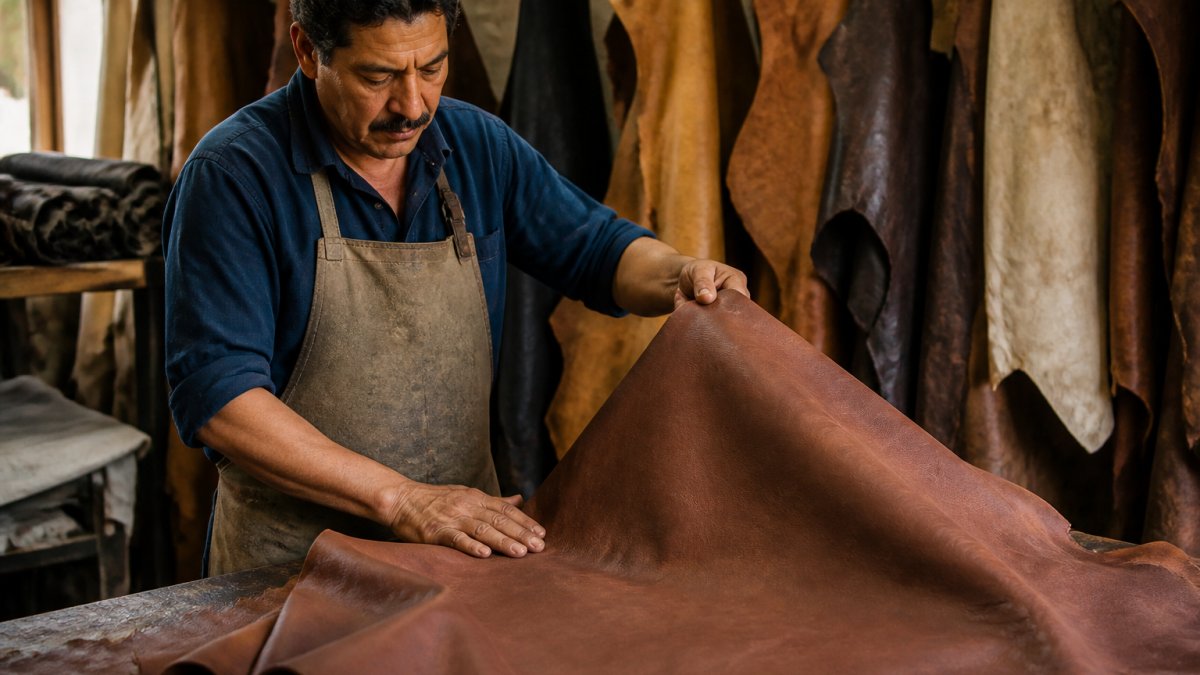
The leather capital of Mexico, León, Guanajuato, has been the epicenter of leather production for over 400 years. This isn't accidental. The region's access to water, its proximity to cattle ranches, and its deep institutional knowledge of tanning created an unmatched production ecosystem.
León's tanneries operate at massive scale while maintaining artisanal standards. Mass-produced leather from factories differs dramatically from handcrafted goods made by individual makers.
Vegetable-tanned leather uses tannins from tree bark, creating leather that develops character over time (Vegetable Tannins Used in the Manufacture of Historic Leathers). A vegetable-tanned bag will look noticeably richer and deeper in five years. Chrome-tanned leather remains static and is more prone to cracking.
The tanning traditions emphasize sustainability and longevity. Artisans understand leather as a living material that ages and tells a story, a philosophy industrial tanning cannot replicate.
How to Identify High-Quality Mexican Leather Goods
Spotting authentic Mexican leather requires checking grain structure. Genuine full-grain leather shows natural texture variations. Uniformly smooth, plastic-like surfaces indicate bonded leather or corrected hide.
Quality leather is dense. Handcrafted pieces feel substantial, reflecting hide thickness and quality. Lightweight leather signals thin, lower-grade material or synthetic blends.
Hand-stitched leather shows slight irregularities and varying thread spacing, hallmarks of authentic artisan work. Mass-produced goods display perfectly uniform stitching. Look for visible hand-stitching on interior and exterior.
Genuine leather has a distinctive, rich scent. Synthetic or heavily treated hides smell plastic-like. Real Mexican leather smells earthy and natural, this indicator eliminates most counterfeits.
Full-Grain vs. Chrome-Tanned: What to Look For
Full-grain leather retains the hide's natural surface and is the highest quality classification. It's more durable, develops a beautiful patina, and lasts 20-30 years with proper care.
Chrome-tanned leather is softer and resists water better initially, but is more prone to cracking and fades faster. It typically lasts 5-10 years before showing significant wear.
For a bag that becomes more beautiful and lasts decades, choose full-grain vegetable-tanned leather. Chrome-tanned offers immediate softness but sacrifices longevity.
Handcrafted vs. Mass-Produced: Spotting Authentic Artisan Work
Handcrafted leather displays inconsistencies that prove authenticity. Hand-tooled patterns and stitching show minor variations impossible to fake at scale.
Mass-produced goods achieve perfect uniformity. If two supposedly identical bags are absolutely identical, they're factory-made. Authentic handcrafted pieces are never truly identical.
Legitimate artisan operations name the craftsperson, describe their techniques, and share stories. Mass-production operations offer generic descriptions.
Benefits of Vegetable Tanned Leather and Durability
Vegetable-tanned leather develops a patina, a rich, darkened surface that emerges through use. Each bag develops unique character, looking noticeably different in three years with deeper color and more supple texture.
Vegetable-tanned leather hardens slightly over time, resisting damage better than fresh leather. Scuffs add character. A five-year-old vegetable-tanned bag often looks better than a one-year-old chrome-tanned alternative.
Vegetable-tanned leather is inherently sustainable. The process uses natural tannins, creates less waste, and requires fewer replacements over a lifetime.
Vegetable-tanned leather softens and molds to your body shape within months. This personalization is impossible with chrome-tanned alternatives.
How to Care for Leather Handbags and Accessories
Keep leather dry. Constant moisture causes mold and deterioration. If wet, dry slowly at room temperature, never use direct heat.
Escama — Chiseled Scale Genuine Leather Satchel | Bolsa de Piel Genuina →
Condition your leather with a quality leather conditioner. This replenishes natural oils that evaporate over time. Conditioning prevents cracking and maintains suppleness. Use a small amount on a soft cloth and apply in circular motions. Excess conditioner attracts dust, so use restraint.
Store leather in a cool, dry place away from direct sunlight. Extended UV exposure fades color and dries out the material. Use dust bags when storing for extended periods. Never store in plastic, leather needs to breathe. Cotton or linen bags are ideal.
Clean surface dirt with a soft, dry cloth. For stubborn marks, slightly dampen the cloth with water and gently wipe. Avoid harsh chemicals or abrasive materials. Leather is durable but not indestructible, treat it with the care you'd give fine furniture.
For scuffs and minor damage, embrace the patina. Vegetable-tanned leather develops character through use. Attempting to hide every mark defeats the purpose of owning quality leather. However, deep scratches can be minimized with leather cream or oil applied to the affected area.
| Care Task | Frequency | Impact |
|---|---|---|
| Conditioning | Every 6-12 months | Prevents cracking, maintains suppleness |
| Cleaning | As needed | Removes surface dirt, extends life |
| Storage | When not in use | Prevents mold, UV damage, dust accumulation |
| Inspection | Monthly | Catches damage early, prevents deterioration |
Authentic Mexican Leather Boots and Regional Styles
Mexican leather boots represent a distinct category of craftsmanship. The style varies dramatically by region, with each area developing signature techniques and aesthetics. Western-style boots from the northern regions differ from the more ornate, hand-tooled boots of central Mexico.
Authentic Mexican boots feature hand-stitched construction and hand-tooled designs. The tooling, decorative patterns carved or stamped into the leather, requires years of training to master. A skilled bootmaker can create intricate patterns that tell stories or represent cultural symbols. This artistry is impossible to replicate mechanically.

The leather used in traditional Mexican boots is almost always vegetable-tanned, chosen specifically for its ability to hold tooled designs and develop character. The boots are designed to break in over time, molding to the wearer's feet. A stiff new pair becomes increasingly comfortable through months of wear.
Regional variations matter. Boots from León emphasize structural quality and subtle elegance. Boots from Oaxaca feature bolder, more colorful designs with cultural significance. Boots from northern regions tend toward western styling with practical construction. Understanding these regional differences helps you choose boots that match both your aesthetic and your intended use.
Pricing, Customs, and What to Expect When Buying
Authentic handcrafted Mexican leather goods vary in price depending on complexity and materials. These prices reflect the labor intensity of true handcrafting.
When purchasing through established importers like Lunas Artisanal Shop, you avoid middleman markups. Direct sourcing is an economical approach.
Customs and import regulations affect purchases from Mexico.
Shipping costs vary based on weight and destination.
Return policies differ by seller. Clarify return policies before purchasing.
Sustainable Sourcing and Supporting Real Artisans
Genuine sustainable sourcing means supporting artisans directly and ensuring fair compensation for their labor. When you buy from a retailer claiming to support Mexican artisans, verify the claim. Do they name specific tanneries or makers? Can they describe the production process? Do they offer transparency about pricing and labor practices?
Real artisan operations maintain relationships with specific craftspeople and tanneries. They know their suppliers personally. They can tell you about the artisan's background, their techniques, and their commitment to quality. Generic retailers can't provide this level of detail because they source from intermediaries.
The leather industry has significant environmental implications. Vegetable-tanned leather, while slower and more expensive to produce, is genuinely more sustainable than chrome-tanned alternatives. Vegetable tanning uses natural materials and creates less chemical waste. Supporting artisans who use these methods directly impacts environmental outcomes.
Fair compensation is non-negotiable for ethical sourcing.
Lunas Artisanal Shop maintains direct relationships with makers in León and surrounding regions, ensuring fair pricing and quality standards. Each piece carries the artisan's commitment to their craft. By choosing retailers with transparent sourcing practices, you support the continuation of traditional leatherworking and ensure artisans can sustain their livelihoods.
Research the retailer's sourcing claims.
Frequently Asked Questions
Is leather cheaper in Mexico than other countries?
Mexican leather is competitively priced because production happens at the source, eliminating middleman markups. The value comes from genuine materials and artisan labor, not from cutting corners on tanning or craftsmanship.
How can you tell if Mexican leather is authentic and high-quality?
Authentic Mexican leather shows visible hand-stitching, natural grain variation, and develops a patina over time. Check for full-grain leather, which has an uneven surface texture. Smell genuine leather, it has a distinct, natural aroma, never chemical. Handcrafted pieces from artisan tanneries in León often include maker details, visible tool marks, and weight that feels substantial. Mass-produced synthetic alternatives feel thin and uniform.
What are the benefits of vegetable tanned leather compared to chrome-tanned?
Vegetable tanned leather develops rich character and patina as it ages, becoming more beautiful with use. It's more durable, lasting decades with proper care, and breaks in to fit your body perfectly. Unlike chrome-tanned leather, vegetable tanning uses natural tannins from tree bark, making it environmentally sustainable. It resists cracking and peeling better, especially in high-wear areas like bag straps and wallet edges.
How should I care for leather handbags to keep them looking like new?
Condition your leather with a genuine leather conditioner to maintain suppleness and prevent cracking. Wipe spills immediately with a soft, damp cloth. Store bags in a cool, dry place away from direct sunlight, which fades color and dries out leather. Avoid excessive moisture and heat. For stubborn stains, use a leather-specific cleaner. Proper care extends the life of handcrafted pieces significantly, allowing the natural patina to develop beautifully.