

Table of Contents
- What Makes Authentic Mexican Leather Handbags Worth the Investment
- How to Identify Genuine Leather and Artisanal Craftsmanship
- Hand-Tooled Leather Purses: Understanding Artisanal Techniques
- Fair Trade and Ethical Sourcing: Where Your Money Goes
- Best Practices for Leather Care and Maintenance
- Styling Your Mexican Leather Handbag for Timeless Appeal
- Where to Buy Authentic Mexican Leather Handbags Online
- Conclusion
Last Updated: August 13, 2026
What Makes Authentic Mexican Leather Handbags Worth the Investment
Investing in an authentic Mexican leather handbag isn't just about owning a purse, it's about acquiring a piece of artisanal heritage that improves with age. At Lunas Artisanal Shop, we understand that discerning buyers want more than mass-produced accessories. They want craftsmanship that tells a story, durability that spans decades, and the assurance that their money supports real artisans.
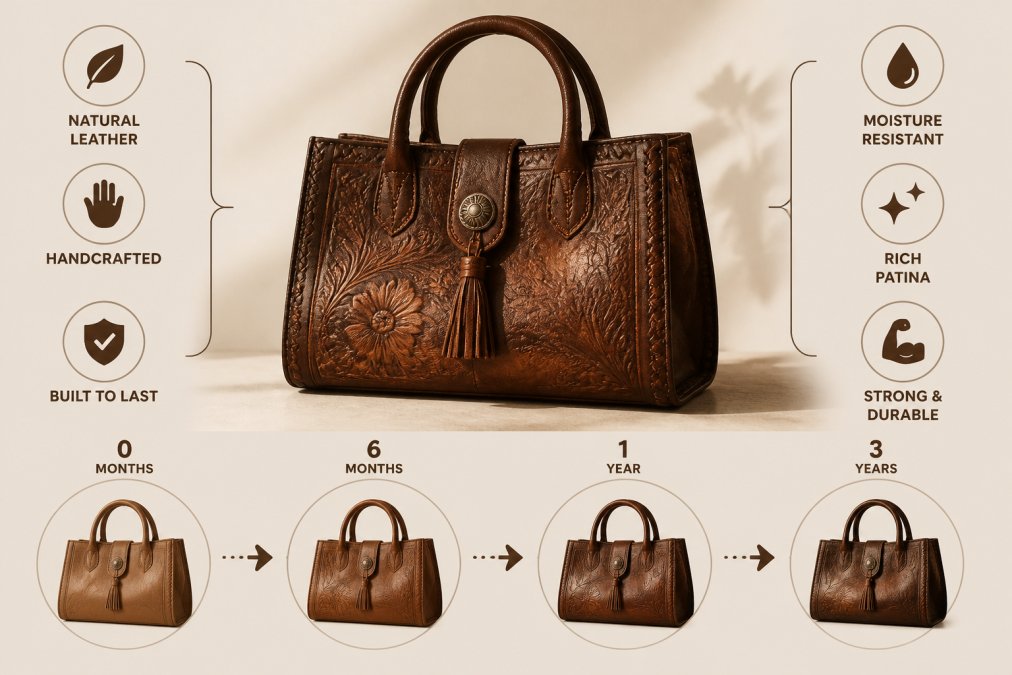
The difference between genuine handcrafted leather and factory-made imitations comes down to materials, construction, and the hands that shape them. A true authentic Mexican leather handbag is built to last, develops character through use, and maintains its structural integrity far longer than cheaper alternatives. The patina that forms on vegetable-tanned leather, that rich, darkened surface that emerges naturally over time, is something no synthetic material can replicate.
When you buy authentic Mexican leather handbags online, you're paying for several things at once: the quality of the hide itself, the skill required to hand-tool intricate designs, the time invested in careful stitching, and the ethical sourcing practices that ensure artisans are fairly compensated. This isn't premium pricing for a brand name. It's the actual cost of doing things right.
How to Identify Genuine Leather and Artisanal Craftsmanship
The easiest way to spot a fake is to understand what genuine looks like. Real leather has irregularities, slight color variations, natural markings, and texture inconsistencies. These aren't flaws. They're proof of authenticity.
Vegetable-Tanned and Full-Grain Leather Quality Markers
Vegetable-tanned leather is the gold standard for handcrafted Mexican bags. This tanning method uses natural plant extracts rather than chemicals, resulting in leather that ages beautifully and becomes more supple with time. Full-grain leather, which retains the complete grain surface of the hide, shows every characteristic of the animal, scars, brands, and natural variations included.
When examining a handbag, run your fingers across the surface. Full-grain leather feels substantial and slightly textured. It won't be perfectly smooth or uniform in color. Synthetic leather or low-quality splits (thin layers of hide) feel plastic-like and have an artificial sheen that doesn't change with handling.
Look for these markers:
- Natural color variations across the surface
- Visible pores that change with the grain pattern
- Slight waxy feel indicating natural oils
- Flexibility without cracking or peeling
- Darkening in high-touch areas as the bag ages
The leather should smell earthy and organic, not chemical or artificial. A fresh vegetable-tanned hide carries a distinctive scent, one that fades slightly over time but never disappears entirely. If a bag smells like plastic or chemicals, it's likely chrome-tanned or synthetic.
Hand-Stitching, Hardware, and Construction Details
Examine the stitching closely. Handcrafted stitching shows slight variations in spacing and angle, this is normal and actually desirable. Machine stitching is perfectly uniform, which is precisely why it's a red flag on a bag claiming to be handmade. Each stitch should be tight, even if not perfectly spaced, with no loose threads or gaps.
The hardware tells a story too. Genuine Mexican leather bags use quality metals, brass, copper, or stainless steel, that develop patina or maintain their finish appropriately. Cheap hardware feels lightweight and thin. Quality hardware has weight and substance. Check where straps attach to the bag body. These stress points should be reinforced with multiple stitching passes, creating a dense, nearly impenetrable seam.
Look inside the bag as well. The lining should be securely attached, not glued loosely. Seams should be clean with no raw edges or fraying. If the interior feels rushed or sloppy, the exterior craftsmanship is likely compromised too. A well-made bag has the same attention to detail inside and out.
Hand-Tooled Leather Purses: Understanding Artisanal Techniques
Hand-tooled leather represents the pinnacle of artisanal skill. This process requires years of training and a steady hand capable of creating intricate designs that don't compromise the leather's structural integrity.
The Embossed and Floral Design Process
Hand-tooled designs begin with a leather that's been treated to optimal moisture content, too dry and it cracks, too wet and it doesn't hold impressions clearly. The artisan uses specialized metal stamps and hand tools to create embossed patterns, often working freehand without stencils. This is where individual artistry emerges. Two supposedly identical pieces will have subtle differences because they're created by human hands, not machines.
Floral patterns are particularly challenging because they require depth variation. A skilled tooler creates shadows and dimension by adjusting the force and angle of each strike. The leather surface is carefully prepared, sometimes with special solutions to enhance the tooling effect. Once the design is complete, the leather is sealed and finished to protect the work.
The best hand-tooled pieces show:
- Crisp, clean impressions without smudging
- Consistent depth across the design
- No machine-like uniformity
- Integration with the leather's natural grain
- Designs that enhance rather than obscure the hide's character
Why Hand-Tooled Pieces Command Premium Pricing
A single hand-tooled bag can take 8 to 15 hours to complete, depending on design complexity. That's not including the time spent preparing materials, selecting hides, or finishing the piece. When you're paying for a hand-tooled authentic Mexican leather handbag, you're paying for skilled labor that simply cannot be rushed or automated.
The premium also reflects the waste involved in artisanal production. Not every hide is suitable for tooling. Artisans are selective, rejecting leather with significant flaws that would compromise the final design. This selectivity reduces yield but ensures quality. Mass production doesn't have this luxury, or this standard.
Additionally, hand-tooled pieces develop differently over time. As the leather ages and develops patina, the tooled design becomes more pronounced. The contrast between the raised portions and the darker recessed areas deepens. This evolution is part of the appeal and the value.
Fair Trade and Ethical Sourcing: Where Your Money Goes
When you buy from Lunas Artisanal Shop, you're supporting a model that prioritizes artisan communities over profit margins. Ethical sourcing means verifiable relationships with leather producers and toolers, fair compensation that reflects the skill involved, and transparency about where materials come from.
Many online retailers claim ethical sourcing without documentation. Genuine commitment involves direct relationships, regular communication, and payment practices that allow artisans to sustain themselves. The leather used in truly ethical bags comes from suppliers who maintain standards for animal treatment and environmental responsibility.
Fair trade practices also mean supporting small-batch production rather than factory systems. Small batches allow for quality control that industrial operations can't achieve. Each piece is reviewed by the maker before it ships. There's accountability because the artisan's reputation is directly tied to every bag that leaves their workshop.
When you choose ethically sourced pieces, you're making a statement about what you value. You're saying that craftsmanship matters, that artisans deserve fair compensation, and that durability and cultural heritage outweigh the convenience of disposable fashion.
Best Practices for Leather Care and Maintenance
A handcrafted Mexican leather handbag will outlive most of its owner's wardrobes if properly maintained. Leather isn't fragile, it's actually quite resilient, but it does require intentional care.
Protecting Your Handbag's Patina and Supple Texture
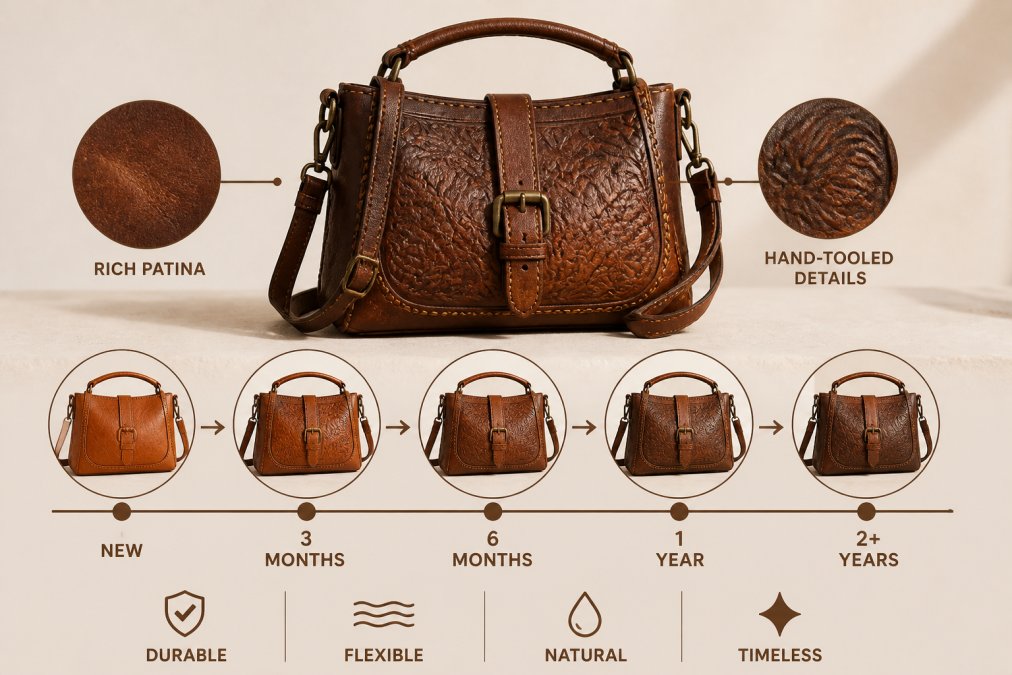
The patina that develops on vegetable-tanned leather is a feature, not a flaw. It's the visual record of how you've used your bag. To protect and enhance this aging process, keep your bag away from direct sunlight for extended periods. Sunlight accelerates fading, which can create uneven patina. Occasional exposure is fine and actually helps develop color.
Condition your leather every 6 to 12 months using a quality leather conditioner designed for vegetable-tanned hides. A small amount goes a long way. Apply it sparingly with a soft cloth, working it in circular motions. The conditioner replenishes natural oils that keep the leather supple and prevent cracking. Over-conditioning can make leather feel greasy, so restraint is key.
Moisture is leather's natural enemy. If your bag gets wet, dry it slowly at room temperature. Never use heat sources like hair dryers or radiators. Rapid drying causes leather to shrink and crack. Stuff the bag loosely with unprinted paper to help it maintain its shape as it dries.
Storage, Cleaning, and Repair Tips
Store your bag in a cool, dry place away from extreme temperature fluctuations. Avoid plastic bags, which trap moisture and promote mold growth. Instead, use a breathable dust bag or store it in an open space in your closet. Stuff the bag loosely with unprinted paper to help it maintain its shape during storage.
For regular cleaning, use a soft, dry cloth to wipe away dust and surface dirt. For stubborn stains, a slightly damp cloth works, but avoid soaking the leather. If you spill something oily or acidic, blot immediately with an absorbent cloth. Don't rub, which can spread the stain deeper into the leather.
Scuffs and minor damage are part of a leather bag's story. Light surface scratches often fade as the leather ages. Deeper scuffs can sometimes be minimized by applying a small amount of matching leather conditioner, which darkens the affected area slightly. For significant damage, torn seams, broken hardware, or deep gouges, seek out a leather repair specialist rather than attempting DIY fixes that might worsen the damage.
Styling Your Mexican Leather Handbag for Timeless Appeal
A quality Mexican leather handbag transcends seasonal trends. The key to timeless styling is choosing pieces that complement your existing wardrobe rather than demanding it conform to them.
Neutral-colored leather, cognac, chocolate brown, deep tan, or black, pairs with virtually everything. These tones ground an outfit and let other elements shine. Hand-tooled designs in floral or geometric patterns add visual interest without feeling costume-like, even in professional settings. The artistry reads as sophistication, not cultural appropriation, because it's genuine craftsmanship, not a trend.
Consider your lifestyle when selecting a handbag. A smaller, structured hand-tooled piece works beautifully for professional environments. A larger, more relaxed tote suits casual and creative settings. The leather's natural supple texture and the way it moves with you creates an elegance that stiff, synthetic bags can't match.
Pair your Mexican leather handbag with quality basics. A well-made bag elevates simple clothing, jeans and a sweater, neutral trousers and a blouse, casual dresses. The bag becomes the statement piece, which is exactly where quality craftsmanship should be showcased. Avoid pairing it with other bold, competing patterns unless you're deliberately creating an eclectic look.
As your bag develops patina and shows signs of use, it becomes more beautiful, not less. This is the opposite of fast fashion, where visible wear signals cheapness. With genuine leather, visible wear signals authenticity and longevity. Embrace the changes your bag undergoes.
Where to Buy Authentic Mexican Leather Handbags Online
Finding genuine handcrafted pieces requires knowing what to look for and where to look. Not all online retailers claiming to sell authentic Mexican leather handbags actually deliver on that promise.
Lunas Artisanal Shop specializes in curated collections of 100% genuine leather handbags and accessories, each handcrafted with passion. The collection features unique designs ranging from vibrant Frida Kahlo motifs to timeless, high-quality leather goods that blend traditional artistry with modern elegance. By working directly with artisans and maintaining transparent sourcing practices, Lunas Artisanal Shop ensures that every piece meets rigorous standards for material quality, construction, and ethical production.
When shopping online, look for retailers who provide detailed product information: the type of leather used, the tanning method, whether pieces are hand-tooled or machine-made, and specifics about hardware and construction. Legitimate sellers are transparent about their sourcing and happy to answer questions about artisan relationships and production practices.
Read customer reviews carefully, but understand that new leather can feel stiff initially, this is normal and expected. A review mentioning that a bag felt stiff initially but softened beautifully with use is actually a positive sign of genuine leather. Conversely, reviews mentioning peeling, cracking, or leather that never softened suggest lower-quality materials.
Check return and warranty policies. Reputable sellers stand behind their products and offer reasonable return windows. If a retailer has restrictive policies or seems evasive about product details, that's a warning sign.
Frequently Asked Questions
How can I tell if a Mexican leather handbag is truly handcrafted and not machine-made?
Authentic handcrafted pieces show visible variations in stitching spacing, slight irregularities in hand-tooled patterns, and individual character marks from the artisan. Machine-made bags display perfectly uniform stitching and identical embossing. Examine the leather grain closely, genuine full-grain leather shows natural markings, scars, and texture variations that cannot be replicated. Ask sellers for documentation of the maker or artisan, and request photos showing the construction process. Real artisans are proud to share their heritage and work.
What's the difference between vegetable-tanned and other leather used in Mexican handbags?
Vegetable-tanned leather, traditional in Mexican leatherworking, develops a rich patina over time and becomes more supple with use. It's tanned using natural tannins from tree bark, making it more sustainable than chrome-tanned alternatives. This leather is more durable, ages beautifully, and improves with proper care. Full-grain vegetable-tanned leather is the gold standard for authentic Mexican artisanal pieces because it showcases the natural hide and ages gracefully, whereas lower-quality leather may peel or crack.
How should I care for my hand-tooled leather purse to keep it looking new?
Condition your leather every 3-6 months with a quality leather conditioner to maintain suppleness and prevent cracking. Store in a cool, dry place away from direct sunlight, which can fade colors. Wipe spills immediately with a soft, dry cloth. For embossed or hand-tooled details, use a soft brush to gently remove dust from crevices. Avoid excessive moisture and extreme heat. Professional restoration can address deeper issues, but regular maintenance prevents most damage and allows your bag's patina to develop beautifully over years of use.
Why do authentic Mexican leather handbags cost more than mass-produced alternatives?
Authentic pieces reflect the true cost of artisanal craftsmanship: skilled labor, high-quality full-grain leather, fair-trade sourcing, and small-batch production. Each hand-tooled design takes hours to complete. Fair-trade practices ensure artisans receive livable wages, supporting their communities. Machine-made bags cut corners with lower-grade materials and overseas labor exploitation. Authentic Mexican handbags are investments in durability, heritage, and ethics, they last decades with proper care, making them more economical long-term than cheaper alternatives that wear out quickly.
Choosing an authentic Mexican leather handbag means committing to quality that lasts. The challenge isn't finding a bag, it's finding one that genuinely delivers on promises of handcraftsmanship and ethical sourcing. Lunas Artisanal Shop offers a curated selection of 100% genuine leather pieces, each handcrafted with attention to detail and featuring authentic designs that celebrate Mexican artisanal heritage. Shop your story today and own a piece of craftsmanship that improves with time.
This article was written using GrandRanker