

Table of Contents
- Full-Grain vs. Top-Grain Leather for Bags
- Vegetable-Tanned vs. Chrome-Tanned Leather
- Structured vs. Soft Leather for Handbags
- How to Identify High-Quality Leather
- The Value of Handcrafted Leather Purses
- How to Care for Leather Handbags
- Choosing the Right Leather Type for Your Lifestyle
- Frequently Asked Questions
Last Updated: September 19, 2026
Full-Grain vs. Top-Grain Leather for Bags
Full-grain leather retains the complete hide with all natural characteristics intact, developing a rich patina over time as the surface darkens and softens with use.
Top-grain leather has the outer layer sanded and refinished, removing imperfections but also character. It's more uniform and stain-resistant than full-grain, but doesn't develop the same depth over time.
Full-grain leather has superior abrasion resistance for constant use. Top-grain resists visible scratches but its protective finish can eventually wear away.
Full-grain works best if you embrace natural marks and aging; top-grain offers consistent appearance. Artisans favor full-grain because authentic character adds value.
Vegetable-Tanned vs. Chrome-Tanned Leather
Vegetable-tanned leather is traditional for structured bags, holding shape and developing distinctive hand-feel. Chrome-tanned is ideal for immediate softness and water resistance.
Structured vs. Soft Leather for Handbags
Structured leather handbags hold their shape, ideal for professional settings. This firmness comes from natural stiffness and artisan construction.
Soft leather offers flexibility and comfort, molding to your body and packing easily. The trade-off is more care needed to maintain shape and visible creasing.
How Climate and Environment Affect Leather Performance
Humidity and Moisture Exposure
Heat and Sunlight Exposure
Temperature Fluctuations
Choosing Based on Your Environment
Match leather type to your climate.
Maintenance Adjustments by Climate
Adjust care by climate: condition every 2-3 months in humid regions; increase frequency in hot, dry climates; condition before winter storage in cold climates.
How to Identify High-Quality Leather
Genuine leather has non-uniform grain patterns with natural variations. Run your fingers across it; authentic leather has texture and irregularities that imitations cannot replicate.
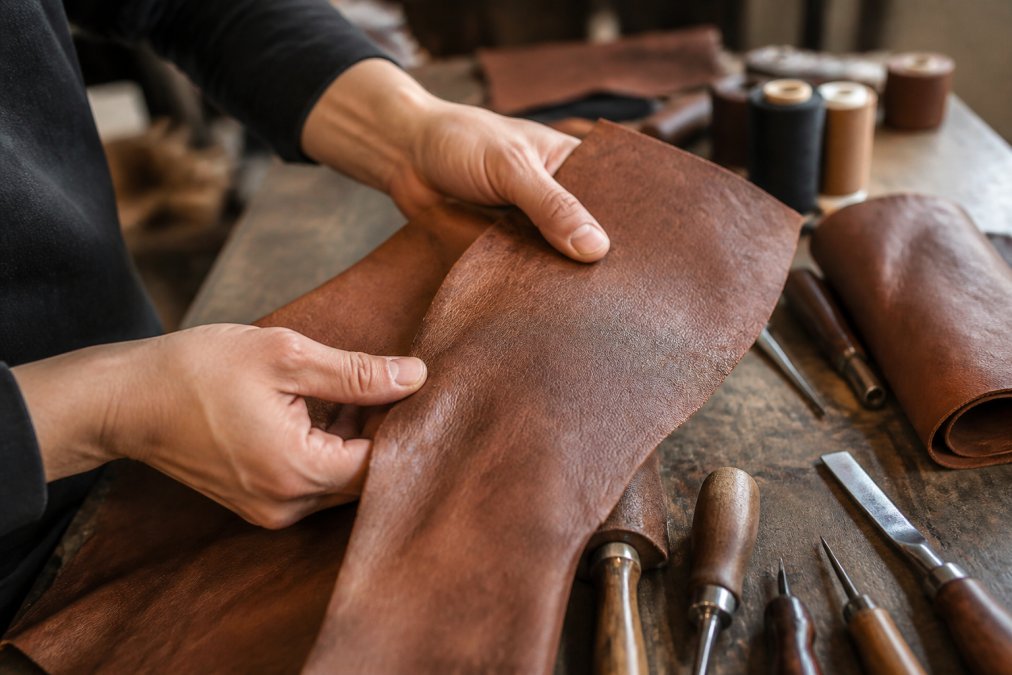
Leather Weight and Thickness: The Technical Specification That Matters
Leather thickness, measured in ounces per square foot (oz/sq ft), determines whether a handbag holds structure, resists punctures, and lasts through years of use.
When shopping, ask the maker or seller for the leather weight specification.
Other Quality Indicators
Check the edges. Quality leather handbags show raw or finished edges that reveal the leather's true color and structure. If edges are sealed with plastic or heavy coating, that's often a sign the leather is lower-grade and needs hiding. Handcrafted pieces typically display finished edges that showcase the craftsmanship.
Smell matters. Genuine leather has a distinctive, pleasant scent that synthetic materials cannot replicate. If a bag smells chemical or plastic-like, it's likely not authentic leather. Real leather has an earthy, slightly warm smell.
Look for consistency in hardware. Quality bags use metal hardware that feels solid and is securely attached. Cheap hardware feels hollow and can bend or break easily. Gold-tone or silver-tone finishes should not flake or tarnish quickly. The hardware should be proportional to the leather weight, lightweight leather paired with heavy hardware creates imbalance and stress on attachment points.
Flora Backpack — Hand-Tooled Leather →
Examine stitching patterns. Hand-stitched or machine-stitched seams should be even, tight, and follow a consistent pattern. Loose or irregular stitching indicates rushed production. The thread color should complement the leather, and stitches should not pucker or pull the leather.
The Value of Handcrafted Leather Purses
Handcrafted leather purses represent a fundamentally different value proposition than mass-produced bags. When artisans create each piece by hand, they invest time and skill that machines cannot replicate. This results in superior construction quality, better material selection, and unique aesthetic details.
The durability advantage is significant. Handcrafted bags are built to last decades because makers take pride in their work and stand behind their creations. Mass-produced bags are engineered for a specific lifespan, often just a few years, after which replacement is expected.
Supporting artisan communities matters too. When you purchase a handcrafted leather purse, your money directly supports skilled makers and their families. This is especially true with pieces from Lunas Artisanal Shop, where each bag is created by expert artisans in León, Guanajuato. You're not just buying a product; you're supporting cultural heritage and traditional craftsmanship.
The personalization aspect appeals to conscious consumers. Handcrafted pieces often feature unique details that reflect the maker's individual style. You won't see your bag on someone else because it was made specifically, not mass-produced in thousands of identical units.
Handcrafted leather purses also develop character over time in ways factory bags cannot. The leather responds to your use patterns, developing creases and patina that tell the story of your relationship with the piece. This is something many people find deeply meaningful.
How to Care for Leather Handbags
Proper leather care extends the lifespan of your handbag significantly. Start with regular conditioning, every 3 to 6 months, depending on use frequency. Leather is skin, and like skin, it needs moisture to stay supple. A quality leather conditioner replenishes natural oils that dry out over time.
Protect against water and stains proactively. Apply a water-resistant treatment before heavy use, especially during rainy seasons. If your bag gets wet, dry it slowly at room temperature, never use direct heat, which can crack leather. Pat away moisture with a soft cloth and let it air dry naturally.
Address spills immediately. Blot (don't rub) with a clean, damp cloth to prevent stains from setting. For stubborn marks, use a soft eraser or leather cleaner designed for your specific leather type. Test any cleaning product on an inconspicuous area first.
Store your bag properly when not in use. Keep it in a cool, dry place away from direct sunlight, which fades color. Use a dust bag if available, and stuff the interior with tissue paper to help the bag maintain its shape. Never store in plastic, which traps moisture and can cause mildew.
Inspect hardware regularly. If metal clasps or handles show signs of wear, have them serviced by a leather specialist before they fail completely. Reinforced stitching and secure hardware are what keep a bag functional for years.
Choosing the Right Leather Type for Your Lifestyle
When selecting types of leather for handbags, your daily activities should drive your choice. If you work in professional environments, structured leather in neutral tones provides the polish and durability you need. The Nieve Lux White Lizard Tote works beautifully in corporate settings with its sophisticated white leather and organized compartments.

For casual daily use, soft leather offers comfort and develops character you'll appreciate. The Coco Café Brown Croc Handbag combines approachability with the sophisticated crocodile embossed texture that elevates casual outfits.

Climate matters too. Consider your environment when prioritizing water resistance versus patina development.
Budget influences the decision as well. Handcrafted full-grain leather bags cost more initially but outlast cheaper alternatives by years. A Flora Backpack Hand-Tooled Leather at $65 represents genuine craftsmanship and authentic materials at a price point that respects both quality and accessibility.

Think about how you'll use the bag. A work tote needs durability and organization. An evening bag prioritizes aesthetics and can be softer. A travel bag should be structured to protect contents. Matching leather type to function ensures satisfaction for years to come.
The most important factor is choosing types of leather for handbags that align with your values. If you love the patina journey, genuine leather rewards patience and regular use.
Choosing the right leather for your handbag isn't just about aesthetics, it's about investing in a piece that will serve you for years while telling a unique story. The handcrafted leather purses from Lunas Artisanal Shop showcase each leather type's strengths through thoughtful design and authentic craftsmanship. Whether you select pieces that develop rich patina or structured pieces that maintain professional polish, you're choosing quality over disposability.
Frequently Asked Questions
What is the best quality leather for handbags?
Full-grain leather is considered a high quality for handbags because it retains the complete hide with all natural markings and can develop a rich patina over time. It offers superior durability and longevity compared to lower grades. When choosing a handbag, look for genuine leather with visible grain patterns and natural variations, these can indicate authenticity and quality craftsmanship.
Is full-grain leather better than top-grain for handbags?
Yes, full-grain leather is superior to top-grain for most handbag applications. Full-grain retains the entire hide including the outer layer, giving it greater tensile strength and durability. Top-grain has the outer layer sanded away and often receives a protective coating, making it more uniform in appearance but less durable and prone to peeling over time. Full-grain develops character through natural patina formation, while top-grain resists staining better initially but sacrifices longevity.
What makes handcrafted leather purses worth the investment?
Handcrafted leather purses offer superior quality, durability, and uniqueness compared to mass-produced alternatives. Artisans hand-select premium hides, apply traditional techniques, and pay attention to every detail, from stitching to hardware compatibility. Each piece develops its own character through use and patina formation. Handcrafted purses from skilled artisans in tannery regions like Guanajuato, Mexico often feature genuine leather, ensuring bags last for years or decades with proper care.
How often should I care for my leather handbag?
Establish a regular leather maintenance routine: wipe your bag monthly with a soft, dry cloth to remove dust and surface debris. For deeper cleaning, use a leather-specific cleaner every 3-6 months depending on usage frequency. Condition your leather handbag twice yearly with a quality leather conditioner to maintain pliability and prevent cracking. After exposure to water or harsh conditions, allow your bag to dry naturally away from direct heat. Store your bag in a dust bag in a cool, dry place. This consistent care extends the life of your handbag significantly.